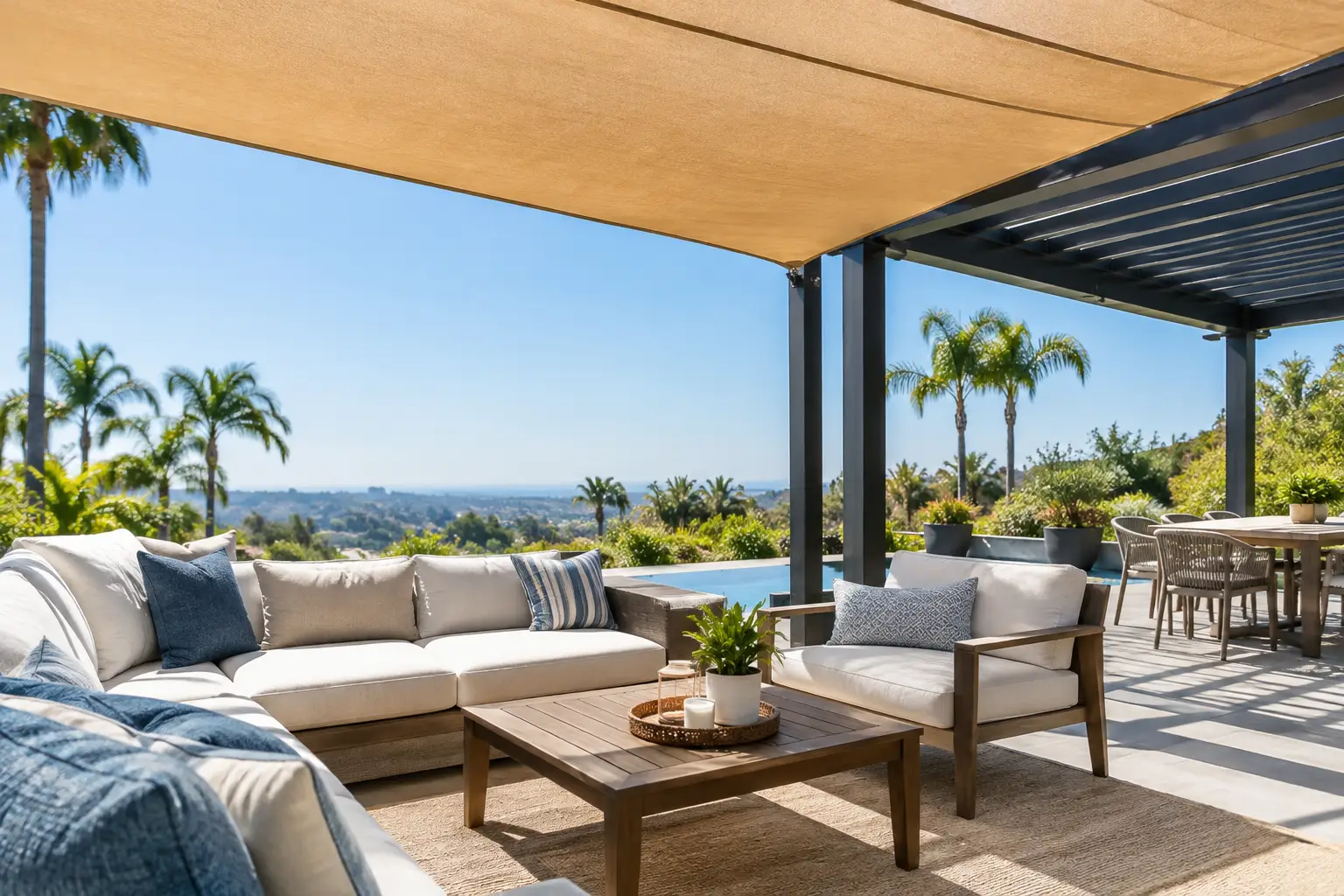
A Southern California patio can be perfect at 9 a.m. and too hot to enjoy by noon. The best patio shade solutions do more than block glare – they make room for longer meals, relaxed spa sessions, family gatherings, and the kind of everyday restoration that turns a backyard into a true retreat.
The right choice depends on how you use the space. A compact dining area may need the flexibility of an umbrella, while a hot tub, outdoor kitchen, or conversation set may call for a permanent structure with dependable coverage. Before choosing based on appearance alone, consider sun direction, wind exposure, available space, and how much of the patio you want to keep comfortable throughout the year.
Start With How You Use Your Patio
Shade should support the way your household actually spends time outside. If you host weekend barbecues, you may need broad coverage over a dining table and grill-side seating. If the patio is centered around a hot tub or swim spa, comfort, privacy, ventilation, and easy access should all guide the design. A shaded lounge area can also make the transition from a sauna or cold plunge feel more inviting.
Watch the patio at different times of day before making a purchase. Morning and late-afternoon sun often come in at a low angle, which means a roof overhead may not fully solve glare. Western exposure is especially demanding in Orange County, where direct afternoon sun can make even well-furnished patios uncomfortable. A combination of overhead shade and side coverage may be the better long-term answer.
It also helps to decide whether you want seasonal flexibility or a more permanent backyard feature. Portable options generally cost less and can be moved as your layout changes. Permanent structures create a more finished look, add definition to the outdoor room, and can deliver more reliable protection when installed correctly.
Best Patio Shade Solutions for Different Backyards
Patio umbrellas for flexible, targeted coverage
A quality patio umbrella is one of the simplest ways to add shade exactly where it is needed. Market umbrellas work well over dining tables, while cantilever umbrellas place the pole off to the side, leaving more usable space beneath the canopy. That makes them especially practical over deep seating, chaise lounges, and smaller spa-side areas.
The advantage is flexibility. You can rotate or tilt many umbrellas as the sun moves, then close them when not in use. The trade-off is that umbrellas require a properly weighted base and should be secured or closed during strong winds. In exposed locations, a lightweight umbrella may become more frustrating than useful.
Choose a canopy large enough to shade the furniture, not just the tabletop. For a dining set, the coverage should extend beyond the chairs when they are pulled out. Look for fade-resistant outdoor fabric and a sturdy frame, since Southern California sun is hard on lower-quality materials.
Pergolas for an architectural outdoor room
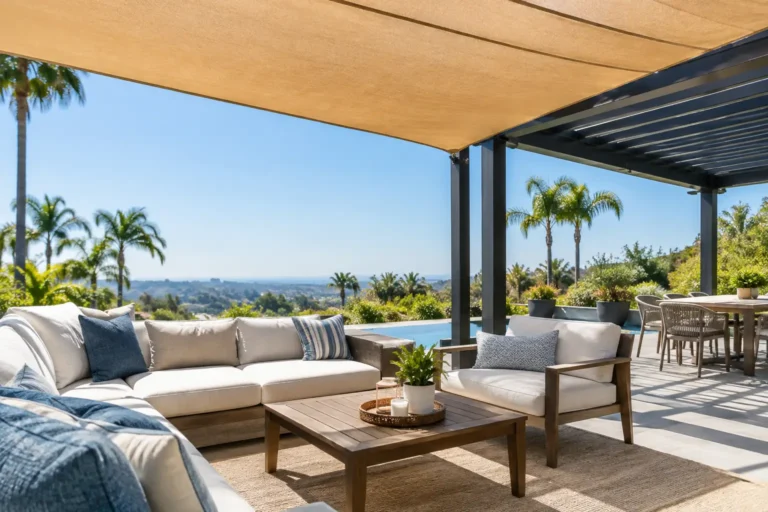
A pergola gives a patio structure and visual presence without necessarily enclosing it. It can define a dining area, frame an outdoor kitchen, or create a designated place to unwind after a soak. Traditional open-slat pergolas offer filtered shade, while those fitted with a canopy, retractable shade fabric, or climbing greenery can provide more protection.
Pergolas are a strong fit for homeowners who want the patio to feel like a natural extension of the home. They are also highly customizable in scale, material, and finish. Wood has warmth and character but needs ongoing care. Aluminum and vinyl are lower-maintenance choices that can better suit a busy household focused on relaxing rather than refinishing.
Keep in mind that an open pergola alone may not offer enough relief during the hottest hours. If full shade is the goal, plan for a cover or adjustable top from the beginning. The posts and footprint should also be positioned so they do not interfere with spa covers, service access, or the walking paths around your furniture.
Louvered patio covers for adjustable sun control
For homeowners who want more control than a fixed roof provides, louvered patio covers are a premium option. Their rotating slats can open for sun and airflow, tilt to reduce glare, or close for stronger overhead coverage. Some systems are designed to manage light rain as well, although performance varies by installation and product design.
This option is particularly appealing when the patio serves several purposes. You can let in morning light for coffee, create shade for an afternoon gathering, and open the louvers for stargazing later in the evening. The tailored look works beautifully alongside high-end patio furniture, outdoor kitchens, and wellness features.
The investment is greater than an umbrella or fabric canopy, and professional planning is essential. Site conditions, drainage, local requirements, and attachment to the home all matter. Still, for a frequently used backyard, adjustability can be worth it.
Gazebos for dependable coverage and privacy
A gazebo creates a more defined destination in the yard. With a solid or covered roof, it offers dependable overhead shade and can create a sense of separation from the rest of the property. It is an excellent choice for a conversation area, dining space, or a sheltered location near a hot tub.
Gazebos are available in many forms, from simple freestanding structures to substantial installations with lighting, curtains, screens, and built-in seating. Side panels or curtains can reduce low-angle sun and offer privacy from nearby homes. Screens may also help make evening use more comfortable in areas where insects are a concern.
Ventilation deserves special attention if a gazebo will sit near or over a spa. Hot tubs release heat and moisture, so the structure should not feel closed-in or restrict safe access to the cover and equipment. A well-planned gazebo creates a private, inviting setting without turning spa ownership into a maintenance challenge.
Shade sails for modern coverage in challenging spaces
Shade sails use tensioned outdoor fabric to cast broad, angled shade. Their clean, contemporary profile can work well over irregular patios, poolside seating, or narrow side yards where a traditional structure would feel too heavy. Layering two or more sails at different heights can create a striking look while improving coverage.
Because they are installed at an angle, shade sails can also help with afternoon sun that slips under a flat roof. However, they rely on strong attachment points and precise tension. A sagging or poorly positioned sail can collect debris, flap in the wind, and look unfinished. Professional installation is often the right choice for larger sails or locations with meaningful wind exposure.
Fabric selection matters. Look for material designed for UV protection and outdoor use, and remember that a sail may provide shade without providing rain protection. This can be ideal for a bright, dry climate, but it is worth understanding the distinction before committing.
Retractable awnings for shade attached to the home
Retractable awnings extend from the house to shade a patio immediately outside doors and windows. They are a practical option when you want to reduce direct sun near the home while creating a comfortable space for dining or lounging. When retracted, they leave the patio open and preserve more daylight indoors.
The convenience is hard to beat, particularly for patios used every day. Motorized models make it easy to adjust coverage quickly, and some include sensors that respond to sun or wind. Yet an awning is not right for every house or patio. It needs a suitable mounting surface, and large units should be evaluated carefully for wind conditions and structural support.
Details That Make Shade Feel Like Part of the Design
A shade structure should work with the backyard, not simply sit on top of it. Match the scale to the patio: a small umbrella can disappear beneath a large roofline, while an oversized gazebo can crowd a compact yard. Consider the colors and materials already present in the home, hardscape, spa cabinet, and furniture so the space feels intentional.
Lighting extends the value of shade after sunset. Soft overhead lighting, string lights, or integrated fixtures can make a pergola or gazebo welcoming for dinner and conversation. Patio heaters can also help carry the space into cooler evenings, but maintain proper clearance from canopies, fabrics, and roofs according to the manufacturer’s directions.
Do not overlook drainage and maintenance. Fixed covers need a plan for rainwater, even in a region known for sunshine. Fabric components should be cleaned as recommended, frames should be inspected periodically, and moving parts on retractable systems need regular care. Choosing quality materials from the start usually protects both the appearance and the long-term enjoyment of the patio.
Choose Coverage That Supports Your Whole Backyard
The best solution is rarely the one with the largest canopy or the lowest upfront price. It is the one that gives your family a comfortable place to gather while fitting your home, your habits, and the features you want to enjoy most. A freestanding gazebo may create the ideal setting for a spa retreat, while a cantilever umbrella may be all a favorite lounge area needs.
For homeowners planning a larger outdoor-living upgrade, it can be helpful to select furniture, wellness products, heating, and shade as one coordinated plan. Backyards In Style can help Southern California homeowners think through how those pieces work together, from the first showroom conversation to the years of enjoyment that follow.
Take a few afternoons to notice where the heat lands, where people naturally gather, and what would make you stay outside a little longer. That is usually where your best shade solution belongs.