A gazebo for hot tub owners can do more than make the backyard look finished. It can turn an exposed spa into a private place to decompress after work, ease sore muscles after a long day, or bring friends together without worrying about bright sun, wind, or nearby neighbors. The best choice is not simply the largest structure that fits. It is the one that gives you comfortable access, proper airflow, and a design that works with the way you want to use your backyard.
For Southern California homeowners, that often means planning for strong sun, occasional rain, warm afternoons, cool evenings, and a spa that remains inviting in every season. A well-chosen gazebo helps protect that investment while making the entire area feel more intentional.
Start With How You Want to Use the Space
Before comparing gazebo styles, picture a typical evening in your spa. Are you looking for a quiet hydrotherapy retreat for one or two people? Do you host family gatherings where guests move between the patio, grill, and hot tub? Will the spa be used early in the morning, after workouts, or late at night?
Those answers shape the right layout. A compact gazebo may provide plenty of shade and privacy for a two- or three-person spa, while a larger family hot tub benefits from room around the shell for towels, safe entry, and conversation. If you want lounge seating, a bar-height table, a towel warmer, or a changing area nearby, the gazebo needs to function as an outdoor room rather than a simple roof.
The goal is to create enough space to move naturally. A beautiful structure that forces someone to squeeze past a post or climb in from an awkward angle will feel less relaxing over time.
Size a Gazebo for a Hot Tub With Room to Move
Do not size the gazebo only by the exterior dimensions of the hot tub. You also need clearance around the spa for entering, opening the cover, servicing equipment, and cleaning the cabinet. The access side is especially important. Many spas require room for technicians to reach the equipment compartment, and a gazebo should never block that path.
As a starting point, allow a comfortable walking area around the sides people will use most often. Leave additional room where the cover lifts or folds. If you plan to use a cover lifter, check its full open position before selecting a roof height or wall design. The last thing you want is a cover that hits the ceiling, beams, or privacy panels every time you use it.
Think About Vertical Clearance Too
A low roof can feel cozy, but it may create practical problems. Hot tub covers need clearance, tall family members need headroom, and heat rises. A higher ceiling or an open gable design can make the space feel brighter and help warm, humid air escape.
For a spa placed under an existing patio cover, measure carefully before delivery. For a freestanding gazebo, consider roof pitch, posts, and the location of nearby trees. Falling leaves and branches can add maintenance, while a roof that sits too close to a fence may limit access later.
Choose the Right Level of Privacy and Shade
A gazebo can be open, partially enclosed, or designed as a more sheltered retreat. Each approach has advantages.
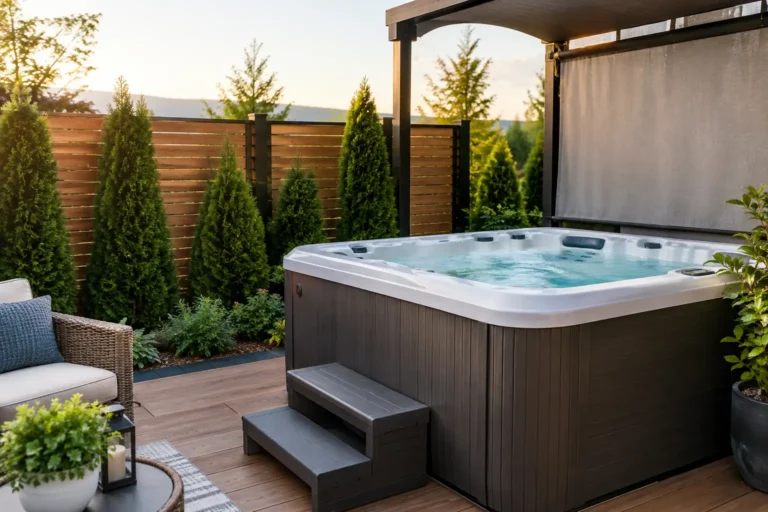
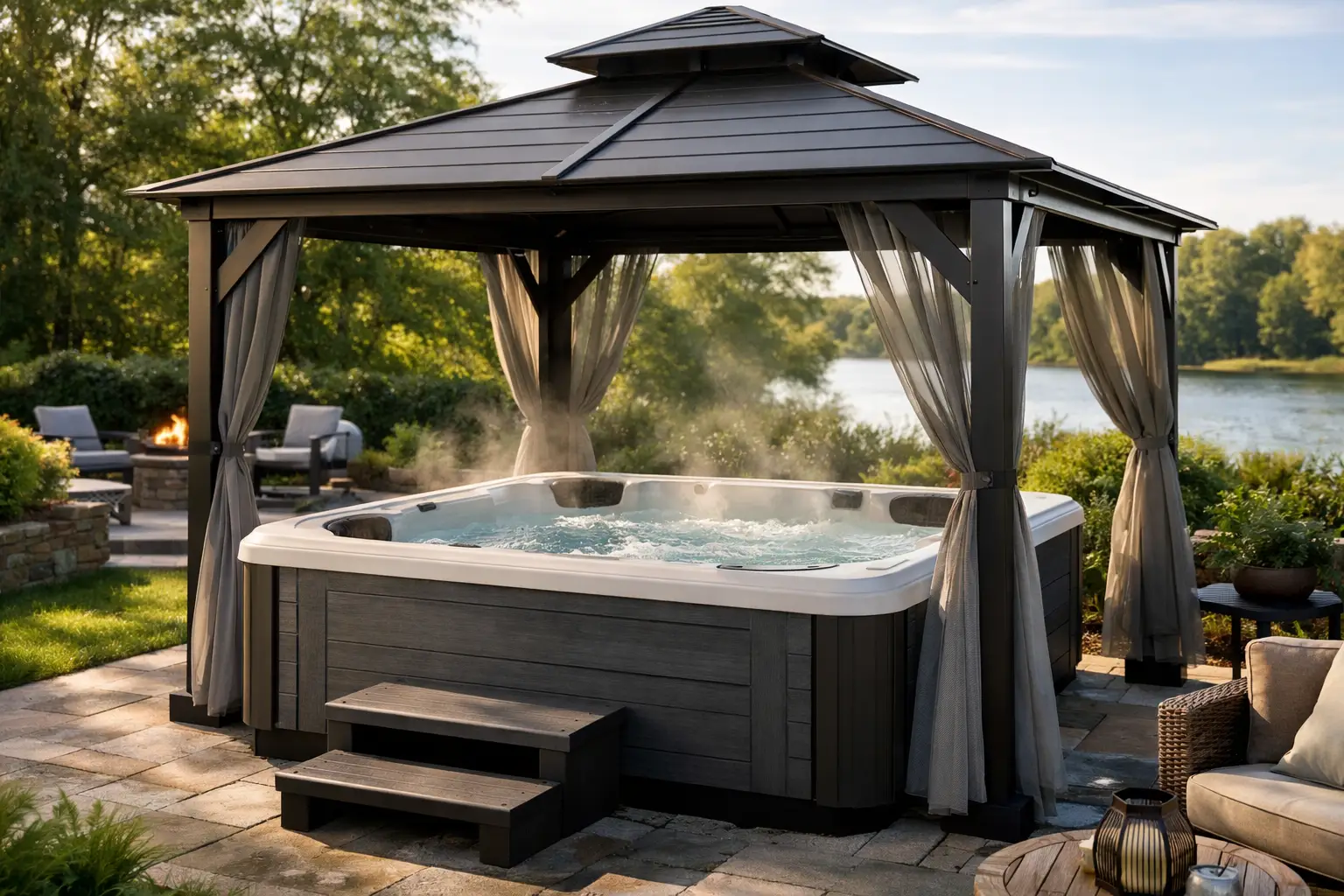
An open-sided gazebo preserves sightlines and breezes, making it a strong fit for a backyard with an attractive view or an outdoor kitchen nearby. It offers welcome shade during sunny afternoons without making the spa area feel closed off.
A partially enclosed design adds privacy panels, louvers, curtains, or slatted walls on the sides that face neighbors. This is often the most flexible choice in closely spaced Southern California neighborhoods. You can shield the spa from direct views while keeping airflow on the other sides.
A more enclosed structure can create a dramatic, private setting, but it requires careful ventilation. Steam and heat need a place to go, particularly when the spa is covered between uses or enjoyed by several people at once. Windows, operable louvers, roof vents, and open upper sections can help prevent the space from feeling damp or overheated.
Ventilation Is Not Optional
Hot tubs release heat and moisture, even in a dry climate. A gazebo that traps that moisture can make the area uncomfortable and may affect finishes over time. This matters most with enclosed walls, vinyl curtains, low ceilings, or solid roof systems.
Plan for cross-ventilation by keeping at least two sides open or using adjustable panels that let air move through. A ceiling fan rated for outdoor use can improve comfort, but it is not a substitute for thoughtful venting. Electrical components must be installed appropriately and safely for the environment.
If you are considering a fully enclosed spa room, speak with qualified installation and building professionals early. The project may require more involved site preparation, electrical planning, ventilation design, and permits than a freestanding open gazebo.
Match Materials to Your Backyard and Maintenance Preferences
The right material depends on your home’s style, exposure to weather, and how much ongoing upkeep you want to take on.
Wood gazebos bring warmth and can complement traditional, coastal, Craftsman, and rustic outdoor spaces. They may need periodic sealing, staining, or painting to stay looking their best in intense sunlight and changing weather.
Aluminum and powder-coated metal structures offer a clean, contemporary appearance with lower maintenance. They can be a practical fit for modern patios and homeowners who want durable shade with less seasonal care. Look for quality finishes and construction designed for outdoor use.
Vinyl or composite options can provide a polished look with minimal maintenance, though the available colors and architectural details may be more limited. Fabric canopies are generally best for flexible, lighter-duty shade rather than a permanent hot tub setting, especially if you want dependable protection throughout the year.
The roof material deserves equal attention. A solid roof provides the most reliable shade and rain protection. Louvered roofs offer adjustable sunlight and airflow, but their placement and drainage should be planned carefully. A roof that sheds water directly toward the spa steps or equipment area can create an avoidable nuisance.
Plan the Site Before the Gazebo Arrives
A gazebo and hot tub should be planned as one project, even if they are purchased at different times. The spa needs a level, load-bearing base, while the gazebo needs a stable installation surface and proper anchoring. A concrete pad is common, but existing pavers, decking, and other surfaces must be evaluated for their ability to support the combined load and structure.
Think beyond the footprint. Consider delivery access for the hot tub, the route technicians will need for future service, drainage after rain, and the location of electrical equipment. Avoid placing posts where they interfere with the spa cover, equipment access, or steps.
Local requirements vary by city, neighborhood, structure size, and installation details. Property-line setbacks, overhead clearances, electrical safety rules, and homeowner association guidelines may all affect the plan. Confirm requirements before building rather than trying to adapt the gazebo after the spa is in place.
Make the Area Comfortable After Sunset
The gazebo is also an opportunity to make evening spa time safer and more inviting. Soft, indirect lighting around the entry steps helps guests see where they are walking without shining into their eyes. Outdoor-rated lighting under the roofline can create a relaxed atmosphere for conversation and entertaining.
Add a dry place for towels, robes, and sandals. A small weather-resistant cabinet or bench can keep essentials close without cluttering the spa edge. In cooler inland evenings, a properly positioned patio heater can extend the season, provided it is used according to manufacturer clearances and away from combustible materials.
For homeowners who want a complete backyard retreat, coordinating the gazebo with patio furniture, a grill island, landscaping, or a sauna can create a more unified result. The spa becomes part of the lifestyle of the yard, not an isolated feature at the edge of it.
Get Guidance Before You Commit
A gazebo is easier to choose when you can view its scale alongside the hot tub you are considering. At Backyards In Style, homeowners can discuss spa dimensions, cover clearance, delivery needs, installation considerations, and the accessories that make daily use more enjoyable. That early planning can prevent expensive adjustments after installation.
The right gazebo should make stepping into your hot tub feel effortless: shaded when the afternoon is bright, private when you want quiet, open when friends are over, and comfortable enough that a few minutes of hydrotherapy becomes a habit worth keeping.