A hot tub can still look clean when its filters are nearing the end of their useful life. The water may feel less inviting, the jets may lose some of their strength, and maintaining balanced water can become more frustrating than it should be. Homeowners often ask how often to replace spa filters because the answer affects both everyday comfort and the long-term health of the spa.
For most residential hot tubs, replacing cartridge filters every 12 to 18 months is a smart baseline. Some filters can last up to two years with excellent care and moderate use. Others need replacement sooner, especially in active Southern California backyards where a spa may be used several times a week, shared by a family, or used after swimming, workouts, and outdoor entertaining.
How Often to Replace Spa Filters: A Practical Schedule
Spa filters are designed to capture body oils, lotion, hair, pollen, dust, and other fine debris before it can circulate back through the plumbing and water. Over time, those contaminants settle deep into the filter media. Regular cleaning helps, but it cannot restore a cartridge forever.
A practical maintenance rhythm is to rinse filters every two to four weeks, give them a deeper cleaning every three to four months, and plan on replacement around the 12- to 18-month mark. That schedule is not a hard rule. A lightly used two-person spa may get more life from its filters than a large family hot tub that sees daily use.
If your spa is part of a busy backyard routine, the filter does more work than you may realize. Every bather brings in a small amount of sunscreen, skincare products, detergent residue from swimsuits, and natural oils. Even with careful water care, that buildup eventually reduces the filter’s ability to keep water clear and circulation efficient.
Signs Your Spa Filters Need Replacing Sooner
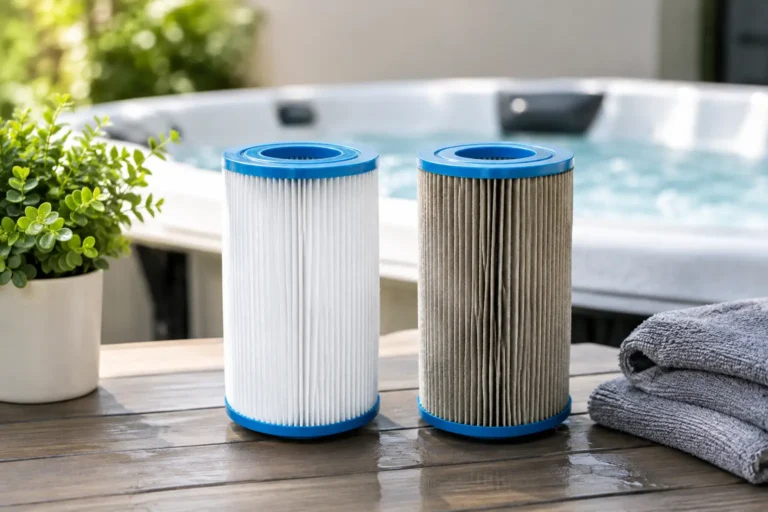
Age matters, but the condition of the cartridge tells the more useful story. A filter that is visibly worn or cannot be fully cleaned should not be pushed through another season simply because it has not reached the one-year mark.
Replace the filter if you notice several of these issues:
- The pleats are flattened, torn, frayed, or separating from the end caps.
- The filter remains gray, brown, stiff, or greasy after a proper filter cleaner soak.
- Water turns cloudy more quickly than usual, even when sanitizer and water balance are in range.
- Jets seem weaker, water flow is reduced, or the spa displays a flow-related warning.
- You are cleaning the filters more often but getting less improvement in water clarity.
A damaged cartridge can allow debris to bypass the filter media. A clogged one makes the circulation pump work harder to pull water through. Neither condition supports the relaxing, reliable spa experience you invested in.
Cloudy Water Is Not Always a Filter Problem
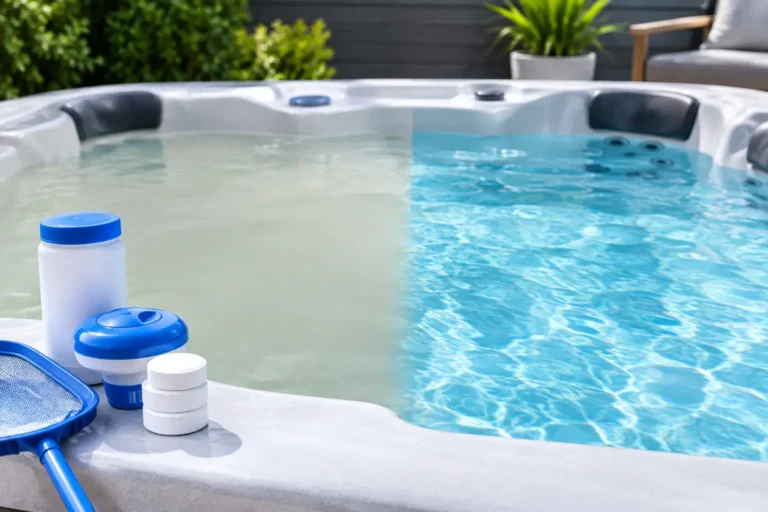
Cloudy water can also result from low sanitizer, unbalanced pH or alkalinity, high calcium levels, heavy bather use, or an overdue water change. Before assuming the filter is the only cause, test the water and inspect the cartridge.
Still, filters are often the overlooked part of the equation. If the water chemistry is balanced but clarity will not hold, a worn filter is a likely suspect. Replacing it can make routine water care noticeably easier.
What Shortens Filter Life in Southern California?
Southern California gives homeowners more opportunities to enjoy a hot tub year-round, but frequent use puts more demand on filtration. Warm weather also means more sunscreen, sweat, windblown dust, leaves, and pollen finding their way into the water.
A spa located near landscaping, a BBQ area, or an open patio may need more frequent filter attention than one kept under a covered gazebo. Pets, children, and regular guests can add to the workload as well. None of this means your spa is harder to own. It simply means the maintenance schedule should match the way your backyard is actually used.
Water hardness deserves attention, too. Mineral buildup can make filter fibers rigid and reduce water flow. If your area has hard water, use a cleaner made specifically for spa filters during deep cleaning, and avoid assuming that a quick hose rinse will remove everything trapped in the pleats.
Clean Filters Properly Before You Replace Them
Cleaning filters consistently is the best way to protect their usable life. Turn off power to the spa before removing them. Then rinse between every pleat with a garden hose, working from top to bottom. A filter-cleaning wand can help separate the pleats without damaging them.
For a deeper clean, soak the cartridges in a spa filter cleaning solution according to the product directions. This step breaks down oils and residue that water alone cannot remove. Rinse thoroughly afterward, since leftover cleaner can foam in the spa.
Avoid using a pressure washer, household detergent, bleach, or a dishwasher. High pressure can tear the filter media, and common household cleaners may leave residues that cause foam or interfere with water chemistry. A filter that looks clean but feels stiff, stays discolored, or has distorted pleats has likely reached retirement.
Keep a Second Set of Filters
Many experienced spa owners keep two sets of cartridges. One set stays in the spa while the other dries completely after cleaning. This makes maintenance easier and prevents the temptation to reinstall a damp, only partially cleaned filter because the spa is ready for use.
Rotating two sets can also be practical for households that use the spa often. It gives you flexibility without interrupting the evening soak, post-workout recovery, or family time you count on. Just remember that rotation extends convenience, not the lifespan of a worn-out cartridge forever.
Choosing the Right Replacement Filter
When it is time to buy a replacement, match the filter to your spa’s exact make, model, and year. Filter cartridges vary in length, diameter, thread type, handle style, and filtration area. A cartridge that nearly fits is not good enough. Incorrect fit can reduce filtration performance or create circulation problems.
Quality matters here. A well-made replacement cartridge uses durable pleated media and secure end caps that can withstand repeated cleaning. It may cost more than a low-grade alternative, but it can support clearer water, better flow, and fewer avoidable service concerns.
If you are unsure which cartridge belongs in your hot tub or swim spa, bring in the old filter or have the model information available. A local spa professional can confirm the correct part and help you determine whether an apparent filter issue may actually be related to water balance, circulation, or equipment.
Make Filter Care Part of a Better Spa Routine
Filters are not the most visible part of your backyard retreat, but they help protect every part of the experience. Clean, freely circulating water allows your spa to feel ready when you are ready, whether that means a quiet evening after work, hydrotherapy for sore muscles, or a relaxed gathering with friends.
Set a recurring reminder to inspect and rinse the filters, and write the replacement date on the new cartridge or in your spa care notes. If you find yourself fighting cloudy water, weak flow, or repeated cleaning cycles, do not wait for the filter to fail completely. A fresh set is a small maintenance decision that helps preserve the comfort, performance, and restorative value of your spa. For personalized guidance on filters, water care, and ongoing service, the team at Backyards In Style can help keep your backyard retreat ready to enjoy.