A sauna should feel like the easiest part of your day: step outside, settle into the warmth, and leave with your shoulders looser than when you walked in. The right choice makes that ritual feel natural in your backyard. This backyard sauna buying guide will help Southern California homeowners sort through the decisions that affect comfort, installation, operating costs, and long-term enjoyment.
Start With the Sauna Experience You Want
The first decision is not the exterior finish or the number of seats. It is how you want the heat to feel. Traditional and infrared saunas create different experiences, and neither is automatically better for every household.
A traditional sauna uses a heater to warm the air and surrounding surfaces. It typically reaches higher temperatures, often between 150 and 195 degrees Fahrenheit, and can produce steam when water is poured over sauna stones. For buyers who picture a classic Finnish-style session with dry heat, aromatic wood, and an intense sweat, this is usually the right direction.
Infrared saunas use radiant panels that warm the body more directly while operating at lower air temperatures, commonly around 110 to 150 degrees. Many owners appreciate the gentler heat and shorter warm-up time. An infrared model can be especially appealing if you want a regular wellness routine but do not enjoy extremely hot air.
Think about who will use the sauna most often. If one person wants quiet recovery after a workout and another wants a high-heat ritual on a cool evening, a traditional sauna may offer the more flexible shared experience. If heat sensitivity, simple operation, and frequent short sessions are the priorities, infrared may be a better fit. Anyone with health concerns should speak with a physician before beginning sauna use.
Choose a Size That Fits Real Life
A two-person sauna is not always comfortable for two people. Bench depth, ceiling height, door swing, and how the seats are arranged all matter. Before shopping, consider whether the sauna will be a private retreat, a couples’ amenity, or part of a larger entertaining space.
For a single user, a compact one- or two-person model can preserve valuable patio space while still creating a comfortable place to unwind. Couples often prefer a larger two- or three-person layout so they can sit without feeling crowded. Families and homeowners who enjoy hosting may find that a four-person or larger sauna better supports the way they want to use their backyard.
Do not choose solely by the maximum occupancy listed on a spec sheet. Sit on the bench if possible. Check whether you can stretch your legs, recline comfortably, and enter without squeezing around the heater. A showroom visit can make these details much easier to judge than online dimensions alone.
Allow Space Around the Sauna
Plan for more than the sauna footprint. You need a clear path for delivery, room to open the door fully, and enough space to safely step out after a session. A small landing area, outdoor shower, cold plunge, or nearby seating can turn a standalone unit into a complete wellness zone.
In Southern California, it is also wise to think about sun exposure. A sauna placed in direct afternoon sun may run warmer before it is even switched on. Shade from a gazebo, pergola, or existing patio cover can make the approach more comfortable and help the area feel inviting at any hour.
Find the Right Location Before You Buy
The best sauna location balances privacy, convenience, and practical site requirements. A secluded garden corner sounds appealing, but a sauna that is too far from the house may see less use, especially after dark. A spot near a primary bedroom, pool area, home gym, or covered patio often makes the daily ritual easier to keep.
Choose a level, stable base that can support the sauna’s full weight. Depending on the model and site, this may be a concrete pad, reinforced deck, pavers on a properly prepared base, or another manufacturer-approved surface. Avoid placing a sauna directly on soil, grass, or an uneven patio.
Outdoor-rated saunas are built for the elements, but placement still affects longevity. Good drainage is essential. Keep the unit away from areas where roof runoff collects, and allow airflow around the exterior as required by the manufacturer. If you live near the coast, salt air and moisture can make proper material selection and routine exterior care even more valuable.
Privacy deserves attention, too. A fence, landscaping, screen, or well-positioned gazebo can create a sense of retreat without making the sauna feel closed off. Thoughtful lighting along the walkway improves safety and lets you enjoy the space after sunset.
Understand Electrical and Installation Needs
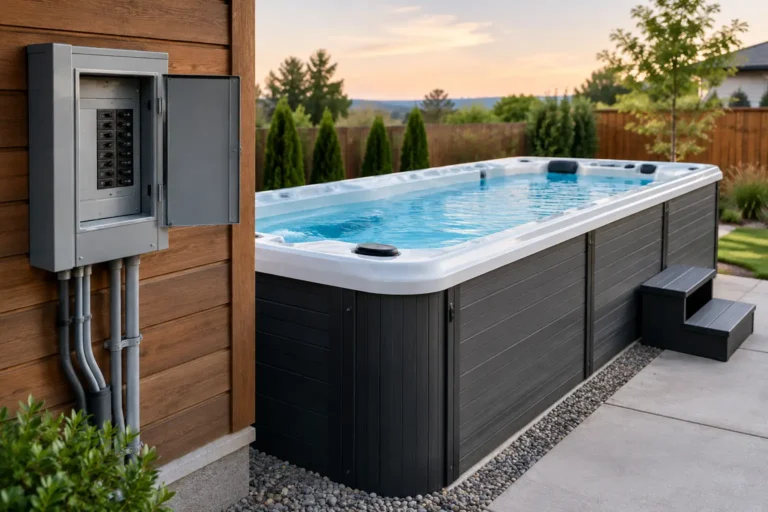
Electrical planning is one of the most important parts of buying a backyard sauna. Smaller infrared models may use a standard 120-volt outlet, while many larger infrared units and most traditional electric saunas require a dedicated 240-volt circuit. Heater size, sauna size, and local code requirements determine what your installation needs.
Bring an electrician into the conversation early, particularly if the sauna will be located far from your electrical panel. The cost to run power can vary based on distance, trenching, panel capacity, and whether an upgrade is needed. Knowing these details before delivery prevents a beautiful sauna from sitting unused while electrical work is scheduled.
Permits can also come into play. Requirements vary by city, homeowner association, electrical scope, and whether you are building a larger structure around the sauna. A freestanding unit may be straightforward, while a custom sauna room, new covered structure, or gas-fired system can involve additional planning. Ask the dealer and qualified local professionals what applies to your property rather than relying on assumptions.
Compare Materials, Heaters, and Features
A sauna is exposed to repeated heat cycles, so construction quality matters. Look for durable, sauna-appropriate woods such as cedar, hemlock, or thermally modified wood, depending on the style and manufacturer. Interior surfaces should feel smooth and comfortable, without harsh finishes or materials that are not designed for high heat.
For a traditional sauna, evaluate the heater capacity against the room volume and insulation level. An undersized heater may take too long to warm the space or struggle to maintain temperature. A properly sized heater creates a more consistent session and typically works more efficiently.
Controls can make a noticeable difference in ownership. Digital controls, timers, delayed start options, interior lighting, and Bluetooth audio may suit your routine, but prioritize the essentials first: reliable temperature control, safe heater placement, comfortable benches, and accessible service support. Decorative upgrades are enjoyable when the sauna performs well at its core.
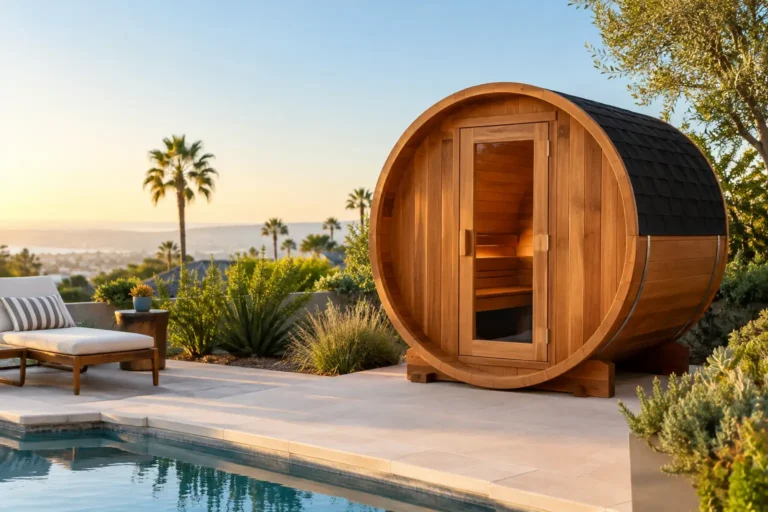
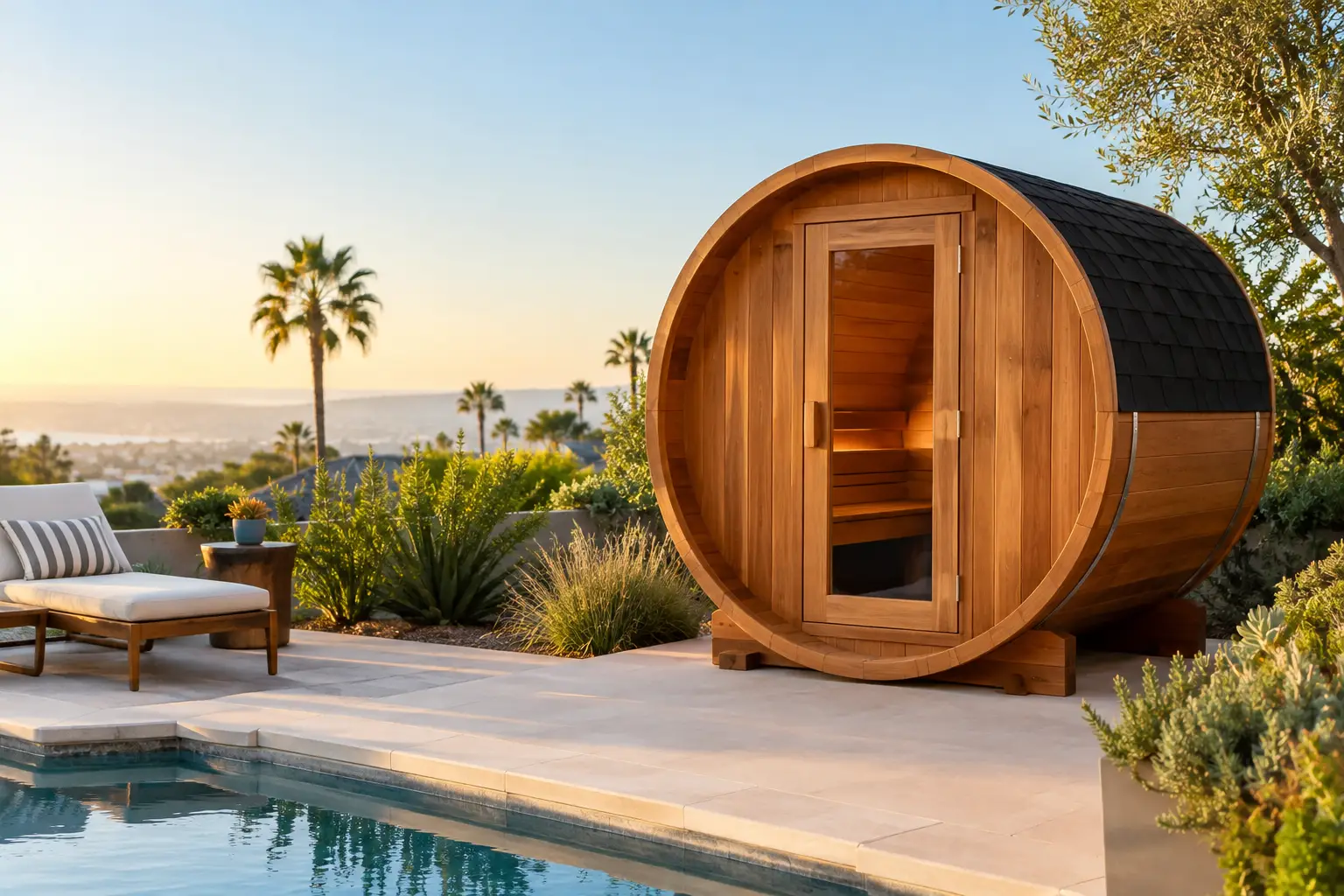
For outdoor models, ask about roof construction, exterior weather protection, insulation, ventilation, and warranty coverage. A barrel sauna can make a striking focal point and may heat efficiently because of its curved shape. A cabin-style sauna usually offers more interior flexibility and can be easier to coordinate with an existing outdoor kitchen, pool deck, or patio design. The better choice depends on your available space and the overall look you want to create.
Budget for Ownership, Not Just the Purchase
Your total sauna budget should include the unit, delivery, site preparation, electrical work, permits when required, and any features that complete the setting. A lower-priced sauna may not be the better value if it requires substantial upgrades or lacks the weather-ready construction you need outdoors.
Operating costs depend on local electricity rates, insulation, ambient temperature, heater type, and how often you use the sauna. Southern California’s generally mild climate can be an advantage, particularly for a well-insulated outdoor unit. Still, keeping the door closed during warm-up and following recommended maintenance practices will help protect efficiency.
Maintenance is usually straightforward, but it should not be overlooked. Wipe benches after use, keep the interior dry and ventilated, inspect the exterior periodically, and follow the manufacturer’s guidance for cleaning wood and checking the heater. A sauna should be restorative, not another complicated household task.
Shop With Long-Term Support in Mind
A sauna is a lasting backyard investment, so look beyond the first sale. Ask who handles delivery coordination, installation guidance, warranty questions, replacement parts, and service after purchase. Local expertise is particularly helpful when your project includes electrical work, a gazebo, patio furniture, a cold plunge, or other pieces of a larger outdoor retreat.
At Backyards In Style, homeowners can explore sauna options alongside the products that help make the surrounding space feel complete. Seeing finishes, sizes, and complementary outdoor-living features in person can bring clarity to a decision that is difficult to make from photos alone.
The best sauna is not necessarily the largest or the one with the longest feature list. It is the one you will look forward to using on an ordinary Tuesday night, when a few quiet minutes of warmth make your own backyard feel like the place you most want to be.