A swim spa can become the most-used part of a Southern California backyard – a place for early-morning exercise, hydrotherapy after a long day, and relaxed time with family. But before delivery day, swim spa fencing deserves the same careful planning as the foundation, electrical connection, and access route. The right barrier protects children and guests, supports local compliance, preserves your view, and helps the spa feel like a purposeful part of the landscape rather than an add-on.
Start With Safety and Local Requirements
A swim spa is not treated exactly the same way in every city or county. Whether fencing is required, what type of barrier is acceptable, and which permits apply can depend on the swim spa’s dimensions, water depth, location, and how local officials classify the installation. In many cases, a swim spa may be subject to pool-barrier requirements. In others, its approved locking cover, surrounding barriers, or placement may affect the final requirements.
That is why the best time to discuss fencing is before the spa is installed. Check with your local building department and include your spa dealer, installer, electrician, and landscape contractor in the conversation. Requirements can address barrier height, gaps below and between fence components, gate latches, self-closing gates, climbable objects near the fence, and door or alarm provisions. A beautiful enclosure that misses one safety detail can be expensive to alter later.
Treat the fence as one layer of protection, not the only one. A properly fitted and secured swim spa cover, clear household rules, attentive adult supervision, and thoughtful access control all matter. If young children visit your home, plan for the moments when the spa is not in use, not only the hours when your family is swimming.
Choose Swim Spa Fencing That Fits the Way You Live
The best material depends on what you need the fence to do beyond creating a barrier. Some homeowners want an open view from the kitchen or patio. Others want privacy from neighboring homes. A family with active children may prioritize a simple, durable gate system, while a homeowner creating a quiet wellness retreat may prefer a more enclosed, resort-like setting.
Aluminum fencing offers an open, low-maintenance look
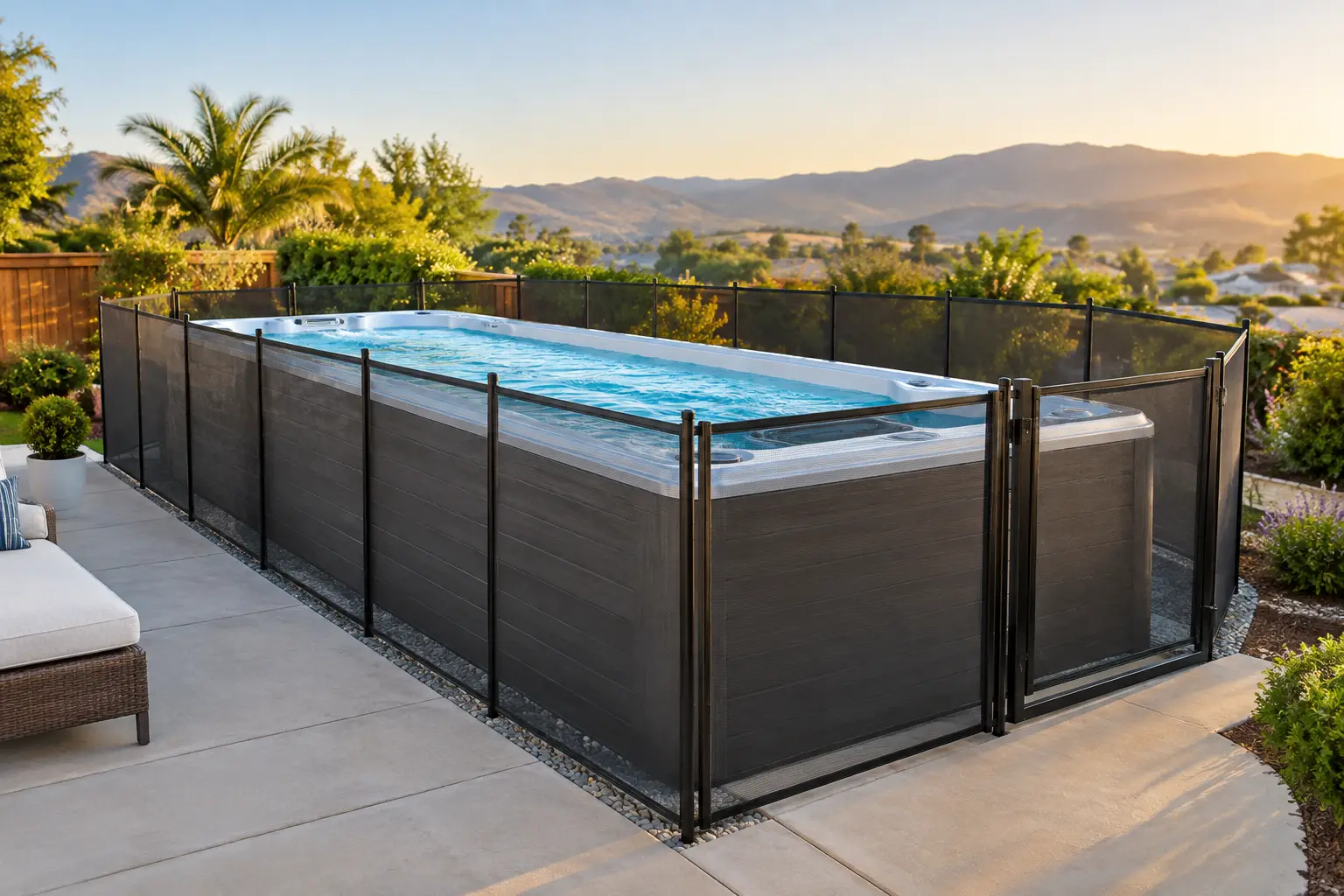
Powder-coated aluminum is a strong choice for homeowners who want defined boundaries without making the backyard feel closed in. Its narrow pickets let light and air move through the space, and darker finishes can visually recede against mature landscaping. It also complements contemporary patio furniture, outdoor kitchens, and clean-lined swim spa cabinetry.
The trade-off is privacy. Aluminum fencing offers little screening on its own, so it works best when privacy is not a major concern or when paired with landscaping outside the required barrier zone. It is also important to choose a design that meets applicable spacing and anti-climb rules rather than assuming every decorative fence panel is suitable.
Glass fencing keeps sightlines open
Frameless or semi-frameless glass fencing can make a compact yard feel larger and keep the swim spa visible from nearby seating areas. For homeowners with hillside views, polished hardscapes, or a modern outdoor design, glass creates a refined look while allowing parents and hosts to keep an eye on the water.
Glass does require regular cleaning to manage water spots, fingerprints, and dust. It can also be a higher-cost option, especially when the layout needs custom panels, gates, or engineered mounting. In a high-use backyard, specify safety-rated glass and hardware designed for outdoor exposure, and ask how the gate will perform after years of use.
Vinyl and composite can add privacy
For close neighbors or a backyard that doubles as a private recovery space, solid-panel vinyl or composite fencing can provide welcome separation. These materials have a clean, uniform appearance and generally require less ongoing care than painted wood. They can also help hide equipment areas or create a calmer backdrop behind the spa.
A solid fence can make a smaller yard feel more enclosed, however. Consider breaking up long runs with planted areas, decorative lighting, or a change in material near the entertaining zone. The goal is privacy without turning the swim spa area into a closed box.
Wood brings warmth, with more upkeep
Wood fencing pairs naturally with gardens, pergolas, and traditional patio designs. A horizontal slat design can feel especially current and can be customized to suit the home. It is also useful when you need a tailored layout around slopes, irregular property lines, or existing structures.
The maintenance commitment is real. Sun exposure, irrigation overspray, and temperature changes can affect finish, alignment, and longevity. Use quality exterior materials and plan to inspect and refinish the fence as needed. If a wood gate is part of the safety barrier, pay special attention to hinges, latch alignment, and sagging over time.
Plan the Gate Before the Fence
A gate is where everyday convenience and safety meet. It should provide a simple route to the swim spa without becoming an open invitation for children, pets, or visitors to enter unsupervised. In many barrier applications, gates must self-close and self-latch, with hardware positioned to limit a child’s ability to operate it. Confirm the exact requirements for your property with local authorities.
Think through how the gate will be used on a typical Saturday afternoon. Can an adult carry towels, water-care supplies, or a tray of drinks through it comfortably? Is there enough room to remove the cover and use the swim spa without opening into a pathway? Will the gate conflict with a furniture arrangement, grill area, or the swing of a patio door?
Avoid placing the gate directly beside the electrical disconnect, filtration equipment, or a narrow service route. Technicians need reasonable access for maintenance and repairs. A well-planned fence protects the experience of ownership by making service straightforward rather than turning routine care into a construction project.
Keep Equipment, Clearances, and Covers in Mind
Swim spa fencing should not crowd the equipment compartment or block the area needed to remove panels and perform service. Your installer can identify the side that needs access and help estimate the clearance required. This is especially valuable for a long swim spa, where tight side yards and existing structures can make layout decisions more complex.
The cover needs room, too. A manual cover, cover lifter, or automated solution changes the space needed behind and beside the spa. A fence that looks perfect on a plan may interfere with cover operation once the spa is in place. Measure the cover in its fully open position, not just when it is closed.
Coordinate electrical work early. The location of the disconnect, conduit runs, lights, and nearby outlets should be reviewed with a qualified electrician. Fencing, gates, and metal components must work with the approved electrical plan. It is much easier to adjust a fence layout on paper than to relocate equipment after a finished patio has been cut or landscaped.
Make the Barrier Part of the Backyard Design
A safety barrier does not need to interrupt the feeling of an outdoor retreat. When its materials and lines relate to the rest of the backyard, it can create a defined wellness zone that feels intentional. Match black aluminum to patio heater finishes or outdoor kitchen accents. Use glass when preserving sightlines matters most. Echo a wood fence detail in a pergola, privacy screen, or storage cabinet.
Lighting deserves attention as well. Soft pathway lighting can make the route to the swim spa safer after dark without creating glare on the water. Keep fixtures positioned so they do not create footholds near the barrier, and avoid placing furniture, planters, storage boxes, or decorative features where they could make climbing easier. This is one of the most common ways a thoughtful fence can lose part of its protective value over time.
Landscaping can soften the perimeter, but choose plants with mature size in mind. Leave room to inspect the fence, operate the gate, and access equipment. Thorny plants may discourage casual traffic, but they are not a substitute for an approved barrier and can make maintenance unpleasant.
Build for Long-Term Ownership
The best swim spa fencing plan considers how the space will work years from now. Gates should close reliably, latches should be checked regularly, and fence panels should be inspected after storms, landscaping work, or any significant changes around the yard. If you replace furniture or add a storage bench, reassess whether it affects the barrier’s climb resistance or access path.
For homeowners planning a complete backyard project, bring the swim spa layout, fence concept, cover solution, seating plan, and service access together before construction begins. Backyards In Style can help homeowners think through the swim spa ownership details that shape the finished space, from placement and delivery access to features that make daily use easier.
A well-designed barrier gives you more than a line around the water. It gives your household the confidence to use the swim spa for fitness, recovery, and connection with fewer worries competing for your attention.