A swim spa can change how your backyard feels every day – morning laps, low-impact exercise, hydrotherapy after work, and a place for the family to gather. But before choosing a model or scheduling delivery, many homeowners ask: do swim spas need permits? In Southern California, the answer is often yes, at least for part of the installation. The exact requirements depend on your city, property, electrical plan, site conditions, and whether the swim spa is treated as a pool or spa under local rules.
A little planning upfront protects your investment, keeps the installation moving, and helps create the safe, polished outdoor retreat you have in mind.
Do swim spas need permits? It depends on the installation
A portable, above-ground swim spa does not always require the same approvals as an in-ground pool. Still, its size, water capacity, electrical demand, and safety considerations mean it is rarely as simple as plugging in a small hot tub.
In many Southern California jurisdictions, the swim spa itself may not trigger a standalone building permit if it sits on a suitable existing surface and is not permanently installed. However, the work required to make it operational often does. A new electrical circuit, a concrete pad, a raised deck, gas work, plumbing changes, fencing, or grading can each require their own review and permit.
Your local building department has the final say. Requirements can differ between Anaheim, neighboring cities, and unincorporated areas, even when the homes are only a few miles apart. Treat online advice and a neighbor’s experience as a starting point, not a permit decision.
The permits most swim spa projects may involve
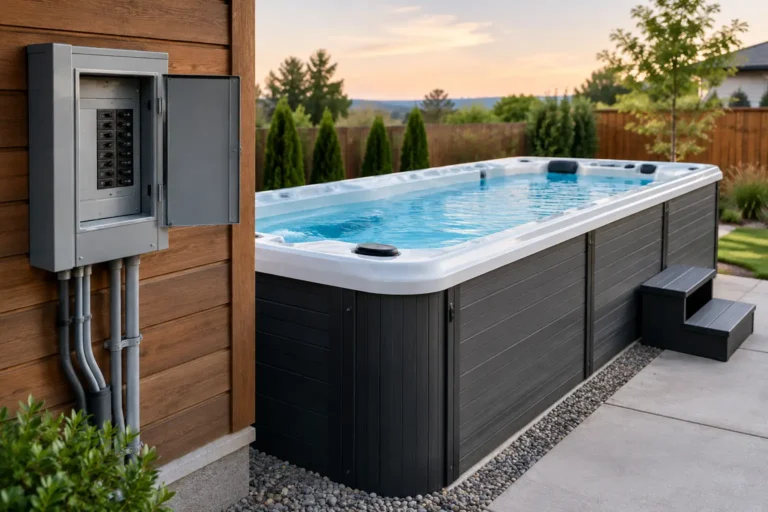
The most common permit is an electrical permit. Most full-size swim spas require a dedicated hardwired circuit, installed by a qualified electrician. The installation generally involves GFCI protection, a properly located disconnect, correctly sized wiring, and bonding or grounding measures that meet applicable electrical codes. This is not an area to treat as a do-it-yourself shortcut. Water and electricity demand careful planning and inspection.
A building permit may be needed when you pour a new reinforced concrete pad, construct a deck around the swim spa, alter an existing patio, or create a structural support system. A filled swim spa is exceptionally heavy. The base must be level and engineered or prepared to support the unit’s operating weight, including water and occupants, without settling or shifting.
Safety-barrier requirements are another major consideration. Depending on how your jurisdiction classifies the unit and the design of your yard, you may need a compliant fence, self-closing and self-latching gates, approved covers, alarms, or other layers of protection. California pool-safety requirements can apply broadly, so it is wise to confirm how your local agency views your specific swim spa rather than assuming a locking cover resolves every requirement.
Additional permits can arise when the project includes gas lines for nearby outdoor features, plumbing connections, drainage modifications, retaining walls, or major hardscape work. If your home is in a hillside area, flood zone, historic district, or community with special zoning restrictions, the review can become more detailed.
What local officials may look at
Permit review is not designed to make a backyard project difficult. It is intended to verify that the installation is safe for your household, guests, neighbors, and future owners of the property.
Expect the city or county to consider the proposed location, distance from property lines, electrical equipment, drainage, access, and safety features. Setback rules can be especially relevant in compact Southern California yards. A swim spa that fits physically may still need to be positioned differently to preserve required clearances or avoid conflicts with easements, utility lines, windows, doors, and equipment.
Drainage deserves more attention than it often receives. A swim spa needs a practical method for periodic draining and service water. That water should not be directed toward a neighboring property, allowed to undermine a patio, or sent where local rules prohibit it. Your installer or contractor can help identify an appropriate drainage approach before the spa is in place.
If the property has a homeowners association, add the HOA approval process to your schedule. HOA approval is separate from a city permit. Your association may regulate equipment visibility, fencing, noise, architectural changes, delivery access, or backyard improvements even when the city does not require a specific permit.
When a permit is more likely
A permit review is particularly likely when the project includes several construction elements rather than a simple placement. Plan to speak with the local building department early if your swim spa project involves:
- A new 240-volt electrical circuit, subpanel, disconnect, or trenching
- A new concrete foundation, elevated deck, retaining wall, or substantial patio modification
- Permanent plumbing, gas work, grading, or drainage changes
- New fencing, gates, or other required pool-safety improvements
- A tight side yard, hillside lot, shared access area, or an HOA-controlled community
Even if only the electrical portion requires a permit, it is helpful to think of the whole project at once. The best swim spa location balances privacy, views, sun exposure, access for service, proximity to the home, and a safe route for delivery. Moving the unit after a pad is poured or wiring is installed can add unnecessary cost and delay.
A smarter way to plan your swim spa installation
Start by selecting the general area of the yard, then confirm the practical details before committing to a final location. Measure the space for the swim spa itself, the cover clearance, steps, service access, and the delivery route. Remember that many units need access to equipment panels for future maintenance. A space that looks ideal from the patio may be frustrating if every service visit requires moving landscaping or furniture.
Next, identify the surface. A level, properly prepared concrete pad is a common choice, but it must be sized for the model and its filled weight. Existing patios are not automatically suitable. Cracks, slopes, uncertain thickness, or unsupported edges may need to be addressed before delivery.
Then involve the right professionals. An experienced swim spa retailer can help you understand product dimensions, electrical expectations, base requirements, and delivery needs. A licensed electrician can assess the home’s available power and map the safest route for the new circuit. If construction is involved, a qualified contractor can prepare plans and coordinate permit work where needed.
Backyards In Style helps Southern California homeowners think through these installation details before delivery, so the focus stays on enjoying the finished space rather than correcting preventable issues later.
Questions to ask your city before you buy
A brief call or visit to your city building and safety department can eliminate uncertainty. Have the swim spa’s specifications ready, including dimensions, water capacity, electrical requirements, and whether it will be above ground or recessed into a deck.
Ask whether your proposed installation requires electrical, building, plumbing, or grading permits. Confirm how the department classifies a portable swim spa and what safety-barrier rules apply. Ask about required setbacks, inspections, approved drainage methods, and whether plans or site drawings are needed.
It is also useful to ask about timing. Some straightforward electrical permits move quickly, while projects involving structural work, safety barriers, or plan review can take longer. Permit lead time should be part of your purchase and installation schedule, especially if you are planning around a family event, a backyard renovation, or seasonal entertaining.
Avoid the costly assumptions
The most common mistake is assuming that “above ground” means “permit free.” Another is relying on a contractor’s verbal assurance without confirming which permits they will pull, who will schedule inspections, and what is included in the quoted scope of work.
Get clarity in writing when construction is part of the project. Know whether your contractor will submit plans, obtain permits, coordinate inspections, and correct any inspection items. If you are serving as the owner-builder, understand that the responsibility for code compliance and final approvals rests with you.
Do not overlook delivery planning, either. A crane, fence removal, gate modification, or temporary street access may be needed for larger swim spas. These arrangements are different from building permits, but they can affect timing and cost just as much.
A well-planned swim spa is more than a beautiful backyard feature. It is a dependable place to move, recover, relax, and spend time together. Confirm the local requirements early, build the right foundation around the installation, and you can look forward to the first soak or swim with far more confidence.