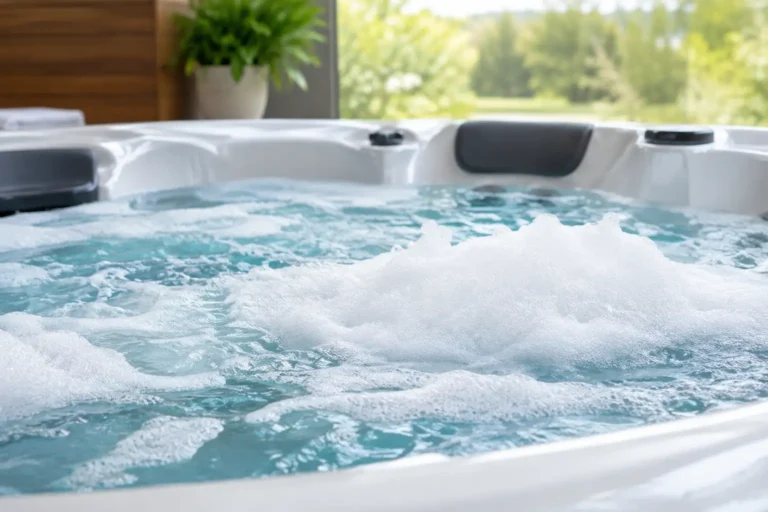
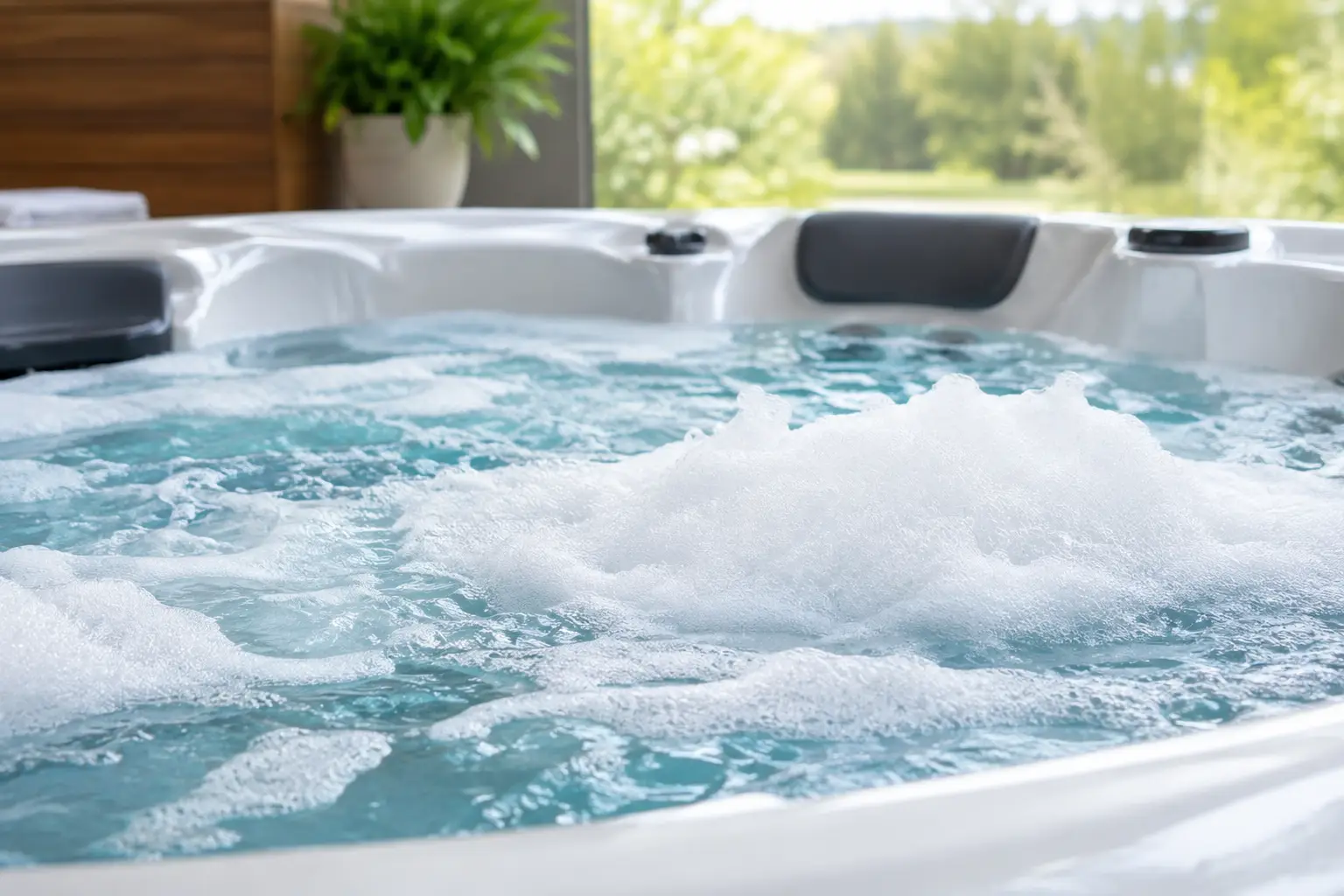
A hot tub should feel like a relaxing reset at the end of the day, not a chemistry experiment. So, why does spa water foam when the jets come on? In most cases, the foam is not caused by the spa itself. It is a sign that products, oils, dissolved particles, or an imbalance in the water are being whipped into tiny bubbles by the jets.
A small amount of bubbles while the jets are running can be perfectly normal, especially after a fresh fill. Foam that builds quickly, hangs around after the jets stop, or returns every time you use the spa deserves attention. The good news is that most foaming issues can be resolved with a few practical water-care steps.
What Spa Foam Is Telling You
Hot tub jets combine water and air under pressure. When the water is clean and properly balanced, the bubbles usually disappear quickly. When contaminants are present, they change the water’s surface tension, allowing the bubbles to cling together and form a layer of white, gray, or slightly tinted foam.
Think of it like shaking a bottle of soapy water. The spa is doing the shaking, while lotions, detergent residue, body oils, and other dissolved materials act like the soap.
Foam is not always a health emergency, but it should not be ignored. The same materials that create foam can make sanitizer less effective and leave the water looking less inviting. For a backyard retreat built around hydrotherapy, family time, and easy entertaining, clear water is part of the experience.
The Most Common Reasons Spa Water Foams
Lotions, soaps, and personal-care products
The most frequent cause is what bathers bring into the water. Body lotion, sunscreen, makeup, deodorant, hair products, and laundry detergent left on swimsuits can all create persistent foam. This is especially common in Southern California, where sunscreen and skin-care products are part of everyday life.
Even a quick rinse before getting in can make a noticeable difference. It is also wise to reserve a few swimsuits for spa use and wash them without fabric softener or heavy detergent. A suit that looks clean may still carry enough residue to affect a small body of warm water.
Body oils and bather waste
Every bather adds perspiration, natural body oils, and trace organic material to the water. Hot water opens pores, and jets circulate everything quickly. A spa used frequently by a family or a group of guests will need more consistent sanitizer and filter care than one used by one or two people a few times a week.
This does not mean you need to avoid enjoying your spa. It simply means water care should match how the spa is actually used. The more activity the water sees, the faster it accumulates dissolved solids that can contribute to foam.
Low sanitizer or an overdue shock treatment
Sanitizer controls bacteria and helps break down organic contaminants. When chlorine or bromine is too low, those contaminants remain in the water and can feed a foam problem. Water can look mostly clear and still have an increased organic load.
A properly selected spa shock treatment can help oxidize the buildup that routine sanitizer has not fully handled. Follow the directions for your specific water-care system and allow the appropriate wait time before using the spa again. Adding more products without testing first can create a different imbalance, so start with the numbers rather than guessing.
Dirty or overloaded filters
Your filters capture oils, debris, and suspended particles before they can circulate back into the spa. Once they become loaded with contaminants, they cannot do their job effectively. In some cases, oils trapped in a filter can be reintroduced into the water when the jets run.
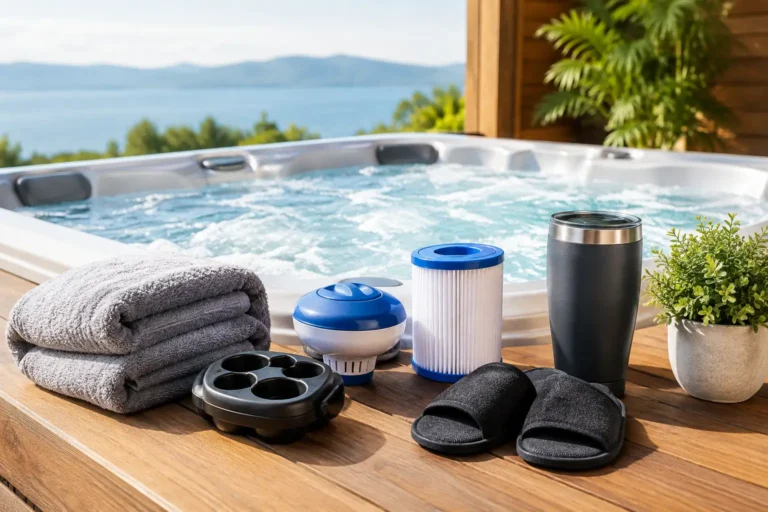
Rinse filters regularly, clean them with an appropriate filter cleaner on schedule, and replace them when they no longer come clean or show signs of wear. A clean filter supports clearer water, better jet performance, and more reliable circulation.
Water that is old or overtreated
Every chemical addition, bather load, and dissolved contaminant increases total dissolved solids in the spa. Over time, the water can become difficult to balance and more likely to foam, even when test results appear close to normal.
This is why draining and refilling are a normal part of hot tub ownership, not a sign that something has gone wrong. Many spas benefit from a fresh fill about every three to four months, though the right schedule depends on spa size, use, and water-care habits. A heavily used spa may need new water sooner.
Water balance issues
Foam is usually more closely connected to contaminants than to pH alone, but water balance still matters. pH that is too high or too low can affect comfort, sanitizer performance, and equipment. Calcium hardness also plays a role. Water that is very soft can foam more readily, while water that is too hard can create scale on heaters and plumbing.
Southern California water conditions vary by neighborhood, so it is better to test and adjust based on your spa’s needs than to rely on a one-size-fits-all chemical routine. Your spa manufacturer and water-care products may also have specific recommended ranges.
How to Clear Foam From Your Hot Tub
Start by running the jets and looking at what happens. If the bubbles disappear within a few seconds after the jets stop, you may simply be seeing normal aeration. If a thick layer remains on the surface, begin with testing.
Check sanitizer, pH, total alkalinity, and calcium hardness with a reliable test strip or liquid test kit. Correct any significant imbalance according to your water-care system. Then shock the water if testing and recent use suggest an organic buildup. Leave the cover open during treatment when product instructions call for it, since gases need a place to escape.
Next, remove and clean the filters. If the foam is minor and the water is otherwise clear, these steps may solve the issue within a circulation cycle or two. Skim away visible foam with a clean spa net rather than pushing it back into the water.
If foam continues to return after balancing, shocking, and cleaning the filters, a drain, surface wipe-down, and refill are often the best solution. This is particularly true when the water has been in the spa for several months, looks dull, has an odor, or has required repeated chemical corrections.
A foam reducer can offer a temporary cosmetic fix before guests arrive, but it is not a substitute for cleaning the water. Defoamers work by collapsing the bubbles, not by removing the oils or dissolved contaminants that created them. Use them sparingly, and focus on the underlying cause.
Preventing Foam Before It Starts
The simplest habit is also one of the most effective: rinse off before soaking. A quick shower removes sunscreen, lotion, and sweat before they enter the water. Ask guests to do the same, especially after a day at the pool, beach, or gym.
Keep up with weekly water testing, maintain your sanitizer level, and rinse filters routinely. After a busy weekend, a long soak with several people, or a spa party, test the water and consider an oxidation treatment rather than waiting for cloudiness or foam to appear.
It also helps to keep drinks and food away from the water. Spills happen, and even small amounts of sugary beverages or oils can affect a spa’s water balance. A nearby patio table or outdoor kitchen area keeps the spa comfortable for entertaining without turning the water into part of the cleanup.
When to Call for Spa Water-Care Help
Persistent foam can occasionally point to a larger maintenance issue, particularly if it comes with cloudy water, weak circulation, unusual odors, or repeated trouble holding sanitizer. A professional service visit can identify whether the issue is water age, filter condition, circulation, or a chemical routine that needs adjustment.
For homeowners who would rather spend their time relaxing than troubleshooting, Backyards In Style can help with ongoing spa service, water-care guidance, filters, and repair support. Consistent care protects the comfort, performance, and long-term enjoyment of a premium hot tub.
Clear, calm water is one of the small details that makes a backyard spa feel like the retreat it was meant to be. When foam appears, treat it as a useful signal, address the cause, and get back to the soak.