A green cast on spa water can make an otherwise relaxing evening feel like a maintenance emergency. So, what causes spa algae? Usually, it is a combination of low or ineffective sanitizer, poor water circulation, and organic material that gives algae or algae-like growth a place to take hold. The good news is that most cases are preventable – and recoverable – with the right water-care routine.
What Causes Spa Algae in Hot Tubs?
Algae needs three things to grow: moisture, warmth, and nutrients. A hot tub supplies the first two by design. The deciding factor is whether the water has enough active sanitizer and circulation to stop growth before it becomes visible.
Hot tubs can develop green, cloudy, slick, or discolored water quickly because they hold relatively little water at elevated temperatures. Each soak introduces body oils, lotion, cosmetics, perspiration, leaves, pollen, and airborne debris. In Southern California, warm weather and frequent backyard use can add even more demand to a spa’s water-care system.
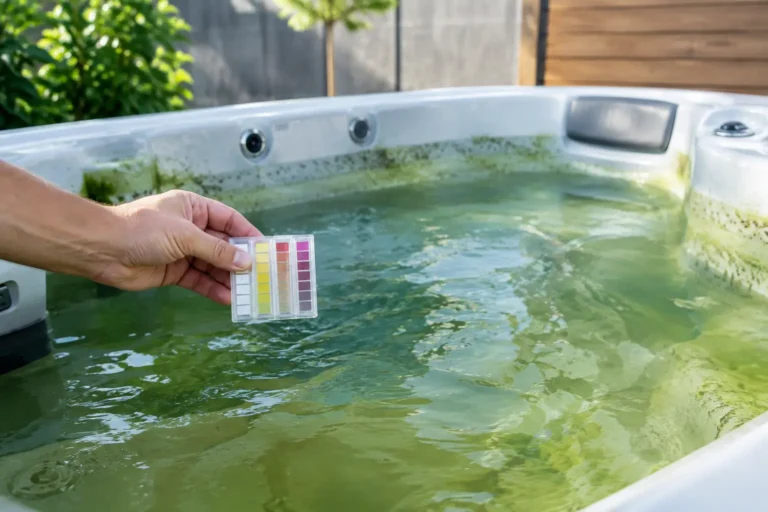
It is also worth knowing that not every green spa is truly algae. Pollen, fine debris, metals in the water, or a buildup of biofilm can create similar symptoms. Algae is often soft, green, and may cling to surfaces or collect near jets. If the water is simply tinted but still clear, or if staining appears on the shell, another water-balance issue may be involved.
Low sanitizer levels
The most common cause is sanitizer that is too low to do its job. Chlorine or bromine needs to remain at the proper level consistently, not just when the spa is first filled or when it looks dirty. When sanitizer is depleted by frequent use, high temperatures, sunlight, or a heavy contaminant load, microscopic organisms can multiply.
A test strip may show that sanitizer was present at some point, but that does not always mean it is active enough right now. High pH, high alkalinity, old water, or excessive contaminants can reduce sanitizer effectiveness. This is why regular testing is more useful than waiting for water to change color.
Inadequate circulation and a dirty filter
Water that does not move cannot be cleaned evenly. Your spa’s circulation system carries water through the filter and exposes contaminants to sanitizer. If a circulation pump is not running as designed, jets are weak, valves are closed, or filtration cycles are too short, stagnant areas can develop around seats, plumbing lines, and the waterline.
A clogged filter creates a similar problem. Filters capture oils, hair, lotion residue, and fine debris, but eventually that material restricts water flow. The sanitizer may be properly dosed, yet it cannot reach and treat the water as effectively when circulation is compromised.
Cleaning the filter on schedule is one of the simplest ways to protect water quality. Rinse it regularly, use an approved filter cleaner as needed, and replace it when the pleats remain discolored, damaged, or difficult to clean. A worn-out filter is not a long-term maintenance shortcut.
Organic debris and heavy spa use
A spa does not need to be visibly dirty to have a high organic load. Sunscreen, hair products, detergent from swimwear, beverages, skin oils, and leaves all use up sanitizer. A busy weekend with family or guests can create more water-care demand than several quiet weeks of ownership.
This does not mean a well-used hot tub is hard to maintain. It means the water should be tested and treated after heavier use rather than following a rigid calendar alone. If several people use the spa, especially after a warm day outdoors, add the appropriate sanitizer or oxidizing treatment according to your spa manufacturer’s guidance.
Water balance problems
Sanitizer and water balance work together. pH that is too high can make chlorine less effective, while low or unstable alkalinity can cause pH to swing. Calcium hardness, total dissolved solids, and the age of the water also affect clarity and sanitation.
Many homeowners focus on chlorine or bromine first, but an imbalanced spa can keep creating problems even after more sanitizer is added. Water that has been in service too long may be saturated with dissolved material from bathers and treatment products. At that point, draining, cleaning, and refilling may be more effective than trying to correct every number in the existing water.
How to Tell Whether It Is Algae
Visible green growth is a strong clue, particularly if it feels slippery on the shell, cover, pillows, or in corners where water movement is limited. Cloudy green water, a musty odor, and recurring discoloration after treatment can also point to algae or a related contamination issue.
Still, do not assume every green tint is algae. Yellow-green pollen can be especially common around outdoor spas, and it may gather at the waterline after windy days. Metals such as copper can tint water green or create staining, while a damaged filter may leave water dull and hazy. Testing your water and inspecting the filter gives you a better starting point than treating every issue the same way.
If you are unsure, bring a water sample to a knowledgeable local spa professional. A full water analysis can reveal whether the problem is sanitizer demand, pH and alkalinity, metals, old water, filtration, or a combination of factors.
How to Clear Algae From a Spa
If you see suspected algae, pause spa use until the water is clean, balanced, and properly sanitized. Trying to soak through the problem can add more contaminants and make recovery take longer.
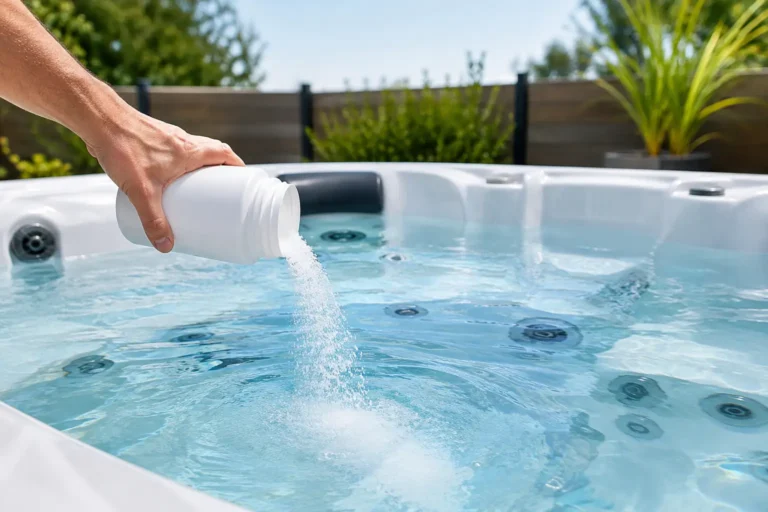
Start by testing sanitizer, pH, and alkalinity. Then treat the water with the appropriate shock or sanitizer dose for your system and spa size. Follow the product directions carefully, and run the pumps with the cover open for the recommended period. Keeping the cover open during a shock treatment helps fumes dissipate and protects the underside of the cover from chemical buildup.
Next, remove and clean the filters. If they are heavily soiled, a deep cleaning may be needed. Wipe down the waterline, shell, headrests, and any visible residue using a spa-safe cleaner. Algae and biofilm can cling to surfaces and plumbing, so treating water alone may not solve a recurring problem.
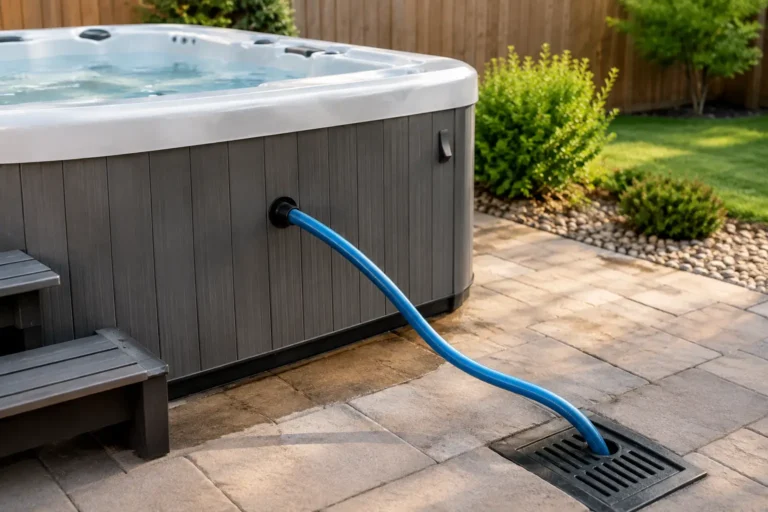
If the water is severely cloudy, has a strong odor, contains visible debris, or turns green again shortly after treatment, draining the spa is often the better choice. Clean the shell thoroughly, address the filters, refill with fresh water, balance the water, and establish the sanitizer level before using the spa again. For persistent contamination, a plumbing-line cleaning product may be appropriate before draining, especially if the spa has gone untreated for an extended period.
Preventing Spa Algae From Coming Back
Prevention is less about adding more chemicals and more about consistent, balanced care. Test the water regularly, particularly after heavy use, storms, heat waves, or time away from home. Keep sanitizer within the range recommended for your specific spa and treatment system, and adjust pH and alkalinity before they drift far out of range.
Run the programmed filtration cycles, make sure jets and circulation are operating normally, and keep the filter clean. A properly fitting cover also protects water from leaves, dust, and sunlight when the spa is not in use. It should be clean underneath as well as on top, since a damp, dirty cover can reintroduce contaminants.
Small habits make a meaningful difference. Encourage bathers to shower before soaking, avoid using the spa immediately after applying heavy lotions or sunscreen, and keep food and drinks away from the water. If your household enjoys frequent spa time, plan for more frequent testing and water adjustments. The right schedule depends on spa size, bather load, weather exposure, and whether you use chlorine, bromine, saltwater, or another approved sanitation system.
When Professional Spa Service Makes Sense
Some algae problems are straightforward, but repeated green water is a signal to look beyond a one-time chemical adjustment. A service professional can inspect circulation, filtration, ozone or auxiliary sanitation equipment, plumbing condition, and water balance. This is particularly helpful if your spa loses sanitizer unusually fast, has weak flow, develops recurring odors, or has not had a water change in a long time.
Backyards In Style can help Southern California spa owners make sense of water-care issues and keep their investment ready for the comfort, recovery, and family time it was meant to provide. A clear, inviting spa is easier to maintain when small concerns are handled before they become a full drain-and-refill weekend.
When your water looks off, trust the early signs. Test it, inspect the filter, restore circulation, and treat the cause rather than covering up the color. That steady approach keeps your backyard retreat ready for the next quiet soak or impromptu gathering.