A swim spa can be your place to exercise before work, soothe tired muscles after a long day, or bring the family together on the weekend. None of that feels relaxing if the water looks dull, smells off, or leaves your skin uncomfortable. Learning how to sanitize a swim spa is less about adding chemicals at random and more about keeping a few water-care basics in balance.
Because a swim spa holds more water than a typical hot tub and is often used for both fitness and relaxation, it needs a consistent routine. The good news is that clear, comfortable water is very manageable when you test often, use the right sanitizer, and give the circulation system the attention it deserves.
Start With the Right Sanitizer for Your Swim Spa
Your sanitizer is the product that controls bacteria and other contaminants brought into the water by swimmers, wind, sunscreen, body oils, and everyday use. Most swim spa owners use either chlorine or bromine. Both can work well, but the best choice depends on your spa model, water temperature, how often it is used, and your personal preference.
Chlorine is widely available, effective, and familiar to many pool owners. It works quickly and is commonly used in swim spas, especially those with larger water volumes. Bromine is often favored for warm-water applications because it remains effective at higher temperatures and can have a less noticeable odor for some users. Follow your manufacturer’s guidance before changing sanitizer systems, since certain products and accessories may have specific recommendations.
Whichever option you choose, consistency matters more than constantly switching products. Use spa-grade sanitizer products, not a one-size-fits-all pool chemical routine. A swim spa’s warm water, compact vessel, and powerful circulation create a different environment than a swimming pool.
Test the Water Before Adding Chemicals
The fastest way to create water problems is to add chemicals based on appearance alone. Water can look clear while sanitizer levels are too low, pH is out of range, or dissolved contaminants are building up.
Test the water at least two to three times a week under normal use. If your swim spa is getting frequent workouts, family use, or guests, test it more often – ideally before and after heavier use. Test strips are convenient for routine checks, while a quality liquid test kit can offer more detailed readings.
Focus first on sanitizer, pH, and total alkalinity. Many swim spa owners aim for a pH range of about 7.2 to 7.8 and total alkalinity around 80 to 120 parts per million. Your sanitizer target will vary by product and system, so use the dosage directions on your chosen sanitizer and the guidelines in your owner’s manual.
Adjust total alkalinity before fine-tuning pH. Alkalinity helps stabilize pH, so trying to correct pH first can turn into a frustrating cycle of additions and retesting. Make one adjustment at a time, allow the water to circulate, then test again.
Why pH Balance Changes Sanitizer Performance
When pH is too high, sanitizer becomes less effective. You may notice cloudy water, scale formation, or a feeling that you need to use more sanitizer to get the same result. When pH is too low, the water can become corrosive and may irritate eyes and skin or place unnecessary stress on equipment.
Balanced water protects more than the people using the swim spa. It also helps preserve heaters, pumps, jets, surfaces, and covers – all key parts of a long-term backyard wellness investment.
Add Sanitizer With Circulation Running
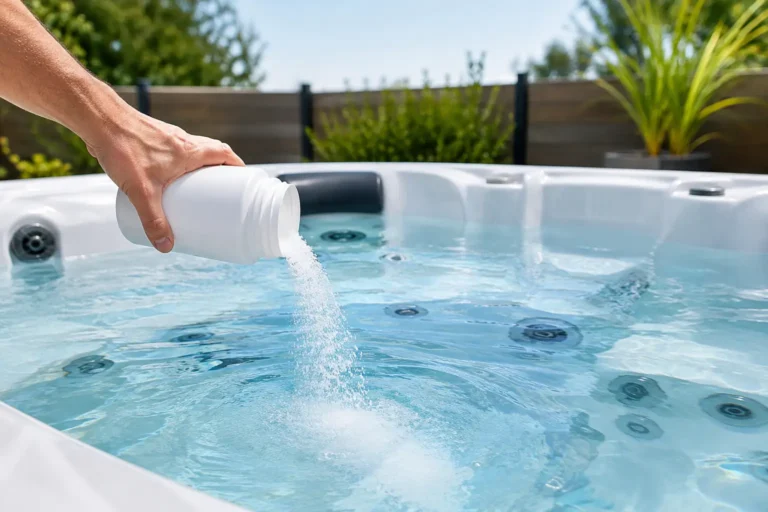
When it is time to add sanitizer, turn on the circulation system or jets according to your manufacturer’s instructions. This helps distribute the product throughout the water instead of allowing a concentrated dose to sit in one area.
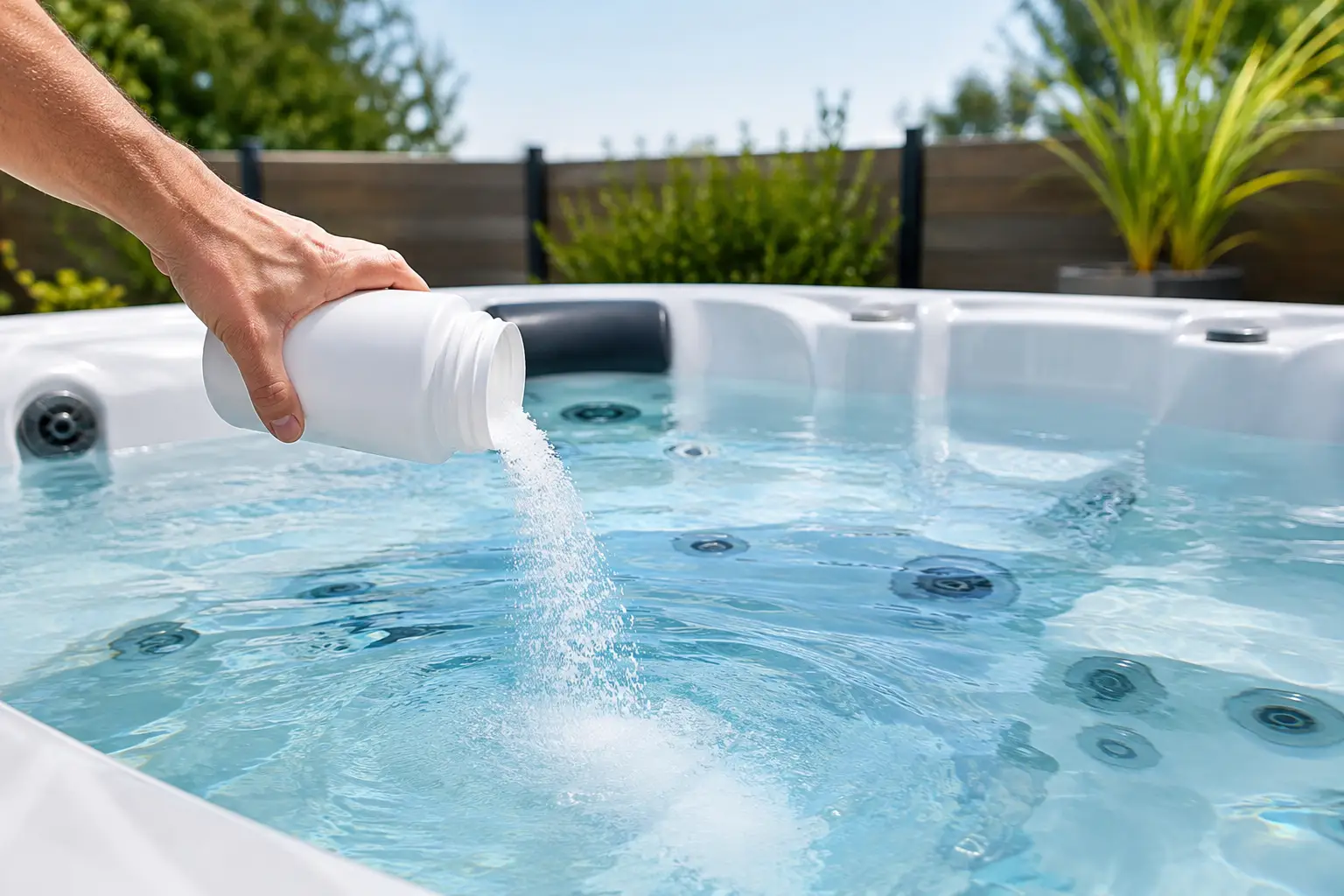
Measure products carefully. More sanitizer is not automatically better. Overdosing can create strong odors, uncomfortable water, and unnecessary chemical expense. Add the recommended amount, keep the cover open for a short period when directed on the product label, and let the water circulate before retesting.
It is also wise to keep different chemicals separate. Never mix products together in a container, and never add water to chemicals. Read each label, use clean dry measuring tools, and store products in a cool, dry place away from children, pets, and direct Southern California sun.
Shock the Water to Clear What Daily Sanitizer Misses
Regular sanitizer handles day-to-day contamination, but it can become less effective as organic material accumulates. Perspiration, lotion, deodorant, cosmetics, and oils can combine with sanitizer and contribute to dull water or persistent odor. Shocking the water oxidizes that buildup and helps restore water clarity.
For many households, a weekly shock treatment is a practical starting point. You may need to shock more often after a swim workout, a busy weekend with guests, a windstorm that blows debris into the water, or any period of unusually heavy use.
Use a shock product compatible with your sanitizer program. Some chlorine-based systems use a chlorine shock, while others may use a non-chlorine oxidizer for routine treatment. The trade-off is simple: non-chlorine shock can be convenient for regular oxidation, but it does not replace the need to maintain an appropriate sanitizer residual.
After shocking, keep the cover open as directed by the product label so chemical vapors can dissipate. Wait until sanitizer returns to a safe range before getting back in the water.
Keep Filters and Circulation Working for You
Sanitizer cannot do all the work alone. Your filters capture the fine debris and contaminants that make water look tired, while circulation helps sanitizer reach every part of the swim spa.
Rinse filters regularly, especially when the swim spa sees frequent use. A gentle rinse can remove loose debris, but periodic deep cleaning with an approved filter cleaner is necessary to break down oils and residue trapped in the filter media. Avoid using household detergents, which can leave behind suds and create foaming problems later.
Inspect your filters for tears, flattened pleats, or discoloration that does not improve after cleaning. Filters have a service life, and replacing a worn filter on time can make water care easier while helping maintain proper flow through the system.
Run the filtration cycle according to your swim spa’s recommendations. Larger swim spas, active families, and warm weather may call for longer circulation times. If water repeatedly turns cloudy despite proper chemistry, restricted water flow or a dirty filter may be part of the problem.
Build a Routine Around How You Actually Use the Spa
A simple schedule prevents the small issues from becoming a weekend project. Two or three quick tests each week, a weekly shock treatment, regular filter rinsing, and a monthly equipment check are usually easier than trying to rescue neglected water.
It also helps to set expectations with everyone who uses the swim spa. Encourage swimmers to rinse off before getting in, especially after applying sunscreen or exercising. Keep food and glass away from the water, and use a cover when the spa is not in use. These habits reduce the contaminant load before chemicals ever need to address it.
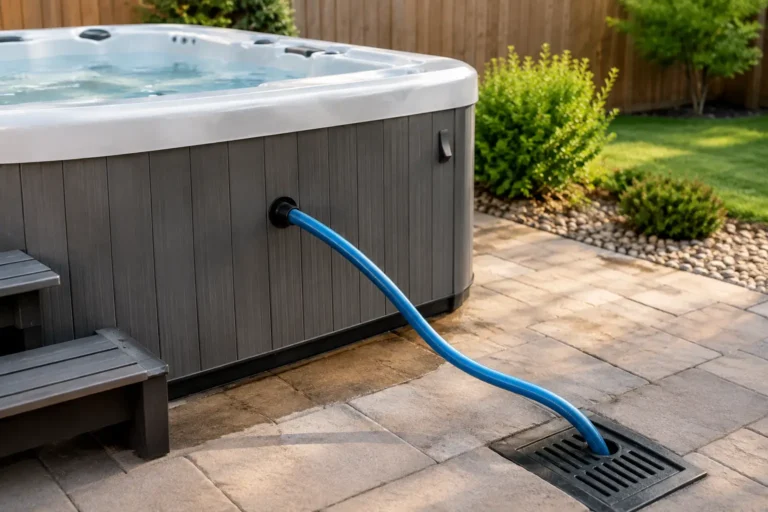
Your drain-and-refill schedule depends on usage, water quality, and your specific swim spa. Many owners plan for a fresh fill every three to four months, while heavy use may require more frequent draining. If you cannot maintain clear, balanced water without repeated chemical corrections, a drain, surface cleaning, filter service, and refill is often the more efficient answer.
When to Ask for Professional Water Care Help
Persistent foam, recurring cloudiness, staining, unusual odors, or sanitizer that disappears quickly can signal more than a simple dosing issue. In some cases, high mineral content, old water, biofilm, failing equipment, or a circulation problem needs closer attention.
That is where local service support can save time and protect your investment. Backyards In Style can help Southern California swim spa owners make sense of water-care concerns, maintenance needs, and the right products for their equipment.
Clean swim spa water should support the reason you bought your spa in the first place: a more restorative, active, and enjoyable backyard. Give it a steady routine, make small corrections early, and your next swim or soak can feel as inviting as it should.