A hot tub should leave you feeling restored, not wondering why the water looks dull, smells off, or no longer feels as comfortable as it did a few months ago. If you have searched “how to drain hot tub,” the good news is that this essential maintenance task is straightforward when you plan for safe drainage, a thorough cleaning, and a proper refill.
Most homeowners should drain and refill a spa every three to four months. A frequently used hot tub, especially one enjoyed by a busy family or used for entertaining, may need fresh water sooner. Regular draining helps remove the dissolved minerals, body oils, lotions, and sanitizer byproducts that build up over time and make water chemistry harder to manage.
When Is It Time to Drain Your Hot Tub?
Water can look clear while still carrying a high concentration of dissolved solids. As those solids accumulate, sanitizer becomes less effective and balancing the water can start to feel like a cycle of adding chemicals without getting the results you expect.
Cloudy water, persistent foam, an unusual odor, scale at the waterline, or water that resists balancing are all practical signs that it is time for a drain and refill. For Southern California spa owners, warm weather and regular year-round use can increase evaporation and concentrate minerals, making consistent water care especially valuable.
It is also wise to schedule a drain before a long period of heavy use, such as hosting guests or settling into a new wellness routine. Fresh, balanced water protects the equipment and makes every soak more inviting.
How to Drain a Hot Tub: Prepare First
Choose a day when you have enough time to complete the job from start to finish. Draining the spa itself can be quick, but cleaning, refilling, heating, and balancing the water takes longer. Depending on your spa size and hose pressure, a refill may take one to several hours, followed by additional heating time.
Start by deciding where the water will go. Never send spa water into a storm drain, street, or neighboring property. Storm drains generally flow directly to local waterways, and even treated hot tub water may not be appropriate there. Follow your local Anaheim or municipal requirements and use a suitable sanitary sewer cleanout when permitted. In some cases, water may be discharged onto your own landscape only after sanitizer levels have dissipated and only if it will not affect plants, pool toward your home, or run off your property.
Test the water before draining if you are considering landscape discharge. Chlorine or bromine should be at or near zero, and the water should not contain recently added chemicals. When in doubt, use the sanitary sewer method or consult a qualified spa service professional.
Before opening the drain, turn off power to the hot tub at the dedicated GFCI breaker. Do not rely on the topside control panel alone. Turning off power protects the equipment from running without water and gives you a safer workspace around the spa.
Remove the cover and set it aside carefully. If it is heavy or waterlogged, having a second person help can prevent damage to the cover and its lifter. Take out the filters now as well, since this is an ideal time to rinse or deep-clean them according to the manufacturer’s instructions.
Use the Built-In Drain or a Submersible Pump
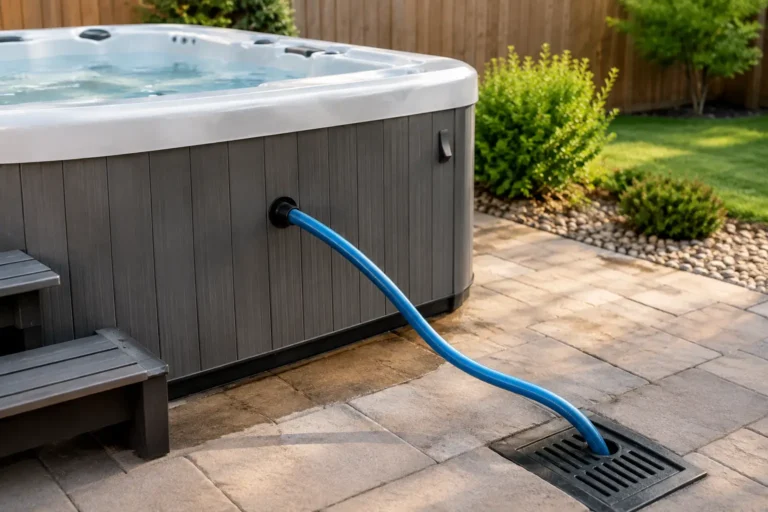
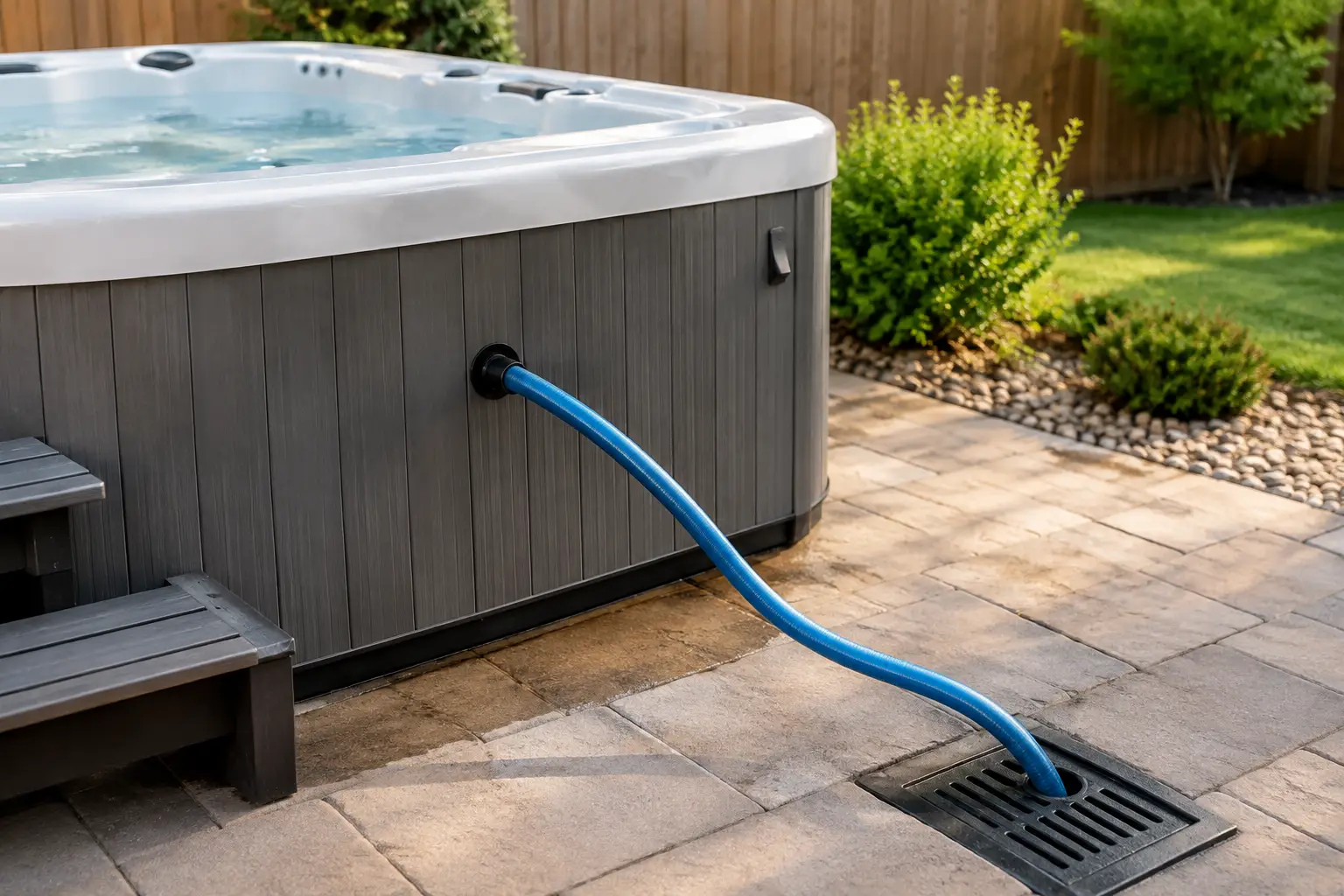
Most hot tubs have a built-in drain fitting near the base of the cabinet. The exact design varies by manufacturer, so check your owner’s manual if the fitting is not obvious. Attach a standard garden hose to the drain, route the hose to your approved drainage point, and make sure it will stay in place before opening the valve.
A gravity drain is simple and gentle on the spa, but it can take several hours. This method works well when the drainage location is downhill or relatively level and you are not in a rush.
A submersible pump is often the faster option for larger spas and swim spas. Place the pump in the footwell, connect its discharge hose to the approved drainage location, and follow the pump manufacturer’s operating instructions. Keep the electrical connection dry and use a properly protected outlet. Do not leave an operating pump unattended, and do not let it run dry once the water level becomes low.
Whichever method you choose, expect a small amount of water to remain in the seats, footwell, and plumbing. Use a wet/dry vacuum, sponge, or towels to remove the remaining water from the shell. Avoid using household tools that could scratch acrylic surfaces.
Clean the Shell Without Creating More Work Later
Draining your hot tub is the best opportunity to clean areas you cannot easily reach when it is full. Wipe the shell with a spa-approved surface cleaner and a soft cloth. Focus on the waterline, headrests, seats, jet faces, and the footwell, where oils and residue commonly collect.
Avoid abrasive pads, household glass cleaners, and products that leave behind soaps or fragrances. Residue from the wrong cleaner can create foam once the spa is refilled. If you notice a stubborn ring at the waterline, use a product intended specifically for acrylic spa surfaces rather than scrubbing aggressively.
Inspect the jets, pillows, cover, and cabinet while the tub is empty. Look for loose fittings, cracked headrests, worn cover straps, or signs of moisture around the equipment area. Catching small concerns early can help preserve the long-term comfort and performance of a premium spa.
If your water has repeatedly turned cloudy or developed an odor shortly after refilling, consider using a plumbing purge product before your next drain. These products are designed to loosen biofilm and buildup inside the lines. They can be helpful, but they should be used exactly as directed and followed by a complete drain, rinse, and refill.
Refill Your Spa the Right Way
Close the drain valve securely and disconnect the hose before refilling. A partially open drain is an easy detail to miss and can waste a surprising amount of water.
Place the garden hose into the filter compartment or filter standpipe, if your model allows it. Filling through this area helps push water through the plumbing and can reduce the chance of an air lock. An air lock occurs when trapped air prevents a pump from moving water normally after the refill.
Fill the hot tub to the level specified in your owner’s manual, usually above the highest jets. Do not turn the breaker back on until the spa is properly filled. Once power is restored, confirm that water is circulating through the jets and that no error message appears on the control panel.
If a pump hums but water does not move, turn the power back off and consult your manual or a spa technician. Continuing to run a pump with an air lock can damage it. Some models have a simple priming procedure, while others need professional attention.
Balance Fresh Water Before Your First Soak
Fresh water is a clean starting point, but it still needs to be balanced for comfort and equipment protection. Test and adjust total alkalinity first, then pH, then sanitizer. This order makes the process more predictable because alkalinity helps stabilize pH.
Your preferred sanitation system, whether chlorine, bromine, saltwater, or another manufacturer-approved approach, will determine the products and levels you use. Follow the recommendations for your specific spa and avoid adding multiple chemicals at once. Give the water time to circulate between adjustments, then retest.
It may take a day or two for new water to settle into an easy routine. During that period, keep the cover on while the spa heats, check the water once more before soaking, and leave the cover open briefly after adding chemicals so vapors can dissipate. Once balanced, your hot tub is ready to return to what it does best: creating a comfortable place to recover, reconnect, and enjoy your backyard.
A planned drain-and-refill routine is not just another chore on the calendar. It is part of protecting the investment that brings everyday wellness and relaxed time at home. If drainage, water chemistry, or a pump issue feels uncertain, the service team at Backyards In Style can help you keep your spa ready for the next restorative soak.