A hot tub should feel like the easiest part of your backyard – warm water, quiet jets, and a place to recover after a long day. The right spa water chemicals make that possible. Without a consistent routine, even a premium spa can develop cloudy water, unpleasant odors, skin irritation, or costly equipment issues that take time away from the relaxation you invested in.
For Southern California homeowners, water care is also affected by frequent use, warm weather, sun exposure, and the dust that naturally finds its way into an outdoor spa. The good news is that clean, balanced water does not require a complicated chemistry project. It requires the right products, regular testing, and a few habits that protect both your water and your investment.
What Spa Water Chemicals Actually Do
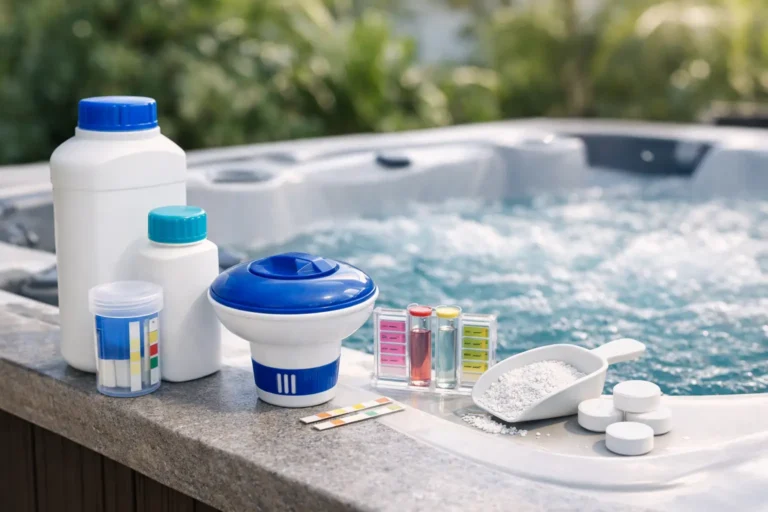
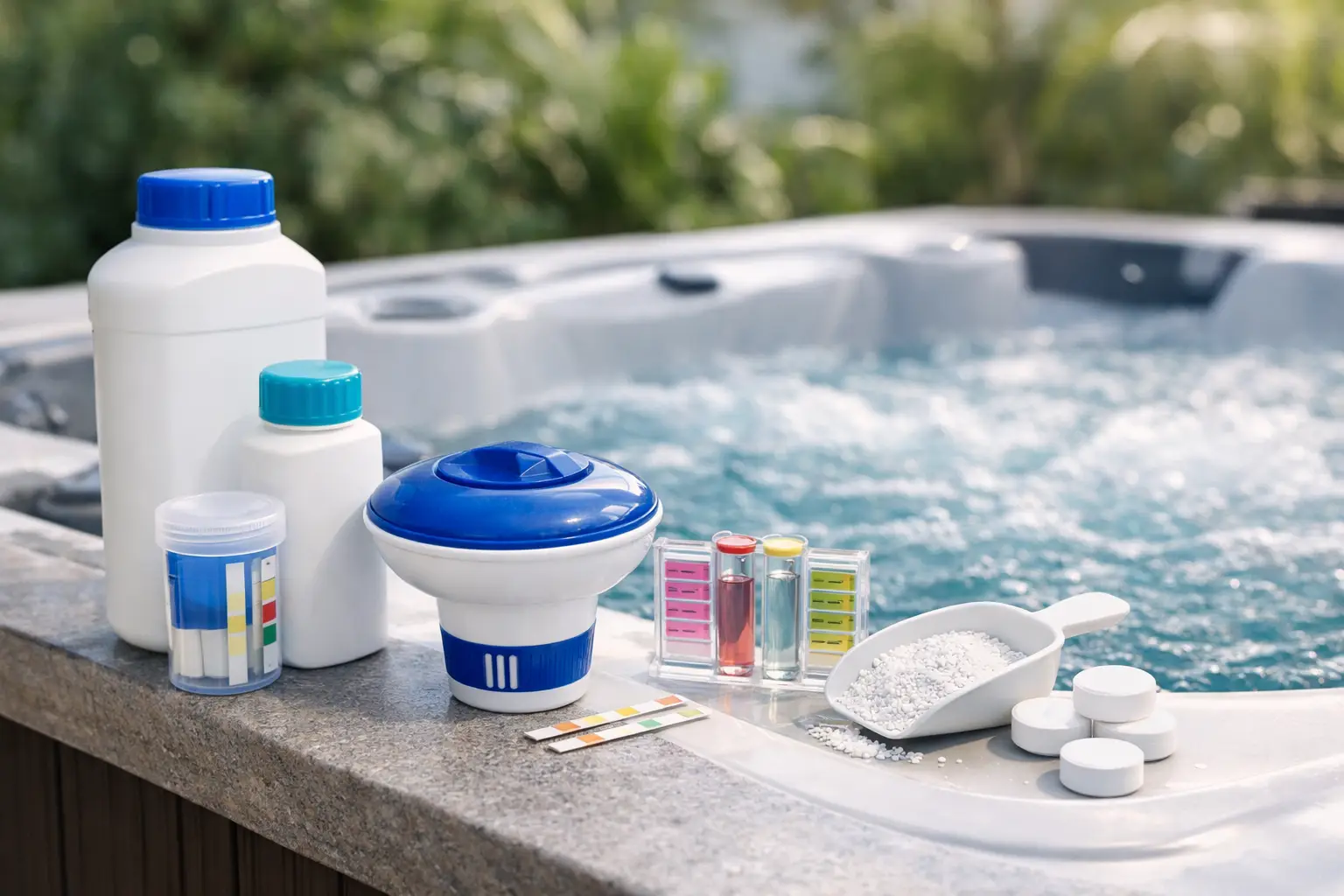
Spa chemicals have different jobs, and they work best as a system. Sanitizer controls bacteria and other contaminants introduced by bathers. pH and alkalinity products keep the water balanced and comfortable. Oxidizer helps clear away the non-living waste that sanitizer has already worked on. Specialty products can address concerns such as calcium buildup, foam, metals, or cloudy water.
The goal is not to add more products than necessary. It is to use the correct product at the correct dose based on reliable test results. Over-treating water can be just as uncomfortable as under-treating it.
Hot tubs need closer attention than swimming pools because the water volume is smaller and the temperature is much higher. A few people enjoying an evening soak can quickly introduce body oils, lotion, sweat, hair products, and other contaminants. Those materials consume sanitizer and can alter the water balance within hours.
The Core Spa Water Chemicals You Need
Most owners can maintain consistently inviting water with a focused collection of products rather than a shelf full of mystery bottles. Your spa manufacturer and water-care professional can help tailor the routine to your model, water source, and preferred sanitizer system.
Sanitizer: chlorine or bromine
Chlorine and bromine are the two common sanitizer choices for hot tubs. Both can maintain safe water when used properly, but they behave differently.
Chlorine acts quickly and is familiar to many first-time spa owners. It can be a good choice for owners who test and adjust water frequently. Dichlor chlorine is often used in hot tubs because it is formulated to dissolve effectively in warm water.
Bromine tends to remain active at high temperatures and provides a steadier sanitation approach, commonly through tablets in a floating dispenser or built-in system. Some owners prefer its consistency, while others prefer chlorine’s faster response. The best choice depends on your spa, your household’s use patterns, and the manufacturer’s recommendations.
Do not mix chlorine and bromine products or use a product without confirming it is compatible with your existing treatment system. If you are changing systems, start with a drained, cleaned, and freshly filled spa.
pH and total alkalinity adjusters
pH affects how comfortable the water feels and how well your sanitizer performs. If pH runs too high, water may look dull or cloudy, scale may form on surfaces and heating components, and sanitizer becomes less effective. If it falls too low, the water can feel irritating and may become corrosive to spa equipment.
Total alkalinity acts as pH’s stabilizer. When alkalinity is out of range, pH may bounce up and down even when you keep correcting it. For that reason, adjust total alkalinity before making major pH adjustments. Make small changes, circulate the water, then retest before adding more.
Shock or oxidizer
Shock treatment oxidizes contaminants such as sweat, oils, and cosmetics that sanitizer alone does not fully remove. This helps restore clear water and reduces the compounds that can create a stale or overly chemical smell.
A non-chlorine shock is often a convenient weekly option for regularly used spas. Chlorine shock may be appropriate in certain situations, especially after unusually heavy use or when your water-care plan calls for it. Follow product directions carefully, leave the cover open while the spa circulates, and wait until water readings are safe before soaking.
Calcium, metal, and water clarifying products
These products are not always needed with every fill, but they can solve specific water issues. Southern California water conditions vary by neighborhood, and hard water is common in many areas. High calcium hardness can create scale on heaters, jets, and shell surfaces. Low calcium can contribute to corrosive water.
A stain-and-scale product can help manage mineral deposits. Metal control products may be useful if fresh fill water contains iron or copper. Clarifiers gather tiny suspended particles so the filter can capture them, but they are not a substitute for sanitizer, balanced water, or a clean filter. Use them only when testing and water appearance indicate a need.
A Simple Testing Schedule for Your Hot Tub
Testing is the habit that turns water care from guesswork into routine. Test strips are fast and convenient for frequent checks, while a liquid test kit can offer more detailed readings. Whichever method you choose, store it away from direct sun and moisture, and replace it before it expires.
For an actively used spa, test sanitizer and pH at least two to three times each week. Check more often during a busy weekend, after entertaining guests, after a windy day, or when temperatures are especially warm. Test total alkalinity weekly and calcium hardness during a fresh fill and periodically afterward.
A practical weekly rhythm looks like this:
- Test sanitizer, pH, and alkalinity.
- Adjust alkalinity first, then pH, then sanitizer as needed.
- Add an appropriate shock treatment after use or once per week.
- Rinse the filter and inspect the water for foam, odor, or cloudiness.
After adding chemicals, run the jets with the cover open for the amount of time directed on the label. This helps products circulate and allows chemical vapors to dissipate rather than collecting beneath the cover.
How to Add Chemicals Safely
Read the label every time, even for a product you have used before. Dosing can change based on product concentration, spa size, and current water readings. Add products one at a time, never pre-mix chemicals, and keep containers tightly closed in a cool, dry location away from children and pets.
For granular products, broadcast the measured dose across the water surface while circulation is running. Avoid dropping a pile of chemical directly onto one area of the spa shell. Give each product time to circulate before retesting or adding the next one.
A common mistake is trying to correct every number at once. If your alkalinity, pH, and sanitizer are all off, work in sequence and use patience. Water that is allowed to circulate between adjustments is easier to balance than water treated with several large doses in a row.
When Clear Water Still Is Not Healthy Water
Water can look clean while sanitizer is too low, which is why testing matters. The opposite can also happen: water may test within range but still look cloudy because the filter is dirty, circulation time is too short, or the water contains a high load of oils and fine particles.
Persistent foam often points to soap residue, lotions, cosmetics, or dissolved solids. Ask bathers to rinse off before soaking, use spa-safe products sparingly, and clean filters on schedule. If foam returns immediately after treatment, it may be time to drain, clean, and refill the spa.
Strong odors are another signal worth understanding. A sharp chemical odor does not necessarily mean there is too much sanitizer. Often, it means sanitizer has combined with contaminants and needs support from shock treatment and fresh air. Do not cover the spa tightly after a heavy chemical treatment.
Protecting Your Spa Between Water Changes
Even perfectly balanced water eventually reaches the end of its useful life. As dissolved solids build up, the water becomes harder to manage and less comfortable. Many hot tub owners should plan to drain and refill every three to four months, though a lightly used spa may go longer and a heavily used family spa may need attention sooner.
Before refilling, clean the shell with a spa-approved surface cleaner and rinse or deep-clean the filters according to their condition. Starting with clean filters and fresh water makes the first few weeks of care much easier. It also gives you a clean baseline for testing calcium, alkalinity, pH, and sanitizer.
Your cover matters, too. A properly fitted cover keeps out leaves, dust, and debris while reducing evaporation and heat loss. It cannot replace sanitizer, but it lowers the amount of work your water-care system needs to do.
A dependable routine keeps your spa ready for the moments that matter – a quiet soak after work, a family evening outside, or a weekend spent reconnecting with friends. If your water keeps drifting out of balance or you would rather spend your time soaking than troubleshooting, Backyards In Style can help you build a care plan that fits your spa and your backyard lifestyle.