A quiet 20 minutes of heat can change the rhythm of an entire evening. Instead of ending a long workday on the couch, you can step into a warm, private space that helps your body relax and gives your mind a chance to slow down. For Southern California homeowners building more intentional outdoor retreats, home saunas are a natural addition alongside a hot tub, cold plunge, or comfortable patio setting.
A sauna is not just another backyard feature. The right model can become part of a regular wellness routine, a post-workout recovery space, or a peaceful way to reconnect with your partner at the end of the day. Choosing one well means looking beyond appearance to consider heat style, placement, power, capacity, and the kind of ownership experience you want.
Why Home Saunas Are Worth Considering
Sauna bathing has a simple appeal: warmth, stillness, and time away from screens and daily demands. Many owners use a sauna to loosen up after exercise, ease the feeling of tired muscles, or create a consistent transition between a busy day and a restful night. While a sauna is not a replacement for medical care, it can be a rewarding part of a wellness-focused lifestyle when used responsibly.
For families and professionals who have invested in their homes, the convenience matters. There is no drive across town, no membership schedule, and no need to share the experience with strangers. Your sauna is ready when you are, whether that means a short morning session before the house wakes up or a longer evening ritual after dinner.
It also complements the way many Southern California backyards are used. A covered patio, pool area, garden corner, or dedicated wellness zone can support year-round enjoyment. Add thoughtful lighting, nearby seating, and easy access to a shower or changing area, and the sauna feels like a purposeful part of the property rather than an afterthought.
Choosing Between Indoor and Outdoor Home Saunas
The first major decision is location. Indoor and outdoor home saunas can both deliver an excellent experience, but they call for different planning.
An indoor sauna works well when you have an unused corner of a primary suite, home gym, bathroom, or dedicated wellness room. It offers privacy and easy access in any weather. The trade-off is that ventilation, moisture management, electrical capacity, and available interior space need close attention. Installation may also involve more coordination if walls, flooring, or access points need modification.
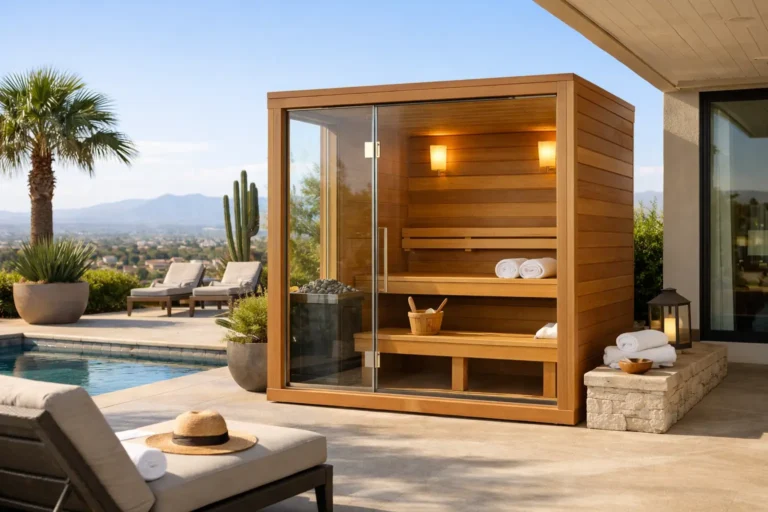
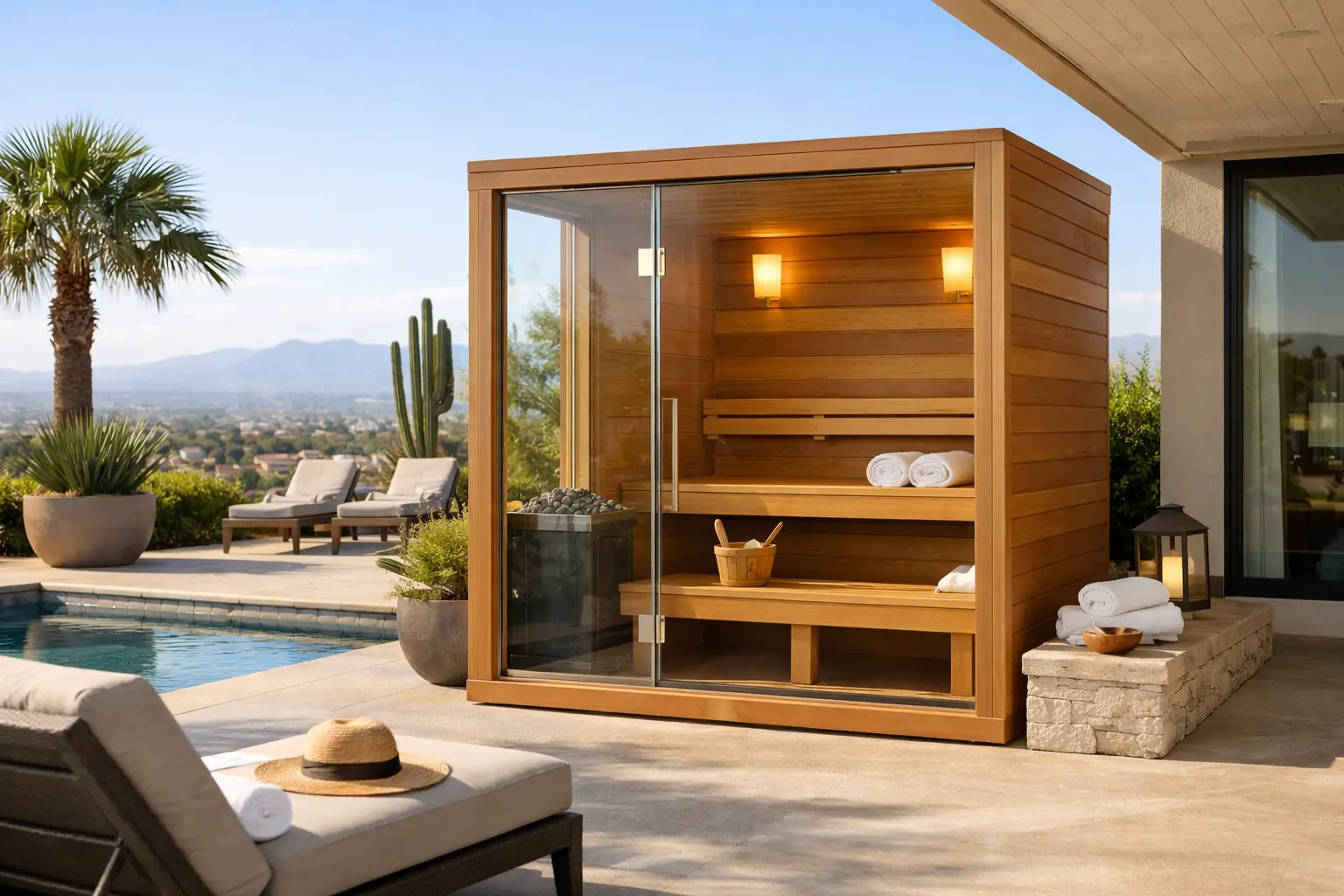
An outdoor sauna can become a standout backyard destination. It gives you more flexibility with layout and lets you create a distinct transition from home life into relaxation. Outdoor models are especially appealing near a pool, hot tub, or cold plunge, where a contrast-therapy routine may fit your goals. However, the unit needs a level, stable foundation, appropriate electrical service, a clear access route for delivery, and a location that feels private without being inconvenient.
In Anaheim and throughout Southern California, sun exposure is another practical consideration. A sauna should be positioned for comfortable use, not placed where late-day sun makes the surrounding area unpleasant. Shade structures, landscape screening, and a clear walking path can make a meaningful difference in daily enjoyment.
Think about the path, not just the footprint
Buyers often measure where the sauna will sit but forget to measure how it will get there. Gates, side yards, steps, tight turns, and overhead obstacles can affect delivery planning. It is also wise to consider the walk from the sauna back into the house, especially for evening use. A well-planned location feels easy to reach, secure, and inviting after dark.
Select the Heat Experience You Will Actually Use
Not all saunas create heat in the same way. The best choice depends on personal preference, how many people will use it, and how you picture it fitting into your routine.
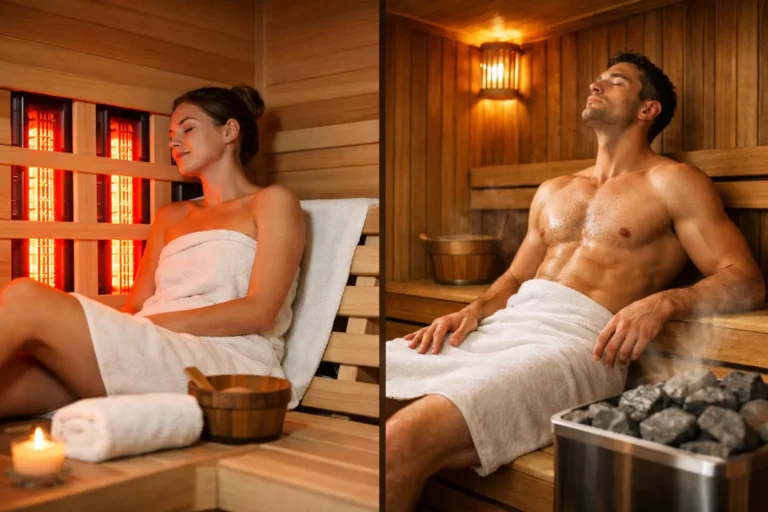
Traditional saunas use a heater to warm the air and stones, creating the classic high-heat sauna environment many people expect. Water may be poured over the stones for a burst of steam, depending on the model and setup. This style suits people who enjoy a more intense, enveloping heat and the ritual of a classic sauna session.
Infrared saunas use infrared heaters to warm the body more directly at generally lower air temperatures. Some owners prefer that gentler-feeling environment and the ability to settle in without the same level of ambient heat. An infrared model may be a good fit for someone new to sauna bathing or for a household where comfort preferences vary.
There is no universal winner. If possible, spend time in both styles before deciding. The sauna you use consistently is more valuable than the one that looks best on paper. Consider whether you prefer a quick, high-heat reset, a longer quiet session, or a shared experience with family members.
Size, Seating, and Everyday Comfort
A compact two-person sauna can be ideal for a couple or a homeowner with limited space. It can provide a personal wellness retreat without overwhelming a patio or indoor room. Larger models make more sense for households that expect to use the sauna together, entertain often, or want enough room to stretch out comfortably.
Capacity labels are helpful, but bench layout matters just as much. Two people may technically fit in a small model, yet the experience will feel very different from sitting comfortably side by side with room to move. Look at interior dimensions, bench depth, backrest design, headroom, and the ability to sit upright or recline.
Also think about how often the sauna will be used by more than one person. If it will primarily be your personal recovery space, buying larger simply for occasional guests may not be necessary. If it will become part of family time or a shared wellness routine, extra room can be a worthwhile long-term investment.
Plan for Power, Foundations, and Installation
A sauna purchase should start with an honest site assessment. Many models require a dedicated electrical circuit, and the exact requirement depends on the heater type, size, and voltage. A qualified electrician should verify your available capacity and complete any required electrical work. This is not a detail to leave until delivery week.
For outdoor installations, the foundation should be level and capable of supporting the sauna’s weight. A properly prepared concrete pad is often a dependable choice, though certain installations may work with another engineered, stable surface. Drainage also matters. Water should move away from the unit rather than pooling around the base after rain or routine cleaning.
Ventilation is equally important for indoor installations and can also improve comfort outdoors. The goal is to support proper airflow and protect the surrounding structure over time. Following the manufacturer’s clearance and installation requirements protects performance, safety, and the life of your investment.
Working with a local specialty dealer can make these details less intimidating. Backyards In Style can help homeowners think through product selection, site readiness, delivery access, and long-term care before a sauna arrives at the property.
Features That Add Value Without Adding Clutter
Premium features should make the experience more comfortable, not distract from it. Interior lighting can create a calmer atmosphere and improve safe entry and exit. Controls should be intuitive enough that starting a session does not feel like operating complicated equipment. Quality wood construction, comfortable backrests, insulated walls, and durable exterior materials are more meaningful than novelty extras.
For outdoor use, weather-resistant construction deserves special attention. Southern California’s climate is generally favorable for backyard wellness products, but sun, temperature swings, wind, and occasional rain still affect finishes and exterior components. A sauna built for its intended location will require less guesswork and deliver a better ownership experience.
Consider practical additions around the sauna as well. A towel hook, storage bench, hydration station, outdoor shower, or lounge chairs nearby can turn a simple session into a more complete ritual. These details do not need to be elaborate. They just need to support the way you want to use the space.
Care and Safe Sauna Habits
Saunas are generally straightforward to maintain, especially when owners build a few simple habits. Use clean towels, wipe down benches as needed, keep the floor free of debris, and follow the manufacturer’s guidance for cleaning wood and exterior surfaces. Avoid harsh products that can damage materials or leave strong odors behind.
For safe use, stay hydrated, limit session length based on your comfort level, and step out if you feel lightheaded, unwell, or overheated. Alcohol and sauna use do not mix. Anyone who is pregnant, has a cardiovascular condition, takes medications that affect heat tolerance, or has another health concern should speak with a healthcare professional first.
The best backyard upgrades earn their place by being used. Choose a sauna that suits your space, your comfort preferences, and the life you want to live at home. When it is thoughtfully planned, a few quiet minutes of warmth can become one of the most dependable parts of your day.