A quiet soak can do more than ease the tension that settles into your shoulders after a long day. A thoughtful hot tub sleep routine may help your body shift from the pace of work, family, and screens toward a more restful night. The key is not staying in the water until you feel sleepy. It is using warmth, timing, and a comfortable backyard setting to create a reliable wind-down ritual.
For Southern California homeowners, that ritual can be available almost every night of the year. Whether your backyard spa is a private place to recover after exercise or the final peaceful moment after dinner with family, a few adjustments can make the experience feel more restorative.
Why a Hot Tub Soak May Help You Sleep
Warm water relaxes muscles, which can be especially welcome after a long commute, a demanding workout, or a day spent standing, lifting, or sitting at a desk. Hydrotherapy jets add targeted comfort for common areas of tension, including the lower back, neck, calves, and feet. When your body feels less physically wound up, it can be easier to settle into bed.
There is also a temperature effect. Soaking in warm water raises your body temperature temporarily. After you get out, your body begins to cool, and that cooling process is associated with the natural changes that occur as bedtime approaches. A warm soak does not guarantee sleep, and it is not a replacement for addressing persistent insomnia with a healthcare professional. Still, for many people, it can be a useful part of a consistent evening routine.
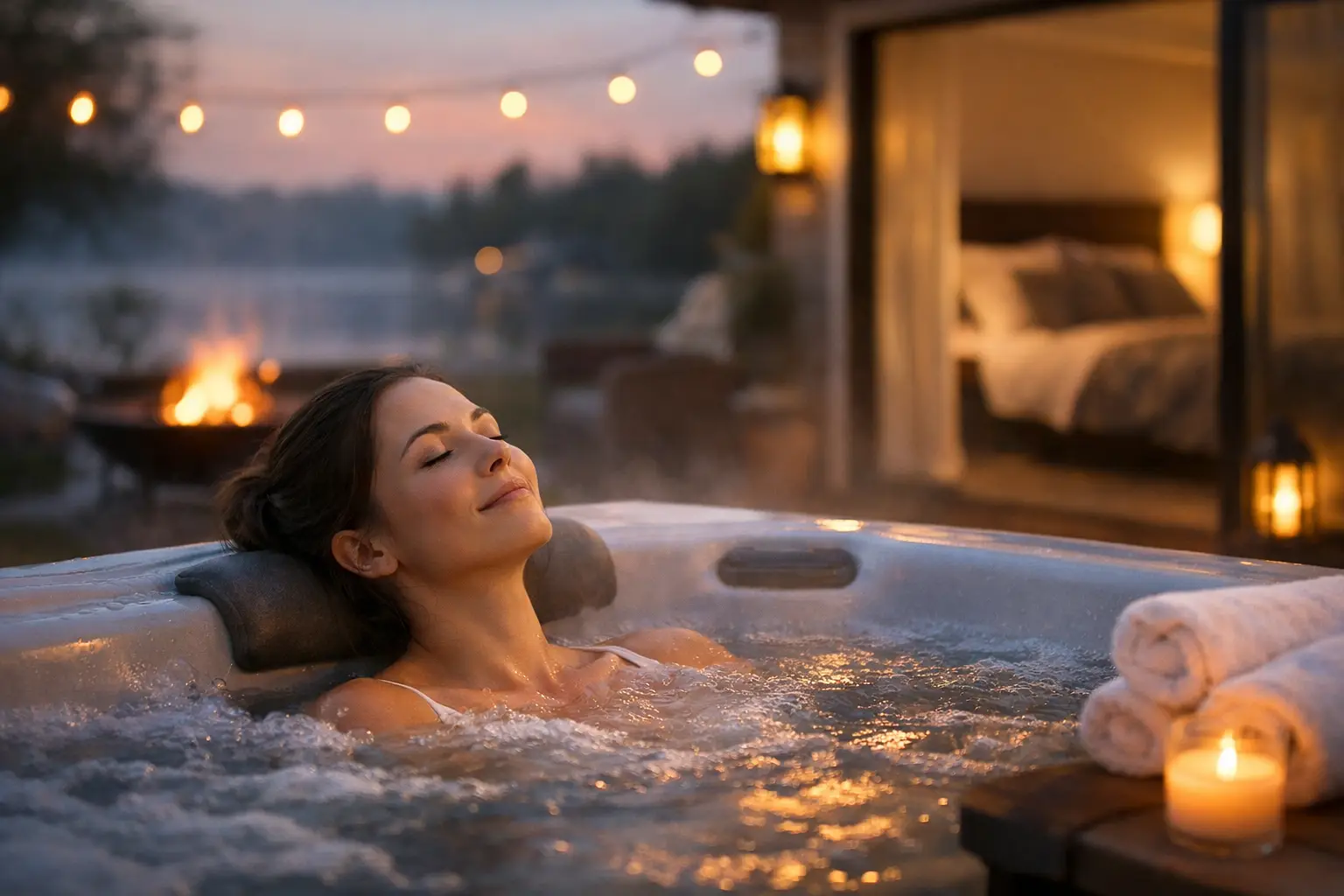
The setting matters, too. Hot tubs create a natural boundary between the busy part of the day and the quieter part that follows. Stepping outside, leaving the phone indoors, and spending 15 or 20 minutes under the evening sky can be a simple cue that the day is ending.
The Best Timing for Hot Tub Sleep
For most adults, the best time to soak is usually about 60 to 90 minutes before getting into bed. This gives you time to dry off, hydrate, and let your body cool comfortably before you turn in. If you soak immediately before bed, you may still feel too warm or energized, particularly if you used powerful jets or had a lively conversation with friends or family.
Start with a shorter session and notice how you feel. A 15- to 20-minute soak is often enough to enjoy the benefits of warm water without becoming overheated. If you are new to hot tub ownership, shorter sessions are a sensible way to learn your comfort level.
Your ideal timing depends on your routine. Someone who comes home from an evening gym session may prefer a soak soon after exercise, then a light snack and quiet reading before bed. A parent may wait until the household is settled and use the spa as a calm reset before the next day. The habit works best when it feels enjoyable and realistic, not like another task on a crowded schedule.
Keep the Temperature Comfortable, Not Extreme
A spa set near 100 to 102 degrees Fahrenheit is comfortable for many evening soaks, though personal preference, weather, health conditions, and time in the water all matter. The maximum recommended water temperature for a hot tub is generally 104 degrees Fahrenheit. For a bedtime routine, hotter is not necessarily better.
If you get out feeling flushed, lightheaded, unusually tired, or unable to cool down, reduce the temperature or shorten the next soak. Outdoor temperatures can affect your experience as well. A mild Anaheim evening may call for a lower setting than a cooler winter night.
People who are pregnant, have cardiovascular concerns, take medications that affect blood pressure or alertness, or have other health conditions should ask their physician about safe hot tub use. Children should always be supervised and should not follow an adult-style bedtime soak routine.
Build a Bedtime Routine Around the Soak
The most effective sleep routines are repeatable. Rather than treating the spa as a once-in-a-while escape, consider making it one part of a gradual transition into rest.
Begin by lowering stimulation before you enter the water. Finish work emails, put away the laptop, and avoid bringing bright screens poolside. If your spa has lighting, choose a soft setting rather than a colorful, high-energy display. Keep the conversation easy, or soak quietly if that feels more restorative.
Afterward, continue the calm pace. A glass of water, comfortable sleepwear, and a cool, dark bedroom can support the transition. Avoid using the soak as a reason to have alcohol. Alcohol and hot water can increase dehydration and dizziness, and alcohol may interfere with sleep quality later in the night even if it initially makes you feel drowsy.
For couples and families, the spa can also support connection without turning bedtime into a social event that runs too late. A brief soak after dinner may be enough time to talk, laugh, and decompress. Then keep the final half-hour before bed quiet and screen-free.
Use Jets for Comfort, Then Let Your Body Settle
A premium hot tub gives you choices in seating, jet placement, and massage intensity. Those features are valuable for a sleep routine, but the goal is relaxation rather than a high-intensity massage session.
Start with moderate jet pressure, especially around areas that hold tension. A lounge seat may feel ideal for tired legs, while an upright seat with neck and shoulder jets can be more useful after computer work. If strong jets leave you feeling energized, reduce the pressure during your last few minutes in the spa or move to a gentler seat.
This is one reason a showroom visit can be helpful when selecting a hot tub. Seating configuration is not just about how many people fit in the spa. It affects how comfortably you can sit, where the jets reach, and whether the spa will serve your daily wellness habits as well as weekend entertaining.
Small Details That Make Evening Soaks Easier
A bedtime soak should feel effortless. Keep towels, robes, and slippers close by so you do not have to search for them while wet. Good pathway lighting helps you move safely from the spa to the house without filling the backyard with harsh light. A gazebo, privacy screen, or well-planned patio layout can make the space feel sheltered and more inviting after dark.
Water care is part of the experience, too. Clean, balanced water makes it easier to use the spa often and comfortably. If the water has a strong odor, looks cloudy, or irritates your skin or eyes, it is time to check the balance and filtration before your next soak. Regular maintenance protects your investment and helps keep a relaxing ritual from becoming an inconvenience.
A quality insulated cover also matters. It helps retain heat, keeps debris out, and makes evening use more practical by reducing the work required to prepare the spa. When the spa is ready when you are, it is far more likely to become part of your routine.
When a Hot Tub May Not Be the Right Sleep Tool
A hot tub is best used as a supportive habit, not a cure for ongoing sleep problems. If you regularly struggle to fall asleep, wake gasping, snore heavily, feel exhausted despite enough time in bed, or rely on alcohol or medication to sleep, speak with a qualified healthcare professional. Those signs can point to issues that need more than a relaxing soak.
It also helps to be honest about what is keeping you awake. If you drink caffeine late in the day, scroll in bed for an hour, or keep an inconsistent schedule, a hot tub can make your evening more pleasant, but it cannot fully offset those habits. Pair the soak with a realistic bedtime, a cool bedroom, and room to decompress.
A well-planned spa can become one of the most enjoyable parts of a backyard, especially when it supports how you want to feel the next morning. Backyards In Style can help homeowners choose a spa with the seating, hydrotherapy features, and ownership support that fit everyday restoration. Start with a simple evening soak, pay attention to how your body responds, and let the routine become a welcome signal that rest is close.