A hot tub can make an underused patio the most valuable part of the home. The best hot tub patio makeover examples do more than place a spa on a slab. They make room for quiet recovery after work, easy conversation with friends, and a comfortable place to spend time outdoors through every Southern California season.
The right design depends on how you plan to use the space, how much privacy your yard already provides, and the access needed for delivery and service. A beautiful patio is only successful when it also gives your hot tub a level, properly supported foundation, convenient entry, and enough space to maintain the equipment over time.
Hot Tub Patio Makeover Examples for Real Life
1. The clean-lined relaxation patio
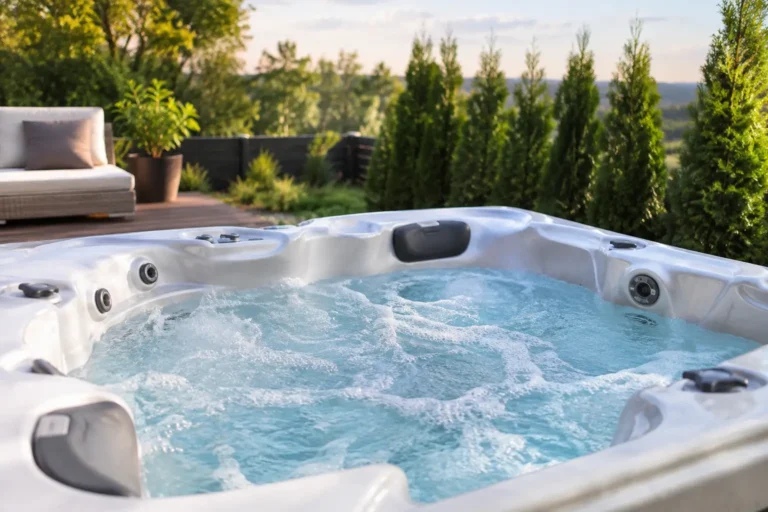
This approach works especially well for homeowners who want a calm, polished retreat without rebuilding the entire backyard. A square or rectangular hot tub sits on a concrete or porcelain-paver patio, framed by low-profile lounge chairs and a pair of large planters. A neutral palette of charcoal, sand, warm gray, or soft white lets the water become the focal point.
For privacy, use a horizontal slat screen or a section of decorative masonry wall behind the spa. This creates a finished backdrop while helping block views from nearby homes. Keep the path from the house open and slip-resistant, particularly if the spa will be used in the evening.
The trade-off is that minimal spaces need disciplined maintenance. Visible surfaces, furniture, and spa covers should stay clean, and a few well-chosen accessories will look better than too much decor.
2. The family connection zone
A family patio makeover should allow people to be together even when not everyone is in the water. Position the hot tub near a dining set or outdoor sectional, leaving clear walking space around both. A six- or seven-seat spa with varied seating depths can give adults, teens, and visiting relatives more ways to enjoy it.
A large umbrella, pergola, or covered patio helps create shade during the day and a welcoming gathering spot at night. Add weather-resistant storage for towels, pool toys, and water-care supplies so the patio stays orderly. If children will use the area, plan boundaries carefully, keep the cover secured when the spa is not in use, and follow all local safety requirements.
This layout is less about a secluded escape and more about making the backyard useful on ordinary weeknights. It is a strong option for homeowners who want hydrotherapy and entertaining in the same footprint.
3. The small courtyard retreat
Limited square footage does not rule out a premium spa experience. In a side yard or enclosed courtyard, select a hot tub with a compact footprint and place it where the cover can open fully without interfering with gates, walls, or furniture. Built-in bench seating along one wall can provide a place to dry off without crowding the patio.
Vertical elements make this type of space feel intentional. Think tall planters, a narrow privacy panel, wall-mounted lighting, or a simple trellis with climate-appropriate planting. Avoid overly dense landscaping directly around the equipment compartment, since service technicians need reliable access.
In compact spaces, lighting matters more than sheer quantity of furniture. Low-glare step lights and warm wall sconces help the patio feel generous after sunset while preserving a quiet, private mood.
4. The resort-inspired pavilion
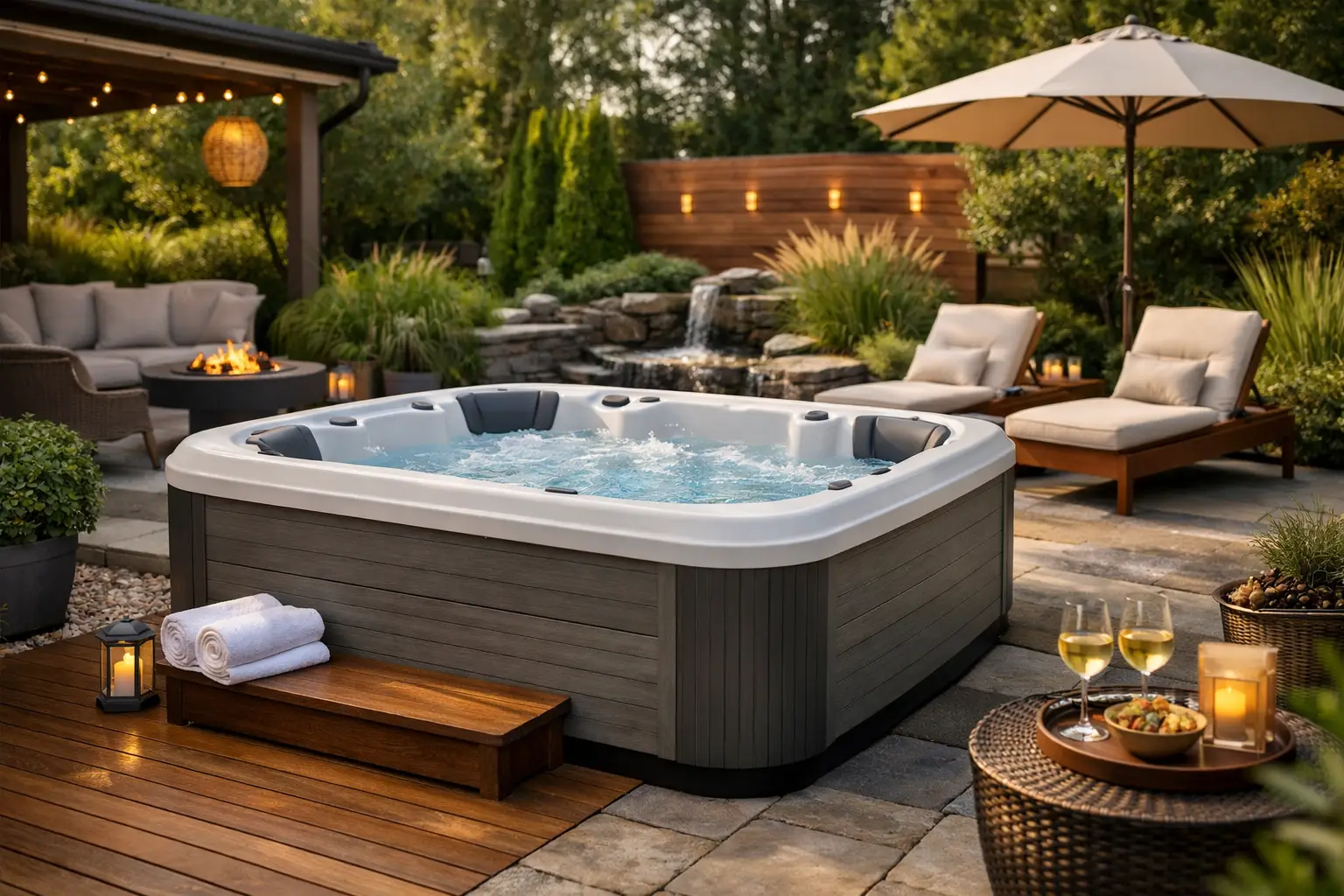
For a larger backyard, a pavilion or gazebo can turn a spa patio into a true destination. The structure offers shade, visual definition, and a sense of arrival. It also gives homeowners a natural place to add a ceiling fan, integrated lighting, curtains, or outdoor-rated speakers.
Keep the design practical. The roof height should allow heat and moisture to dissipate, and the structure should not prevent safe cover operation or future service access. Local permitting, setbacks, electrical needs, and site conditions can affect what is possible, so it pays to plan the spa and structure as one project rather than adding the cover structure afterward.
This example suits homeowners who use their backyard often and want a refined setting for year-round wellness. Pair the spa with comfortable seating nearby, but do not let the pavilion become so crowded that entering and exiting the water feels awkward.
5. The indoor-outdoor wellness corner
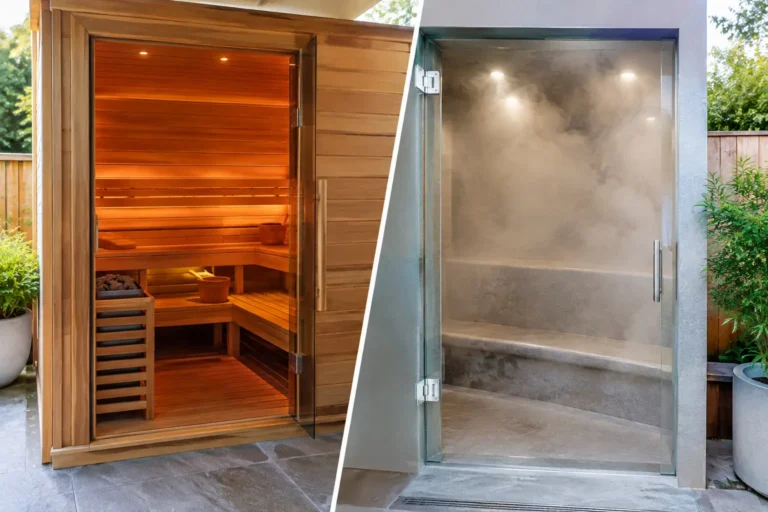
Some of the most functional makeovers center on a wellness routine rather than entertaining. A hot tub can be placed near a sauna, cold plunge, outdoor shower, or private changing area to support recovery after exercise, stress relief, and regular quiet time. A durable surface underfoot, towel hooks, and a small cabinet for robes and water-care essentials make a noticeable difference in daily use.
Privacy is essential here. Layer a solid fence, tall planting, or adjustable outdoor curtains so the area feels protected without becoming dark. If the spa is close to the house, consider the route from the bathroom or laundry room. A short, well-lit path encourages use during cooler evenings and early mornings.
This setup does require more planning than a simple patio refresh. Electrical service, drainage, ventilation for any enclosed feature, and a consistent maintenance routine all deserve attention. The payoff is a backyard that supports a habit, not just an occasional event.
6. The outdoor kitchen and spa patio
A hot tub and outdoor kitchen can work beautifully together when each has its own zone. Place the cooking area where smoke, heat, and food traffic stay away from the spa. Then create a transition area with a dining table, fire feature, or lounge seating. The result is a backyard that can shift from dinner with friends to a relaxing soak without anyone feeling crowded.
Choose finishes that visually connect the zones. Matching stone, complementary cabinet colors, or repeated metal accents make separate features feel like one considered design. Be thoughtful about drainage and water runoff, particularly around grills, refrigerators, and electrical equipment.
For many Southern California homeowners, this is the patio makeover that earns its keep during holidays, game days, and casual weekend gatherings. It works best in yards with enough room to preserve circulation around the cooking area and the hot tub.
7. The view-focused spa terrace
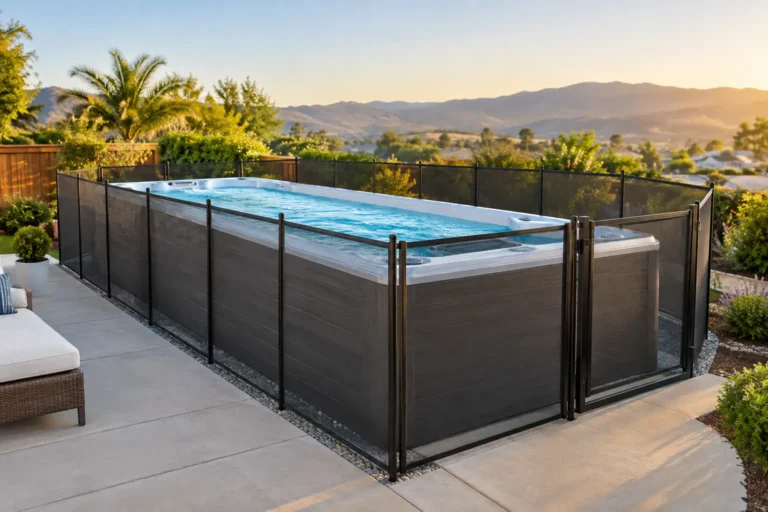
If your home has a garden, canyon, or city-light view, orient the spa to enjoy it from the seats you will use most. A lower-profile hot tub can preserve sightlines, while a glass or open-rail barrier may provide safety without closing off the scenery. Keep plantings low in front of the view and use taller screening only where privacy is needed.
Wind exposure is the detail many homeowners overlook. A view patio that feels perfect at noon may be uncomfortable after dark. A partial screen, pergola wall, or strategically placed planting can soften the breeze without blocking the reason you chose the location.
8. The low-maintenance modern upgrade
Not every makeover needs extensive construction. Replacing faded furniture, updating the spa surround, installing better lighting, and adding a durable cover lifter can transform an existing hot tub patio. New outdoor rugs, planters, and coordinated storage give the space a finished look quickly.
This is a smart route for established spa owners whose equipment is in good condition but whose patio no longer reflects how they want to live. If the hot tub itself is aging, frequent repairs or changing household needs may be a reason to consider an upgrade at the same time. A new model can offer refreshed styling, improved seating, and features better matched to how you use the space now.
Start With the Site, Not the Accessories
Before choosing furniture, confirm where the spa can safely sit. A filled hot tub is extremely heavy, so it requires a level foundation designed to support its full weight. Plan a clear delivery route, proper electrical installation by a qualified professional, drainage away from the home, and access to the equipment area for future care and repair.
It also helps to think about the experience in sequence: arriving from the house, setting down a towel, stepping in safely, relaxing, and closing the cover afterward. Those small movements reveal whether a layout will feel effortless or frustrating. Backyards In Style can help homeowners consider spa size, placement, installation preparation, and the long-term service needs that make a patio makeover feel good well beyond the first season.
A successful patio makeover does not need to copy a resort or fill every open corner. Choose the example that fits your routine, invest in the foundation and access details first, and let the remaining design choices make your backyard a place you genuinely want to use tomorrow night.