
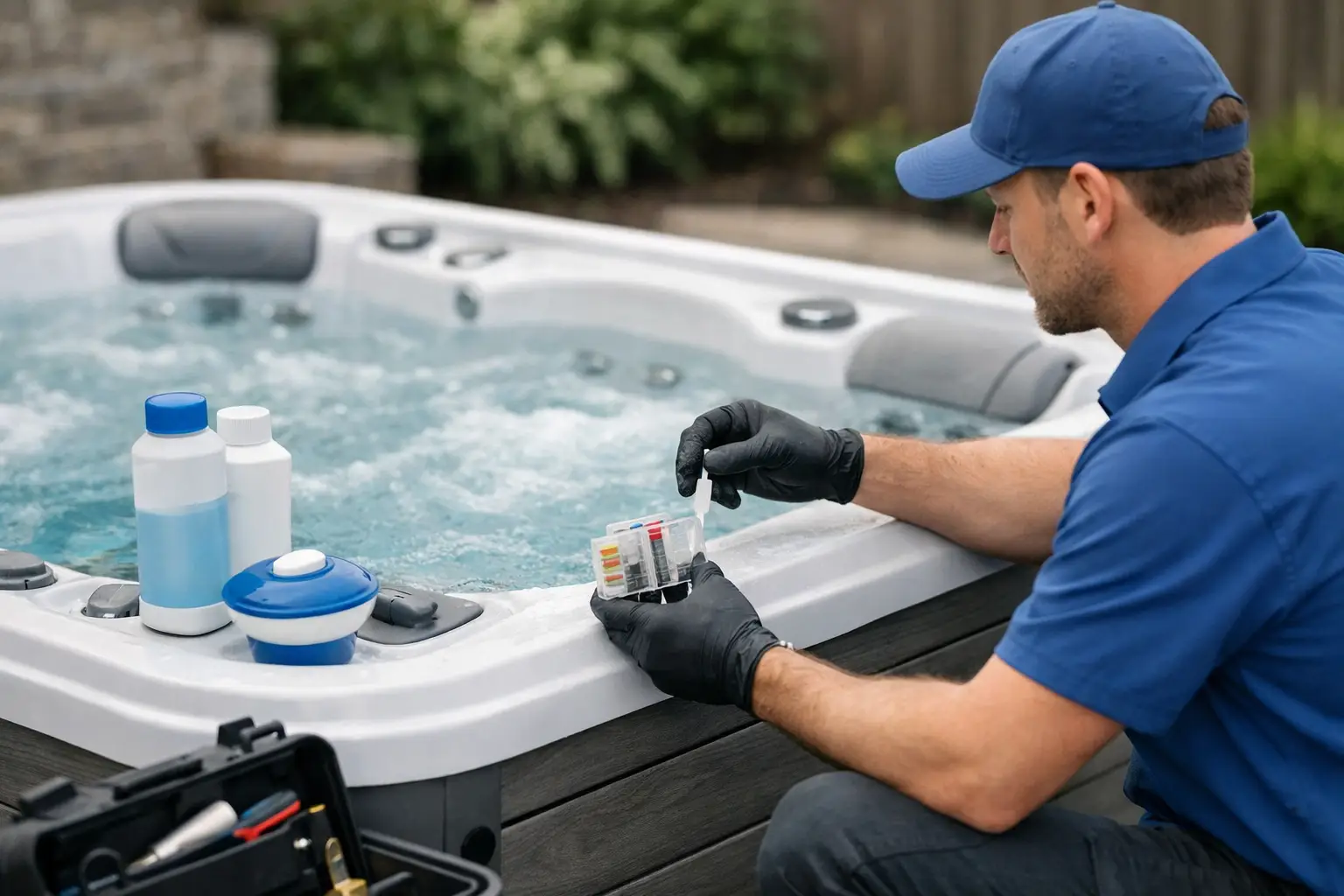
A hot tub should feel like the easiest part of your day: warm water after work, a quiet place to recover after a workout, or a comfortable gathering spot when friends visit. A dependable hot tub maintenance service protects that experience by keeping the water balanced, the equipment operating properly, and small concerns from becoming inconvenient repairs.
For Southern California homeowners, regular care matters even when a spa is used lightly. Warm temperatures, bright sun, windblown debris, frequent entertaining, and long stretches of year-round operation can all affect water chemistry and equipment performance. Professional service gives owners a clear, consistent plan for protecting a premium backyard investment.
What a Hot Tub Maintenance Service Should Include
Quality spa care is more than adding sanitizer and checking that the water looks clear. Water can appear clean while its chemistry is out of range, which may lead to cloudy water, scale buildup, corrosion, skin irritation, or unnecessary wear on pumps and heaters.
A recurring service visit typically begins with testing and adjusting the essentials: sanitizer level, pH, total alkalinity, calcium hardness, and, when applicable, stabilizer. The technician should also inspect water clarity, circulation, filter condition, cabinet and cover condition, and the visible operation of jets, pumps, lights, and controls.
The exact schedule depends on your spa, bather load, sanitizer system, and location. A two-person spa used a few evenings each week has different needs than a larger Sundance, Nordic, or Cal Spas model that hosts family gatherings every weekend. The goal is not to apply the same chemical routine to every hot tub. It is to create safe, comfortable water that suits how your household actually uses it.
A thorough maintenance appointment may include:
- Water testing and chemical balancing
- Skimming debris and cleaning the waterline
- Rinsing or deep-cleaning filters as needed
- Inspecting pumps, heater operation, jets, controls, and unions for early signs of trouble
- Checking the cover, lifter, and cabinet for damage or moisture concerns
- Advising when a drain, refill, filter replacement, or repair is appropriate
This proactive approach is especially valuable for owners who want their spa ready to use rather than spending their free time troubleshooting water problems.
Why Consistent Water Care Protects More Than the Water
Hot tub water works hard. It is heated, circulated, exposed to body oils and lotions, and used in a relatively small volume compared with a swimming pool. When water balance drifts, the effects reach beyond comfort.
Low sanitizer can allow bacteria and organic contaminants to build up. High sanitizer may create an unpleasant odor or irritate skin and eyes. Improper pH can reduce sanitizer effectiveness while making the water uncomfortable. Low alkalinity allows pH to swing too easily; high alkalinity can make the water difficult to balance. Calcium levels also matter, particularly in areas with harder water, because imbalance can contribute to scale on heaters, plumbing, and jets.
A professional technician sees the patterns that are easy to miss. For example, recurring cloudy water may be caused by a neglected filter, not simply a shortage of sanitizer. A persistent chemical demand may point to heavy bather use, old water, or an issue with circulation. Treating the source is more effective than repeatedly adding products without a plan.
The Equipment Checks That Help Avoid Surprise Repairs
A spa does not need to be visibly leaking or making loud noises to deserve attention. Small changes often provide the first warning: a jet that has weaker pressure, a pump that runs louder than usual, a heater that takes too long to bring the water to temperature, or a control panel that displays an intermittent message.
During routine visits, service professionals can look for signs of restricted flow, worn seals, moisture around equipment, loose fittings, failing ozone or sanitation components, and cover issues that allow heat to escape. Catching these concerns early can help preserve energy efficiency and reduce the risk of a no-heat call just when you planned to enjoy the spa.
There is a practical trade-off here. Not every older component needs replacement at the first sign of wear. A trusted service team should explain the condition of the part, the likely timing of a repair, and whether it is reasonable to monitor it. That gives homeowners the information to make a confident decision rather than feeling pressured into an unnecessary fix.
How Often Does a Spa Need Professional Service?
Most hot tubs benefit from a regular maintenance schedule, but the ideal frequency depends on ownership habits. Weekly service is a strong fit for busy households, frequent users, vacation homes, and anyone who wants hands-off water care. Every-other-week service can work well for lighter use when the owner is comfortable checking the water and adding basic chemicals between visits.
Quarterly or occasional service is usually better for specific needs, such as a drain and refill, a seasonal inspection, filter cleaning, or help correcting a water issue. It is less reliable as a complete care strategy for a spa that is used regularly. Water conditions can change quickly, especially after a weekend of entertaining or periods of hot weather.
Your service provider should also recommend a drain and refill schedule based on water quality and use. Many owners plan on fresh water every three to four months, although a heavily used hot tub may need it sooner. Draining is also an ideal time to clean the shell, inspect exposed areas, address scale, and start fresh with properly balanced water.
What Homeowners Can Do Between Service Visits
Professional care makes ownership easier, but a few simple habits help keep the service plan effective. Showering before using the spa reduces lotions, deodorant, makeup, and body oils that can overwhelm the water. Keeping the cover closed when the spa is not in use helps retain heat and keeps leaves, dust, and insects out.
It also helps to remove visible debris promptly and pay attention to changes in water appearance, odor, temperature, or jet pressure. You do not need to diagnose the cause. A quick call with a clear description can help a technician arrive prepared.
If you handle occasional chemical additions yourself, follow the product directions and avoid mixing chemicals or adding several treatments at once. More product is not automatically better. Allow circulation time, retest when appropriate, and ask for guidance if readings remain outside the recommended range.
Choosing the Right Local Service Partner
The best hot tub maintenance service is built on more than a recurring appointment. Look for a local provider with trained technicians, familiarity with your spa brand and equipment, clear communication, and access to appropriate parts and water-care products. Service history matters, too. A team that knows what was adjusted, replaced, or observed on prior visits can spot changes sooner.
For homeowners in Anaheim and across Southern California, Backyards In Style brings the same long-term perspective to service that it brings to building complete outdoor retreats. Whether your spa supports hydrotherapy, family time, or a nightly wellness routine, the right care plan keeps that investment enjoyable instead of demanding.
A well-maintained hot tub does not ask for your attention every time you lift the cover. It simply gives you a warm, clean place to reset, reconnect, and enjoy the backyard you created.