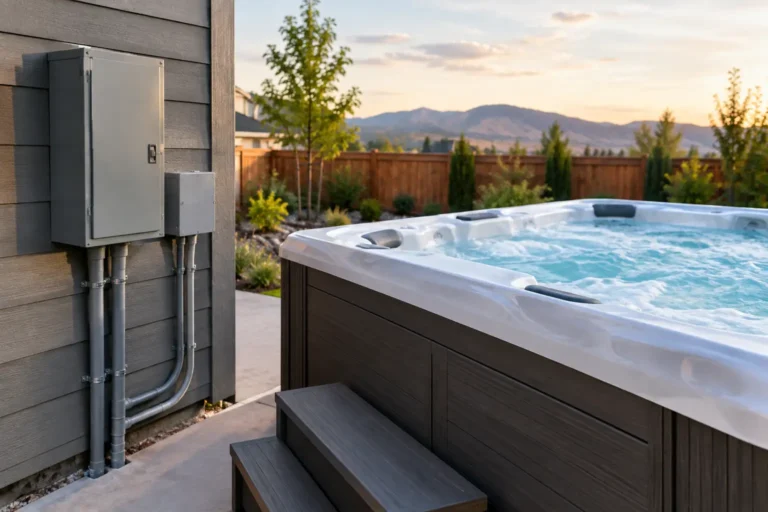
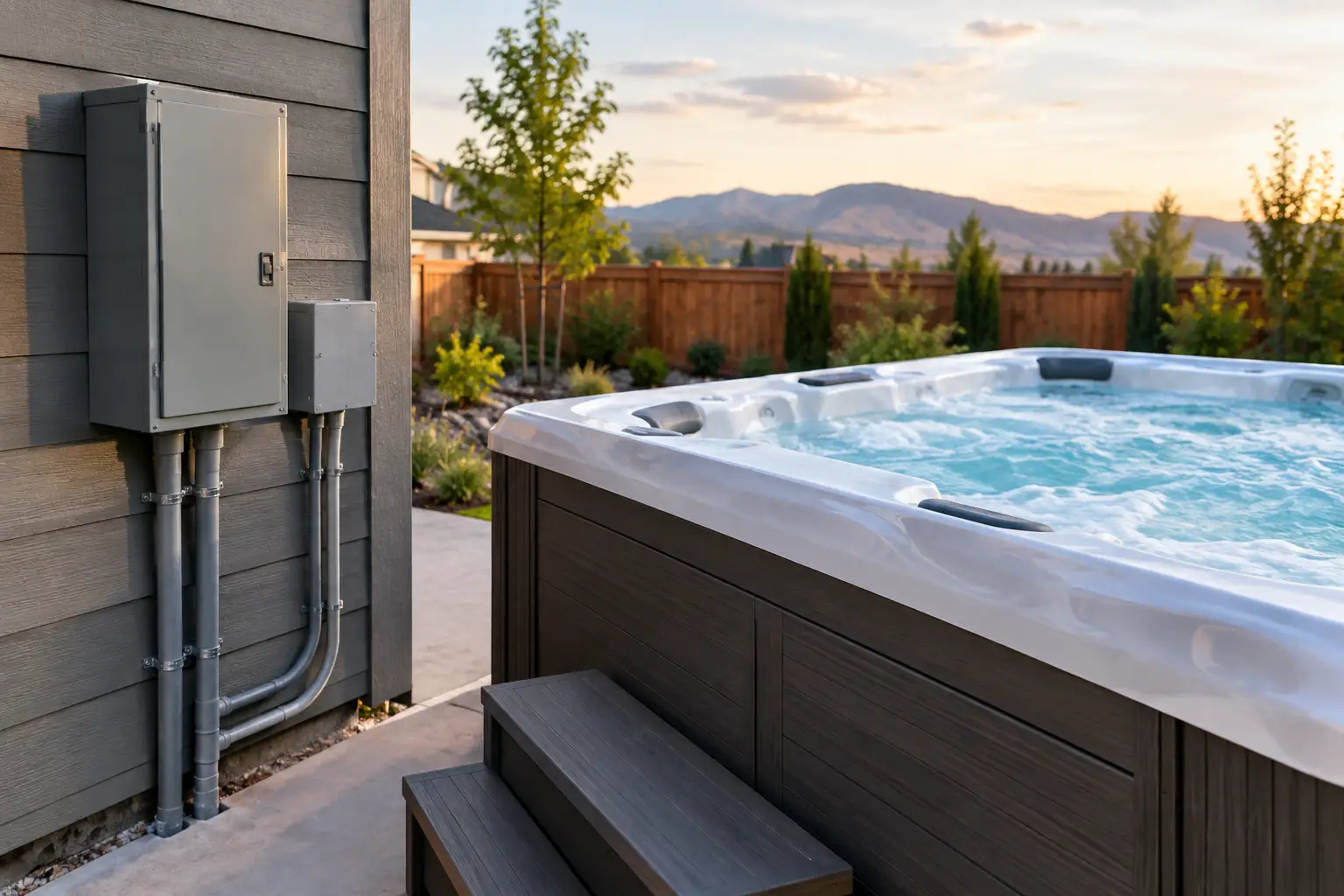
A hot tub should feel like the easiest part of your day: step outside, settle into warm water, and let the jets do their work. The right hot tub electrical requirements make that possible safely. They also need attention before delivery day, because a beautiful new spa cannot be filled, heated, or enjoyed until the electrical setup is ready.
For Southern California homeowners, the answer is rarely a one-size-fits-all circuit. Your spa model, the distance from your electrical panel, your home’s available power, local code requirements, and the intended location all affect the installation. A qualified electrician and your hot tub dealer can help turn those details into a straightforward plan.
Why Hot Tub Electrical Requirements Matter
A hot tub combines water, pumps, heaters, lighting, and controls in one outdoor appliance. That is why its electrical connection needs dedicated protection, correct wiring, and installation by a professional who understands spa equipment and local requirements.
Cutting corners can lead to nuisance breaker trips, poor heating performance, damaged equipment, or a genuine safety issue. It can also complicate inspections, warranty coverage, insurance questions, and future service. Getting the electrical work right at the start protects your investment and keeps the focus where it belongs: recovery after a long workday, time with family, or a calm evening under the patio lights.
In Anaheim and throughout Southern California, permit and inspection requirements can vary by city and property. Your electrician should confirm the current requirements with the local authority having jurisdiction rather than relying on assumptions from a prior project.
120V vs. 240V: Which Connection Does Your Spa Need?
The first question is whether you are choosing a 120V plug-and-play spa or a 240V hardwired model. Both can be excellent choices, but they offer different ownership experiences.
120V plug-and-play hot tubs
Many smaller hot tubs run on 120V power. These models typically plug into a properly installed, dedicated GFCI-protected outlet. They are often appealing for homeowners who want a simpler setup, especially when upgrading a compact patio, condo courtyard, or smaller backyard.
The trade-off is heating performance. A 120V spa may heat more slowly and may not be able to run the heater at full strength while all pumps are operating. In mild Southern California weather, that can work well for some owners, but it depends on how you plan to use the spa. If you expect frequent entertaining, long jet sessions, or year-round use at a consistently high water temperature, a 240V model is often the better fit.
Never use an extension cord or power strip with a plug-and-play hot tub. The outlet must be correctly located, protected, and dedicated to the spa.
240V hardwired hot tubs
Most premium hot tubs are designed for 240V service. Instead of plugging into a standard receptacle, they are wired directly to a dedicated circuit through a spa disconnect. Depending on the model and configuration, this may require a 40-, 50-, or 60-amp circuit. Always use the electrical specifications for the exact spa you are purchasing, not a general rule of thumb.
A 240V connection gives the spa more available power. In practical terms, it usually means faster heating and the ability to enjoy powerful therapy jets without giving up heat. For a larger family spa, a model with multiple pumps, or a hot tub chosen for regular hydrotherapy, that performance difference is meaningful.
The Core Electrical Components
A complete spa electrical installation is more than a breaker in the panel. The components must work together and meet the hot tub manufacturer’s instructions as well as applicable electrical code.
Your electrician will typically evaluate the following:
- A dedicated circuit sized for the spa’s stated electrical load
- GFCI protection, designed to quickly shut off power if a ground fault is detected
- A weather-rated disconnect or spa panel placed according to code
- Correct wire size and conduit for the circuit length and installation conditions
- Proper grounding and, where required, bonding of electrical and metal components
- A suitable path from the home electrical panel to the hot tub location
GFCI protection is not optional convenience equipment. It is a critical safety measure around water. Your electrician may use a GFCI breaker at the main panel, a spa subpanel, or another code-compliant arrangement based on the installation.
Grounding and bonding are often confused, but they serve different purposes. Grounding provides a safe path for fault current. Bonding helps keep conductive components at the same electrical potential. Whether specific bonding work is required can depend on the spa, nearby metal structures, the concrete pad, and local code interpretation. This is one area where professional assessment matters.
Start With the Spa, Not the Circuit
It is tempting to ask an electrician for a generic “hot tub hookup” before selecting a model. A better approach is to choose the spa first, then provide its specification sheet to the electrician. The sheet identifies the voltage, maximum current draw, recommended breaker size, wire requirements, and connection details for that specific unit.
This prevents expensive rework. A circuit sized for one model may not be sufficient for a larger hot tub with more pumps, a stronger heater, or advanced features. It also helps you compare models realistically. A spacious seven-seat spa with high-output hydrotherapy will have different electrical needs than a compact two- or three-seat hot tub designed for quieter daily soaking.
At Backyards In Style, a showroom consultation can help you match a spa’s seating, jet performance, and features with the installation realities of your property before delivery is scheduled.
Can Your Existing Electrical Panel Handle a Hot Tub?
Your existing panel may have open breaker spaces without having enough capacity for a new spa load. Those are different questions. An electrician should perform a load calculation to determine whether your home’s electrical service can support the hot tub along with air conditioning, kitchen appliances, pool equipment, EV charging, and everything else already in use.
Many established Southern California homes have 100-amp service, while newer or renovated homes may have 200-amp service. Either can be workable depending on the total load, but it depends on the home. In some cases, the solution is simply a new dedicated circuit. In others, you may need a subpanel, a panel upgrade, or changes to other planned electrical projects.
Address this early if you are adding more than a hot tub. A backyard renovation that includes landscape lighting, a patio heater, outdoor kitchen appliances, a sauna, or a cold plunge may benefit from coordinated electrical planning. Doing the work together can create a cleaner installation and reduce the chance of reopening finished hardscape later.
Placement Affects the Electrical Plan
The best hot tub location balances privacy, views, access, drainage, and electrical practicality. The farther the spa sits from the main panel, the more complex the wire run may become. Trenching through a finished yard, routing conduit around structures, or crossing a large deck can affect cost and scheduling.
Your spa needs a level, properly engineered base, but the electrical route deserves equal thought. Before a concrete pad is poured or pavers are set, decide where conduit will run and where the disconnect will be placed. This allows the finished space to look intentional rather than patched together.
Also consider service access. Technicians need room to reach the equipment panel, and the disconnect must remain accessible. Avoid building a spa into a tight enclosure that looks polished on day one but makes maintenance harder for years to come.
What about overhead lines and nearby outlets?
Clearance rules for overhead electrical conductors, receptacles, switches, and other equipment are specific and can be affected by the site’s layout. Do not choose a placement based only on what looks open or convenient. Have the electrician review the location before finalizing the pad, gazebo, pergola, or privacy wall.
This is particularly useful for yards with mature trees, existing outdoor lighting, pool equipment, or a planned covered structure. A small adjustment to the spa location during planning is much easier than relocating it after delivery.
A Practical Timeline Before Delivery Day
Once you have selected your hot tub, share the manufacturer’s electrical specifications with a licensed electrician. They can visit the property, assess the panel and proposed location, identify permit needs, and provide a scope of work. Schedule the electrical installation far enough ahead that inspection, if required, is complete before the spa arrives.
Your delivery team will also need a clear path, a prepared foundation, and adequate access to position the unit. The electrical connection itself should be completed only as directed by the manufacturer and local code. In many cases, the spa is placed first and then the electrician makes the final connection.
Do not fill the hot tub until the installation team confirms it is appropriate to do so. Once it is powered correctly, filled, and balanced, your new spa is ready to become part of your routine instead of another unfinished backyard project.
A little planning around power creates a much better payoff: dependable heat, confident operation, and a backyard retreat that is ready whenever you need a quiet reset or a reason to gather.