A new hot tub should arrive as the beginning of easier evenings, better recovery, and more time in the backyard – not as a surprise at the side gate. This hot tub delivery guide explains what to prepare before delivery day, from measuring the access route to confirming the foundation and electrical plan. A little planning protects your property, helps the delivery crew work safely, and gets your spa ready for the relaxing routine you had in mind.
Hot Tub Delivery Guide: Start With the Route
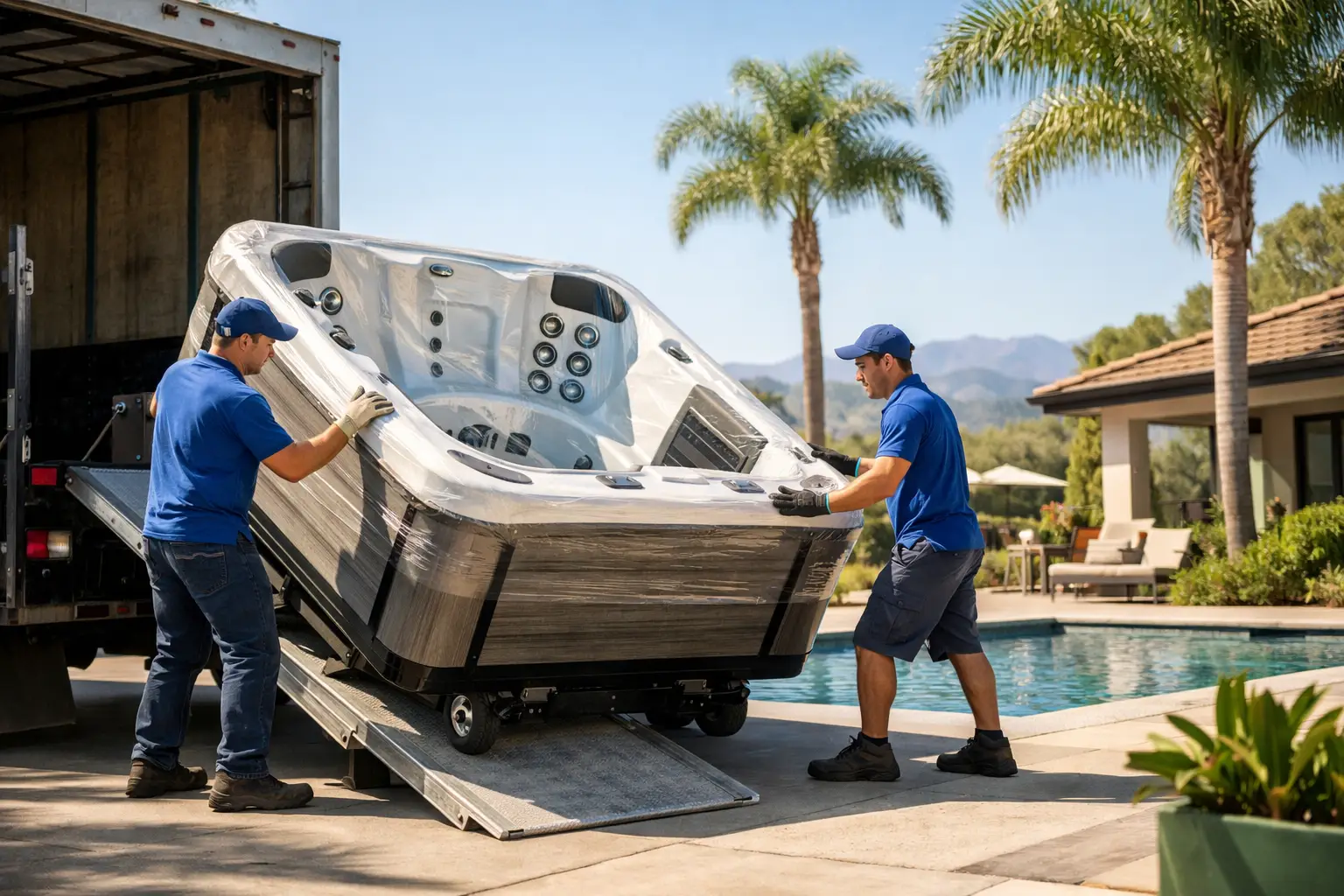
A hot tub may look compact in a showroom, but delivery requires more clearance than many homeowners expect. Most portable spas are transported on their side, often on a spa dolly. The crew needs a continuous path from the street to the final location that accommodates the spa’s height and width, plus room to maneuver around corners.
Begin at the curb and walk the exact route to the backyard. Measure gates, side yards, exterior doors, overhangs, and every tight turn. Do not rely on a gate’s listed width or a quick visual estimate. Measure the narrowest usable opening, taking posts, latches, downspouts, landscaping, and protruding trim into account.
Also look up. Low rooflines, eaves, tree limbs, utility lines, and patio covers can affect whether a spa can pass through safely. Look down as well. Uneven pavers, soft soil, loose gravel, stairs, steep slopes, and narrow passages may require a different approach or additional preparation.
A straight, level side-yard route is generally the simplest option. A backyard with multiple steps, a sharply angled gate, or no ground access is still often workable, but it may require a crane delivery. This is not a failure of planning. It is simply the right solution when the spa cannot safely travel through the property. A site review before scheduling is especially valuable for homes with hillside lots, dense landscaping, townhome layouts, or limited street access.
Before the crew arrives, remove movable obstacles from the route. Patio furniture, planters, hoses, toys, decorative rocks, and trash bins can all slow the process or create avoidable risk. If a gate needs to be temporarily removed, arrange that in advance and save all hardware for reinstallation. Keep children and pets indoors or well away from the delivery area.
Street access matters, too
The delivery truck needs a legal, practical place to park and unload. Let your dealership know about narrow streets, gated communities, steep driveways, construction, low-hanging branches, or parking restrictions. In Southern California neighborhoods, HOA rules and street-parking conditions can be just as important as the path through the yard.
If your home is on a busy street or a cul-de-sac with limited turning room, confirm the plan early. Delivery teams can prepare for many conditions, but they need accurate information before arriving with a large spa and specialized equipment.
Prepare a Foundation That Can Carry the Load
A hot tub must sit on a solid, level, properly supported surface. Once filled with water and occupied by several people, even a medium-sized spa can weigh several thousand pounds. The base is not an accessory. It is a structural part of a safe, long-lasting installation.
A reinforced concrete pad is a common choice because it provides stable, even support and holds up well to regular use. Existing concrete may be suitable if it is level, structurally sound, and large enough to support the entire footprint. Pavers can work when they are installed over a properly compacted base and create a consistently level surface. A purpose-built spa pad may also be appropriate for certain models and sites.
Avoid placing a hot tub directly on grass, bare dirt, loose gravel, or a surface that drains poorly. These materials can shift, settle, and allow moisture to collect beneath the cabinet. An attractive deck also needs a professional assessment before it carries a full spa. Deck framing, footings, load capacity, and access for future service all matter.
Plan for water to drain away from the spa rather than beneath it. Southern California may have long dry stretches, but irrigation, splash-out, draining, and winter rain still need somewhere to go. Good drainage helps protect the spa base, nearby hardscape, and the surrounding landscape.
Leave room to enjoy and service the spa
Placement is about more than fitting the shell into an open corner. Think about how you will use the space on a quiet weeknight, after a workout, or when friends are over. A location near the home can make the spa easier to access after dark, while a more private area may better support relaxation.
At the same time, leave practical working room around the equipment compartment. Service technicians need clear access to the side with the controls and components. Blocking that panel behind a permanent wall, built-in bench, or dense hedge can turn routine maintenance into a difficult and costly project.
Consider sightlines, wind exposure, shade, privacy, and the walk from the house. A gazebo, cover lifter, patio heater, or outdoor seating area can make the spa feel like part of a complete retreat. Just make sure any surrounding structure still allows the cover to open fully and gives technicians access when needed.
Confirm Electrical and Water Plans Before Delivery
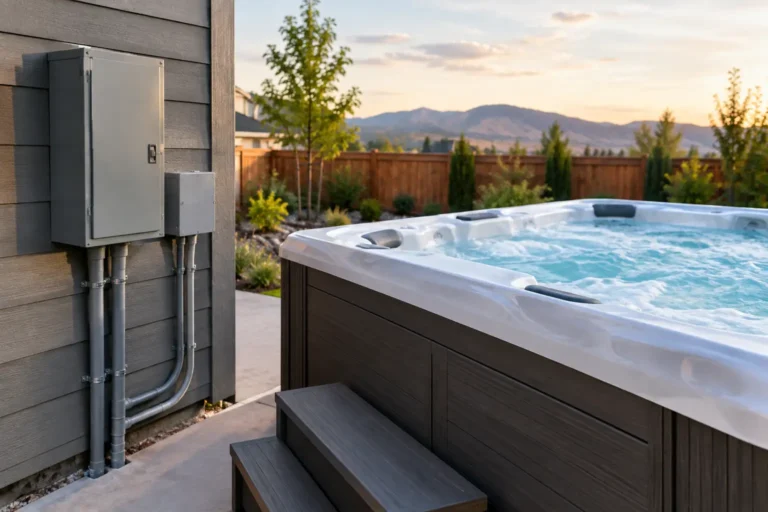
Most full-size hot tubs require a dedicated electrical circuit installed by a qualified, licensed electrician. The required voltage, amperage, wire size, disconnect location, and GFCI protection depend on the specific spa model and local code. Do not treat this as a last-minute detail. Electrical work should be planned early enough that the spa can be connected promptly after it is placed.
Your electrician should work from the manufacturer’s requirements for your exact hot tub. They can also advise on permits, inspection requirements, panel capacity, and the best route for running power from the home to the disconnect. For some homeowners, especially those adding a larger spa or swim spa, an electrical panel upgrade may be part of the project.
The spa does not usually need to be wired before it arrives. In fact, final connection is commonly completed once the hot tub is in its permanent location. What matters is having the electrical scope confirmed and scheduled so the installation does not stall after delivery.
You will also need a nearby water source, typically a standard garden hose, for the initial fill and future water changes. Plan where you will drain the spa according to local requirements and your property layout. Water should not be directed toward your foundation, neighboring yards, or areas where it can create pooling.
Delivery Day: What to Expect
On delivery day, the crew will verify the route, move the spa carefully into position, and set it on the prepared foundation. The hot tub should be placed exactly where it will live. Trying to shift a spa after it has been filled is not practical and can damage the shell, cabinet, or surface beneath it.
Be available to answer questions and confirm placement before the spa is lowered. If the installation includes a cover lifter or other accessories, check that there is enough clearance to operate them. This is also the time to inspect the exterior with the delivery team and make sure the orientation works for the equipment access panel, steps, and seating area.
Depending on the delivery arrangement, startup may include an orientation on the cover, controls, and basic care, or it may occur after the electrician completes the final connection. Once powered, the spa should be filled according to the owner’s instructions, with water chemistry balanced before regular use. Heating can take time, so plan on your first soak after the water reaches the recommended temperature rather than immediately after filling.
Common Delivery Mistakes to Avoid
The most common issue is assuming that a spa will fit because a smaller piece of patio furniture fit through the same gate. Measure every point in the route, including turns. The second is preparing a beautiful location without checking whether it is level, adequately supported, and accessible for future service.
Other avoidable setbacks include scheduling the electrician too late, overlooking HOA approval, leaving a cover-opening path blocked, or failing to tell the delivery team about stairs and tight access. Honest details help create a better plan. If access is complicated, sharing photos and measurements before delivery can prevent an unnecessary reschedule.
A well-planned delivery is one of the first ways your hot tub investment begins working for you. With the route cleared, the base ready, and the electrical plan in place, you can focus on what comes next: stepping outside, settling into warm water, and making your backyard a place you look forward to using every day. Backyards In Style can help homeowners turn those details into a delivery plan that feels clear from the first showroom conversation to the first relaxing soak.