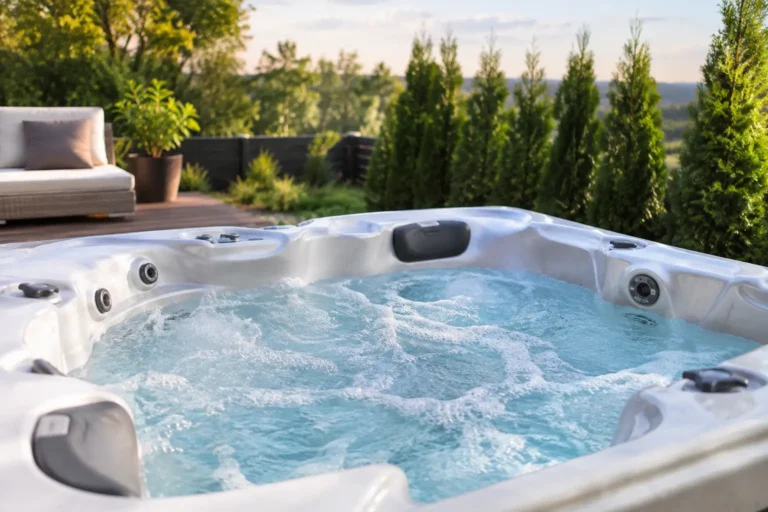
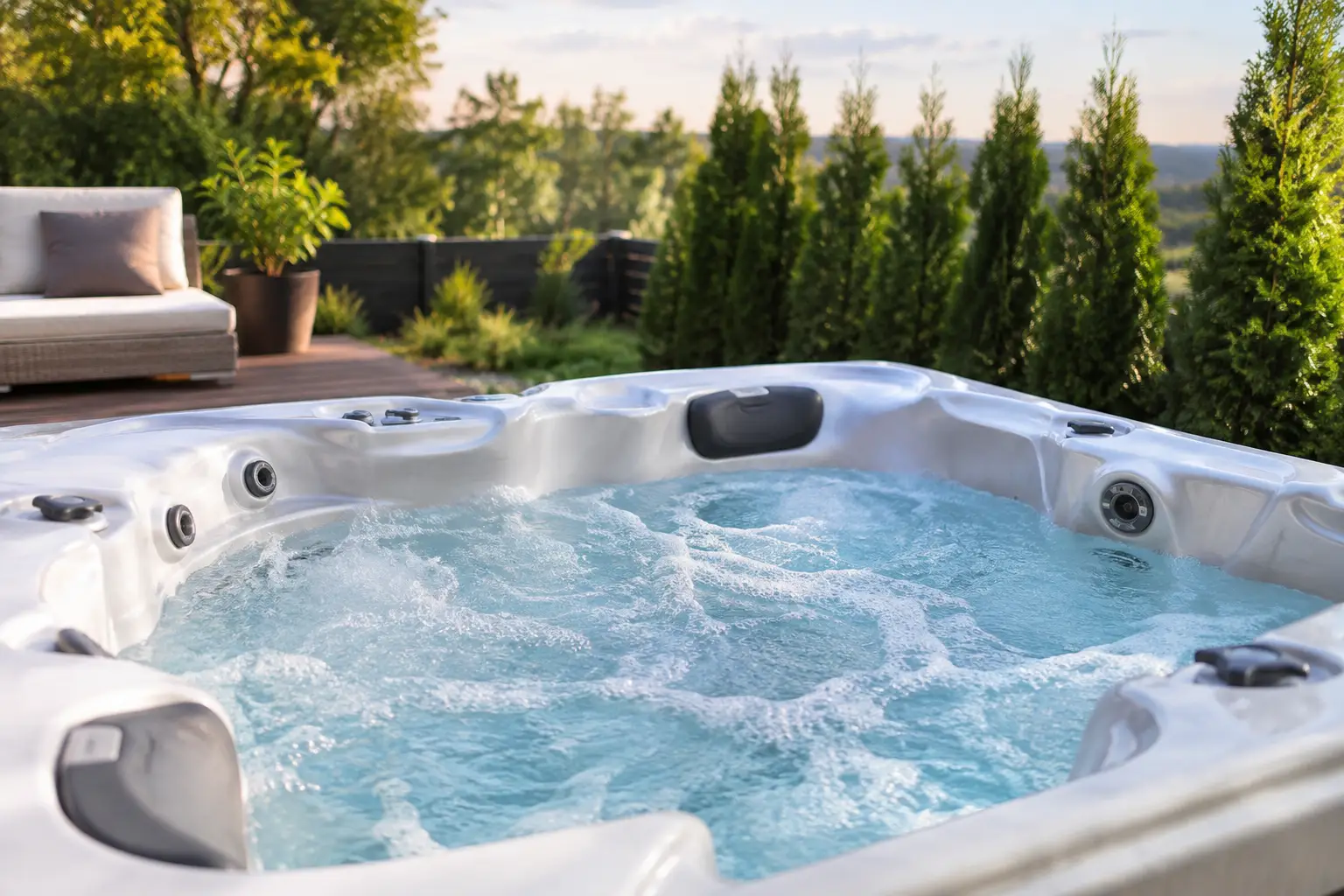
A hot tub can have an impressive jet count, a beautiful cabinet, and room for six on paper, yet still feel wrong if the seating does not suit the people using it. Choosing hot tub seating means looking beyond capacity and considering how your household actually relaxes: where you feel comfortable, which muscle groups need attention, who will use the spa together, and whether you want quiet recovery, family time, or entertaining.
For Southern California homeowners, a hot tub is often part of a larger outdoor retreat. The right seating layout makes that retreat more inviting on a cool evening, after a long workday, or when friends stay late around the patio.
Start With How You Will Use the Spa
The first question is not, “How many seats do we need?” It is, “How will we use them?” A couple looking for daily hydrotherapy may be happiest in a four- or five-seat model with two distinct therapy positions. A family may get more value from an open layout that gives everyone flexible room. Homeowners who entertain regularly may prefer upright seats over a large lounge, since upright seating usually makes conversation easier and accommodates a wider range of guests.
Capacity numbers can be misleading. A six-person hot tub may hold six adults, but it may not offer six equally comfortable seats. Some positions are designed for deep immersion, others for cooling down, and others for targeted back or leg therapy. Think about the number of people who will use the spa at the same time most often, not the maximum number who could fit on a special occasion.
Choosing Hot Tub Seating by Seat Type
A well-designed hot tub gives each seat a purpose. Understanding the common configurations helps you compare models with more confidence.
Upright Therapy Seats
Upright seats are the most versatile option. They typically support a natural seated posture and can provide jets for the back, shoulders, hips, calves, or feet, depending on the model. Because they are easy to enter and exit, they are especially practical for families, guests, and owners who want a social spa as much as a therapeutic one.
Look at where the jets land on your body. A jet pattern that feels excellent across one person’s mid-back may sit too high or too low for another. This is why seat height and back contour matter as much as the number of jets.
Lounge Seats
A lounge seat lets you recline with your legs extended, often with jets along the back, calves, and feet. For someone who wants full-body relaxation after workouts, yard work, or long hours at a desk, a lounge can be a standout feature.
The trade-off is flexibility. A lounge uses substantial interior space, which can reduce the number of upright seats available for guests. It can also fit people differently. Shorter bathers may float or struggle to keep their shoulders positioned against the backrest, while taller bathers may find the footwell too close. If a lounge is on your wish list, spend time in it before making a decision.
Deep Seats and Cool-Down Seats
Many premium spas include a deeper seat for fuller shoulder coverage and a shallower position near the edge. A deep seat can be especially appealing for adults who want the comforting feel of more complete immersion. A cooler, shallower seat gives bathers a place to change positions without leaving the water entirely.
These variations are not just design details. They make it easier for people of different heights and heat preferences to stay comfortable during the same soak. They can also create natural movement within the spa, which is useful when several people are sharing it.
Captain’s Chairs and Specialty Therapy Seats
Some hot tubs feature larger, more contoured seats built around a specific massage experience. These may offer focused shoulder jets, adjustable neck jets, wrist or hip jets, or a more sculpted lower-back zone. They are often a strong choice for owners whose primary goal is muscle recovery, everyday tension relief, or targeted hydrotherapy.
A specialty seat can be a reason to choose one model over another, but it should not be the only reason. Consider whether the rest of the seating arrangement still works for your household. A single excellent therapy chair does not compensate for a layout that leaves everyone else cramped.
Match Seat Depth to the People Using It
Water depth changes comfort dramatically. When you sit in a hot tub, your feet should feel anchored and your body should rest naturally against the shell. If a seat is too deep, you may float upward or feel pressure at the edge of the seat. If it is too shallow, the water may not reach the areas you hoped to soothe.
Height differences matter in every household. A spa that feels ideal for a six-foot adult may not be as comfortable for a petite partner, teen, or visiting parent. Families with a wide range of users often do best with varied seat depths rather than a uniform layout.
Pay attention to the footwell, too. In a compact spa, bathers may compete for foot space or accidentally bump legs when the spa is full. In a larger model, a roomy, open footwell can make the whole experience feel more relaxed. Foot jets are a welcome bonus, but make sure there is enough room to enjoy them without crowding.
Let Jet Placement Guide Your Choice
More jets do not automatically mean better hydrotherapy. What matters is the combination of jet placement, adjustability, pressure, and the way a seat supports your body. A seat with fewer well-positioned jets may feel far more effective than one covered in jets that do not align with your shoulders or lower back.
Consider the areas that need the most attention. Professionals who spend hours sitting may appreciate lumbar and upper-back therapy. Active homeowners may want calf, hamstring, and foot jets. People managing everyday stiffness often enjoy seats that offer a gentler, broader massage rather than concentrated pressure.
Adjustable jets add useful flexibility, particularly in a shared spa. One person may want a vigorous massage after a run while another wants quiet warmth with lighter circulation. Look for controls that let you tailor the experience without making operation complicated.
Plan for Conversation, Movement, and Entry
Hot tub seating is also about the space between the seats. Open layouts encourage face-to-face conversation and make it easier for people to shift positions. They can feel especially welcoming for families and casual entertaining. More sculpted, individual seats create clearer personal zones and often deliver more specific hydrotherapy.
Neither approach is universally better. An open layout is usually more adaptable, while dedicated seating can provide a more refined massage experience. Your preference should follow your lifestyle.
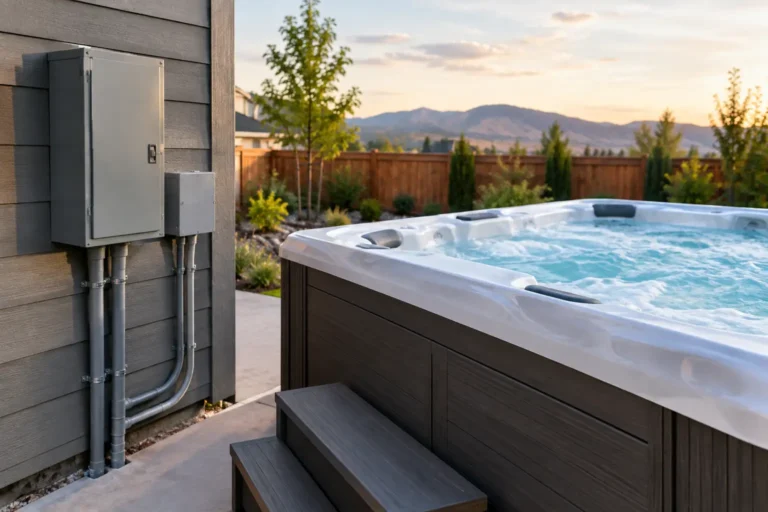
Also consider entry and exit. Steps, handrails, the height of the spa, and the location of the equipment controls all affect how easy ownership feels over time. A seat near the entry can be helpful for anyone who values a stable, uncomplicated way to get in and out. If you expect grandparents, guests, or anyone with mobility concerns to use the spa, this deserves serious attention during the selection process.
Try the Seats Before You Buy
Measurements and photographs are helpful, but they cannot tell you whether a particular seat fits your body. Sitting in a dry showroom model lets you assess legroom, back support, seat height, and the path in and out. A wet test goes further by showing how buoyancy affects the lounge, how water reaches your shoulders, and how the jets feel in real use.
Wear comfortable clothing, take your time, and test more than one position. Sit where you expect to sit most often, then move to each seat as if you were sharing the spa with family or friends. Notice whether you feel supported or whether you are bracing yourself to stay in place.
At Backyards In Style, a knowledgeable showroom conversation can help connect seating layouts with the way you want to live outdoors, from peaceful recovery sessions to weekends with the family. The best hot tub is not simply the one with the most features. It is the one that invites you to use it again tomorrow.