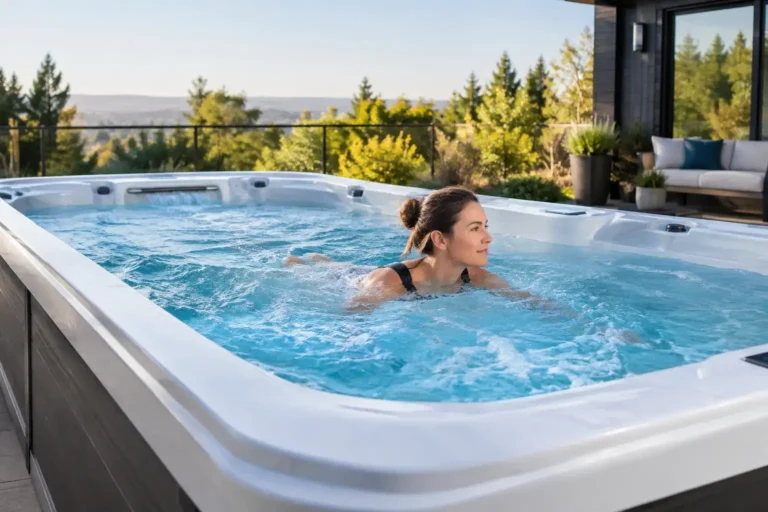
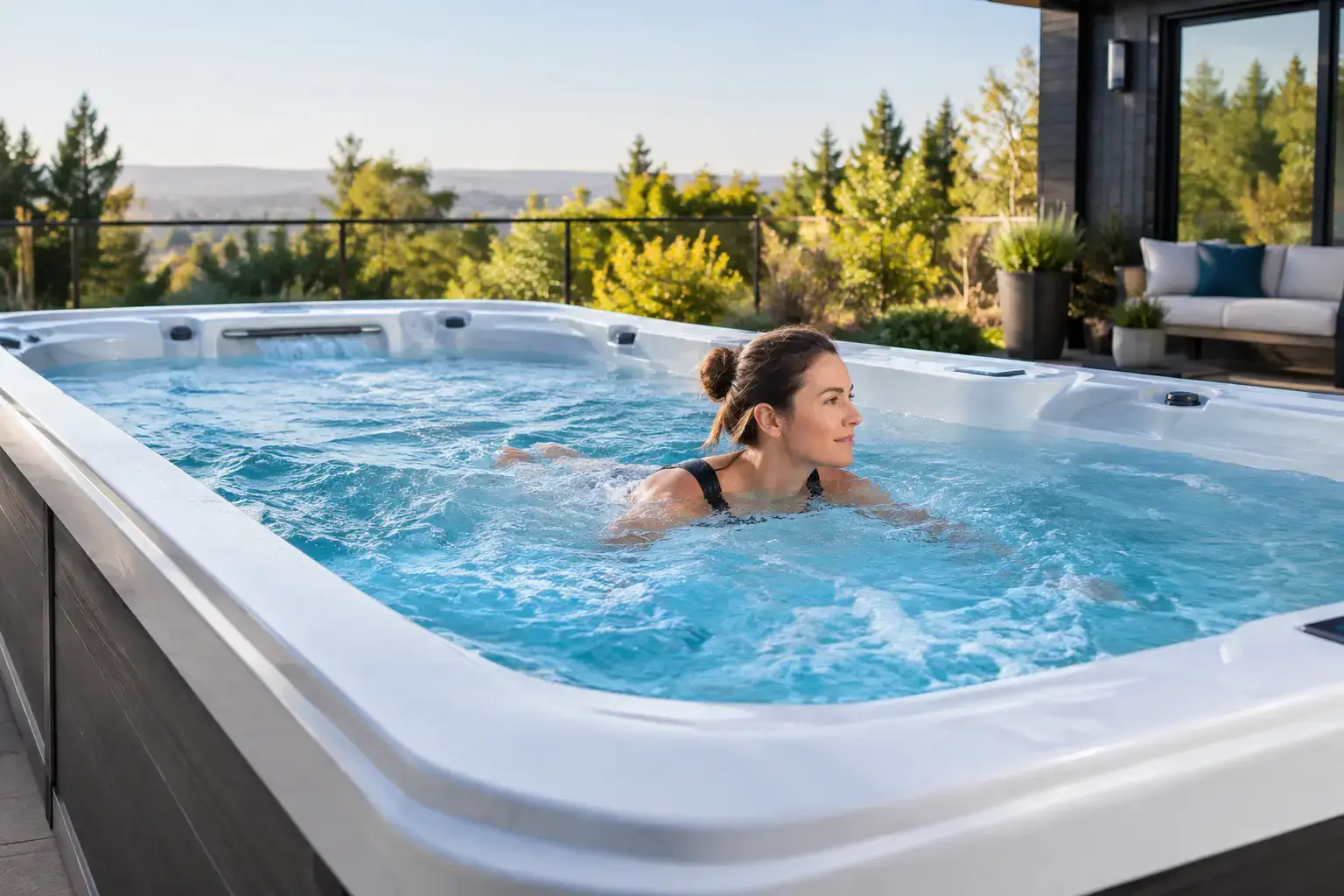
A swim spa should make your backyard feel like a place to reset, train, and spend time with family – not like your pool equipment is running outside your bedroom window. So, are swim spas noisy? Usually, no. A well-made, properly installed swim spa produces a steady operational sound rather than an intrusive one. Still, the model you choose, where it sits, and how it is maintained all make a meaningful difference.
For Southern California homeowners, this question deserves a closer look. Backyards are often designed for year-round use, homes can be close together, and many owners want to enjoy an early-morning swim or a quiet evening soak without disturbing the household or the neighbors.
Are Swim Spas Noisy in Everyday Use?
Most swim spas make some sound whenever their circulation system, filtration equipment, or therapy jets are operating. The sound is generally comparable to a quality outdoor air-conditioning unit or pool equipment running at a distance: noticeable when you are standing nearby, but often easy to blend into normal outdoor life.
The quietest periods are when the spa is maintaining water temperature and running low-speed filtration. During this time, you may hear a soft pump hum and gentle water movement. When the swim current is engaged for exercise, sound increases because the larger pumps are moving a significant volume of water. Therapy jets and water features can add another layer of sound.
That does not mean a swim spa is inherently loud. Premium models are engineered with insulated cabinets, efficient equipment bays, and thoughtful plumbing design to help control vibration and operating noise. The experience also changes with distance. What sounds active while you are beside the equipment compartment may be barely noticeable from inside the house or at a neighbor’s property line.
What Creates Sound Around a Swim Spa?
Understanding the source of the sound helps separate normal operation from a problem that needs attention. In most cases, a swim spa’s noise comes from a combination of equipment and water movement.
Pumps and circulation systems
Pumps are the primary source of mechanical sound. A circulation pump runs quietly to keep water filtered and heated, while larger jet and swim pumps work harder when you use the exercise current or hydrotherapy seats. More powerful performance can create more audible equipment sound, but it also delivers the resistance needed for a satisfying swim and the jet action people expect from a premium spa.
A quality unit should produce a consistent hum, not rattling, grinding, squealing, or banging. Sudden changes in sound are worth investigating, especially if they are accompanied by weaker jet pressure, error messages, or water leaks.
Water flow, jets, and features
Moving water has its own sound profile. An active swim current creates a broad rush of water, while open air controls can add bubbling to therapy jets. Waterfalls, fountains, and spillways are designed partly for ambiance, but they can be more noticeable in a quiet backyard.
For some homeowners, that water sound is a benefit. It can soften traffic noise and create a more private, resort-like atmosphere. For others, especially those installing near a bedroom, home office, or close neighbor, a model with fewer water features or adjustable feature controls may be the better fit.
Vibration from the installation surface
The sound that travels farthest is not always airborne. Vibration can transfer into a deck, raised platform, wall, or nearby structure if the swim spa is not supported correctly. This is one reason the installation site matters as much as the spa itself.
A properly prepared concrete pad is often an excellent foundation because it provides stable, level support. If you are considering a deck or elevated installation, the structure must be engineered to handle the filled weight of the swim spa, bathers, and moving water. Good support protects the spa and reduces the chance of unwanted vibration.
Placement Has a Bigger Impact Than Many Buyers Expect
Before selecting a model, look at the backyard as a whole. A few feet of distance, the direction of the equipment compartment, and the materials around the installation can change how sound is perceived.
Avoid placing the equipment side directly against a bedroom wall, under a window used for sleeping, or immediately beside a neighbor’s fence when another orientation is possible. Leave enough access for service technicians to reach the equipment compartment without difficulty. A tucked-away installation may look appealing, but restricted access can complicate future maintenance.
Hard, reflective surfaces such as stucco walls, glass, and masonry can bounce sound back into a seating area. Landscaping, privacy screens, and thoughtfully positioned patio furniture can help make the area feel more buffered. These elements will not silence equipment, nor should they block ventilation or service access, but they can make the space more comfortable.
For homeowners in denser Anaheim-area neighborhoods, it is also smart to think about usage habits. If you plan to use the swim current before sunrise or after late dinners, select a location that directs sound away from adjacent homes. A showroom consultation can help you compare cabinet layouts, equipment placement, and installation options before a delivery day is on the calendar.
How to Keep a Swim Spa as Quiet as Possible
A quiet ownership experience starts with choosing a well-built swim spa, but regular care is what keeps normal operating sounds from becoming disruptive. Clean water and properly functioning components allow pumps to work as intended.
Keep water at the recommended level, clean filters on schedule, and follow the manufacturer’s water-care guidance. A clogged filter can restrict water flow and make pumps work harder. Low water can allow air into the system, causing surging or sputtering sounds. Small maintenance steps protect both performance and peace of mind.
It also helps to keep the cabinet area clear of loose objects. Yard tools, furniture, or stored accessories leaning against the spa can vibrate when equipment turns on. If the unit is set on a deck, periodically inspect the area for loose fasteners or shifting components that may create a rattle.
When choosing a model, ask to hear it in operation. Listen during standard circulation, hydrotherapy jet use, and swim-current operation if possible. This provides a much more realistic sense of sound than reading a specification sheet alone. At Backyards In Style, an experienced team can help homeowners weigh performance, seating, exercise goals, installation requirements, and the everyday comfort of their outdoor space.
When Swim Spa Noise Signals a Service Need
Some sounds are normal. Others are a clear reason to schedule service. A healthy swim spa should run with a stable, familiar sound profile. If that profile changes, do not ignore it.
Pay attention to loud rattling from the cabinet, high-pitched whining, grinding, repeated clicking, or a pump that sounds strained. These issues may point to a loose fitting, debris in the pump area, a worn bearing, restricted flow, or another equipment concern. A vibrating cabinet panel can be a simple adjustment, while mechanical noise should be assessed by a qualified spa technician.
Do not remove panels or attempt electrical repairs unless you are trained to do so. Swim spas combine water, high-capacity pumps, heaters, and electrical systems. Professional diagnosis is the safer route and can prevent a minor repair from becoming a larger interruption to your backyard plans.
Quiet Is About the Whole Backyard Experience
No active swim spa is completely silent, particularly when the swim current is delivering a real workout. That is the practical trade-off for having lap-style exercise, hydrotherapy, and family recreation available steps from your door. Yet a premium model with a sound installation plan and consistent care should feel like part of the rhythm of your backyard, not the dominant sound in it.
The right swim spa can bring energizing morning workouts, soothing recovery sessions, and relaxed time with the people you enjoy most. Plan the location carefully, choose equipment that suits how you will use it, and let normal water movement become part of the calm you built your backyard for.