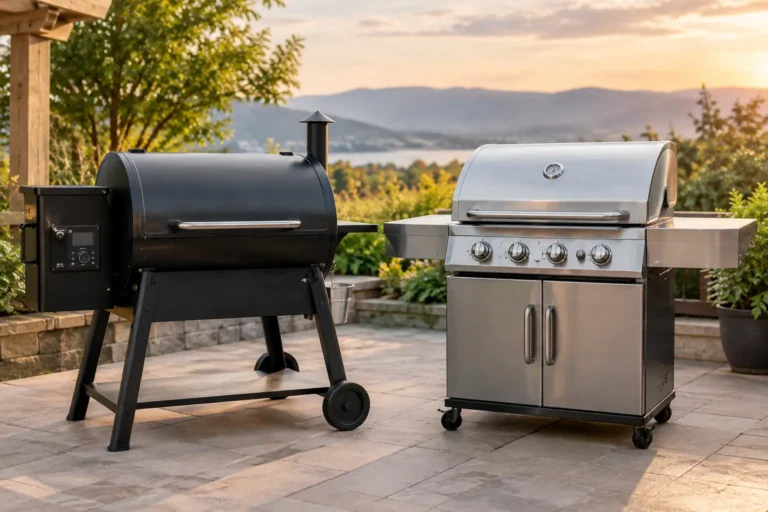
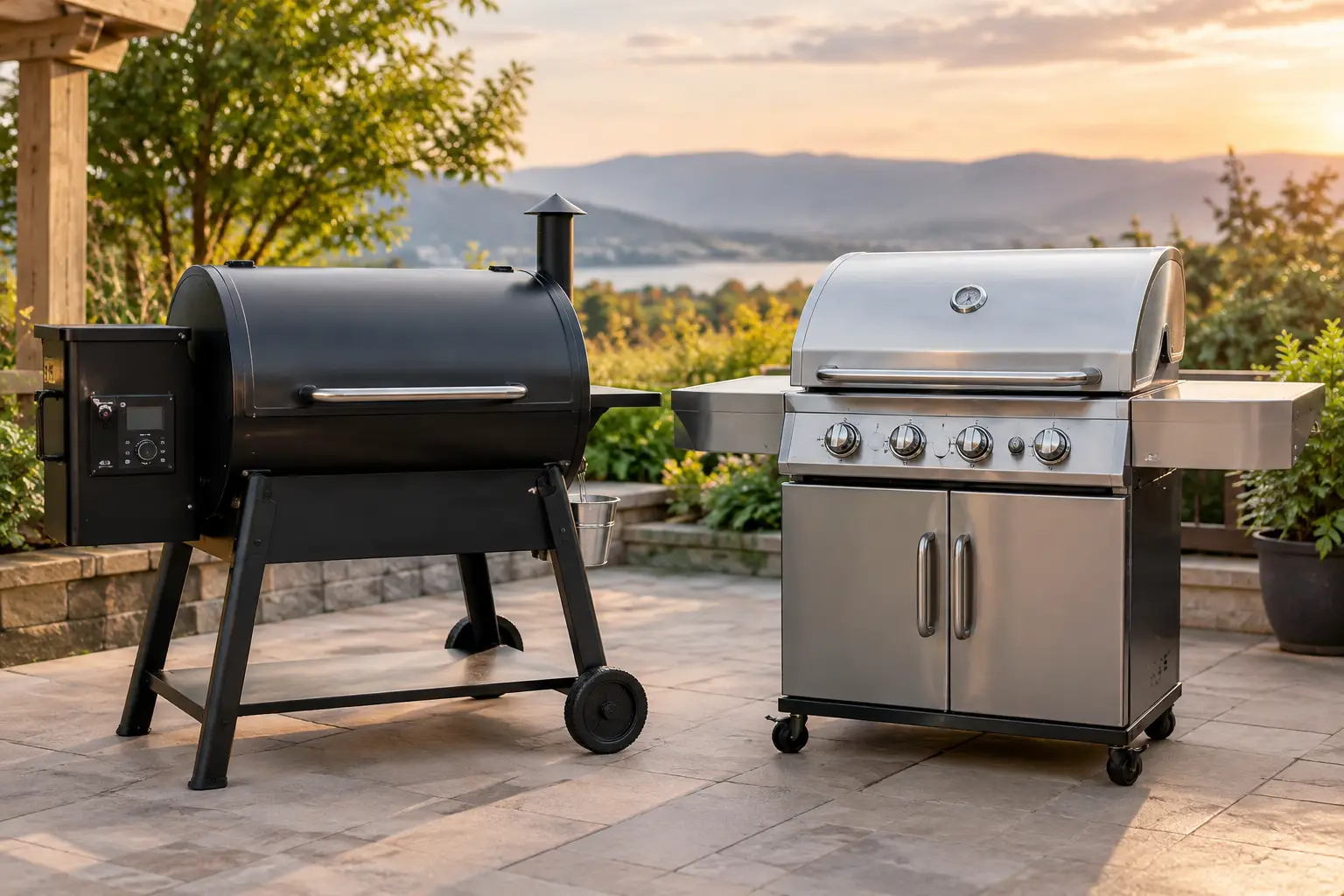
A Saturday cookout can feel very different depending on what is under the lid. In the pellet versus gas grills decision, the real question is not which grill is universally better. It is whether your backyard calls for wood-fired flavor and low-and-slow barbecue, or fast, reliable heat for weeknight meals and easy entertaining.
For Southern California homeowners building an outdoor kitchen or upgrading a patio, both options can earn a place in the plan. The right choice comes down to how you cook, how much time you want to spend tending the grill, and the experience you want to create for family and guests.
Pellet Versus Gas Grills: The Core Difference
A pellet grill burns compressed hardwood pellets. An electric control system feeds pellets from a hopper into a fire pot, then manages airflow and temperature. That system gives pellet grills their defining advantage: the distinct aroma and flavor of real wood smoke without the constant attention required by a traditional offset smoker.
A gas grill uses propane or natural gas to heat burners beneath the cooking grates. Turn a knob, press the ignition, and the grill is ready to preheat. Gas is built for speed, direct heat, and straightforward control, which is why it remains a favorite for homeowners who grill several nights a week.
Neither fuel source is automatically the premium choice. A well-built gas grill can be a lasting centerpiece in an outdoor kitchen, while a quality pellet grill can turn a patio into the place friends request for game-day ribs. Consider the cooking experience first, then match the appliance to it.
Choose a Pellet Grill for Smoke Flavor and Versatility
Pellet grills are especially appealing to cooks who want more than burgers and chicken breasts. They excel at cooking brisket, pork shoulder, ribs, turkey, and whole chickens at steady lower temperatures. Depending on the model, they can also roast, bake, and cook pizza, adding flexibility to an outdoor living space.
Set-it-and-monitor cooking
The digital controller is one of the strongest reasons to consider a pellet grill. After selecting a temperature and making sure the hopper has enough pellets, the grill maintains the heat for you. You still need to check food temperature, manage timing, and follow safe cooking practices, but you do not have to adjust vents or add fuel every few minutes.
That makes a pellet grill well suited to a relaxed afternoon by the pool, a family gathering, or an evening when you would rather enjoy your guests than stand beside the fire. It is a particularly comfortable path into smoking for homeowners who love barbecue but do not want a hobby that demands constant supervision.
The flavor advantage
Hardwood pellets bring a clean, wood-fired character that gas cannot fully replicate. Hickory, oak, apple, cherry, and mesquite pellets each offer a slightly different profile. The smoke is usually gentler than what comes from a charcoal smoker, but it adds a noticeable layer of flavor to meats, vegetables, and even baked dishes.
The trade-off is time. A pellet grill normally takes longer to preheat than gas, and low-and-slow cooking is intentionally unhurried. If dinner needs to be on the table in 25 minutes, a pellet grill can do the job for many foods, but it may not be the most convenient tool for that particular night.
What pellet ownership requires
Pellet grills need electricity to operate the controller, auger, and ignition system. They also need dry pellet storage. In coastal or humid conditions, pellets exposed to moisture can swell and break down, causing feeding problems.
Regular care is uncomplicated but necessary. Empty ash from the fire pot as recommended, clean grease buildup, inspect the temperature probe, and use a properly fitted cover when the grill is not in use. For homeowners who value a polished, ready-to-enjoy backyard, these small habits protect performance and appearance over time.
Choose a Gas Grill for Speed and Direct Heat
Gas grills are designed for the rhythm of everyday cooking. They heat quickly, respond immediately when you turn the controls, and handle familiar favorites with confidence: steaks, burgers, fish, shrimp, vegetables, skewers, and grilled pizza. When work runs late and the family is hungry, that convenience matters.
Fast preheating and familiar control
Most gas grills are ready for cooking after a short preheat. Temperature adjustments are direct and intuitive, so it is easy to create a hotter zone for searing and a cooler zone for gentler cooking. This is useful when you are preparing several foods at once or cooking for guests with different preferences.
High-quality gas grills can also deliver serious performance. Strong burners, solid grates, heat distribution systems, and side burners support everything from a quick lunch to a full backyard dinner. If your vision includes frequent entertaining, a gas grill is often the dependable workhorse that keeps the meal moving.
Natural gas or propane?
A propane grill offers placement flexibility, but tanks must be checked and refilled or exchanged. Nothing interrupts a dinner plan quite like discovering an empty tank halfway through cooking.
A natural gas grill connects to a dedicated gas line, offering a steady fuel supply and eliminating propane tank changes. It can be an excellent choice for a permanent outdoor kitchen, although the line must be planned and installed correctly. If you are designing a larger backyard retreat, this is a decision worth making early in the project.
The gas grill trade-off
Gas grills produce flavorful browning and excellent grill marks, but they do not provide the same wood-smoke profile as pellets. Some owners use smoker boxes or wood chips to add aroma, though the result is typically lighter than food prepared on a pellet grill.
Gas grills also require routine attention. Clean the grates, empty the grease tray, inspect burners and igniters, and watch for flare-ups caused by excess grease. With proper care, a premium gas grill is a practical, long-term investment in easy outdoor meals.
Heat, Searing, and the Foods You Cook Most
The type of food you make most often should carry real weight in this decision. Gas grills are generally the stronger choice for high-heat searing and quick-cooking foods. They make it easy to cook a steak with a good crust, char peppers, or grill burgers for a group without a long warm-up period.
Pellet grills shine when flavor development and steady temperature matter more than speed. Brisket, ribs, pulled pork, smoked salmon, and roasted poultry benefit from the consistent convection-style heat and hardwood smoke. Some pellet models include direct-flame or high-heat features, but performance varies by design. If steakhouse-level searing is a priority, evaluate the grill’s maximum temperature and cooking system rather than assuming every pellet grill handles it the same way.
For many households, the best answer is shaped by frequency. A family that grills chicken, vegetables, and burgers twice a week may get more use from gas. A host who plans weekend barbecues, enjoys experimenting with rubs and smoke profiles, and sees cooking as part of the event may find a pellet grill more rewarding.
Space, Installation, and Backyard Design
A grill should fit the way your backyard works, not simply fill an open corner. Leave room for safe access, food preparation, seating, and traffic flow. Position the grill where smoke and heat will not drift directly toward dining areas, doors, or neighboring properties. Always follow the manufacturer’s clearance requirements and local installation rules.
For a built-in outdoor kitchen, gas can be especially appealing because a natural gas connection creates a clean, permanent setup. Pellet grills are often freestanding and can be easier to reposition, although they need access to a protected electrical outlet. Both styles benefit from durable covers and a location that limits direct exposure to sun, wind, and seasonal weather.
At Backyards In Style, the goal is not simply to place a grill on a patio. It is to help homeowners create an outdoor space that supports relaxed meals, celebrations, and more time together. A grill should work alongside your seating, shade, heating, and entertaining areas as part of one comfortable destination.
Which Grill Is Right for You?
Choose a pellet grill if authentic smoke flavor, hands-off temperature control, and weekend barbecue are high on your list. It is an excellent fit for someone who enjoys the process of cooking and wants the aroma of wood-fired food to be part of the gathering.
Choose a gas grill if fast preheating, responsive heat, and frequent weeknight meals matter most. It is the sensible choice for busy households that want dependable grilling without planning ahead for pellets or longer cook times.
If you are torn between the two, think about the meal you will cook on an ordinary Wednesday, not only the brisket you hope to smoke on a holiday weekend. The grill that makes outdoor cooking easier to enjoy on a regular basis is the one most likely to become a lasting part of your backyard life.