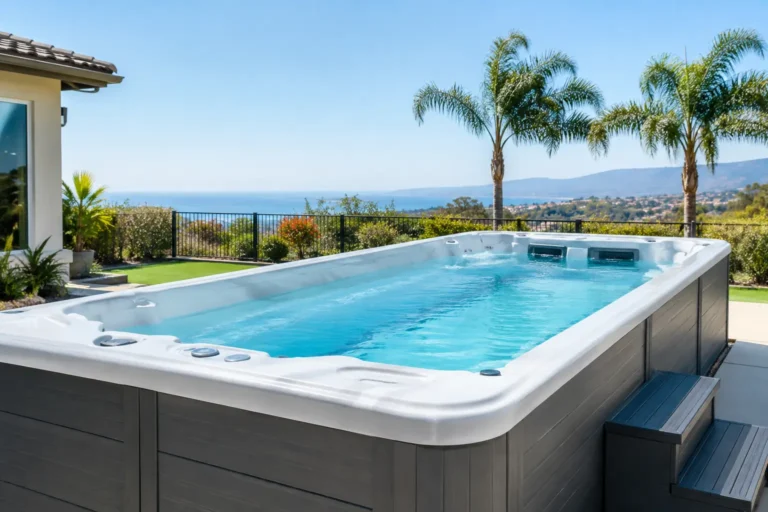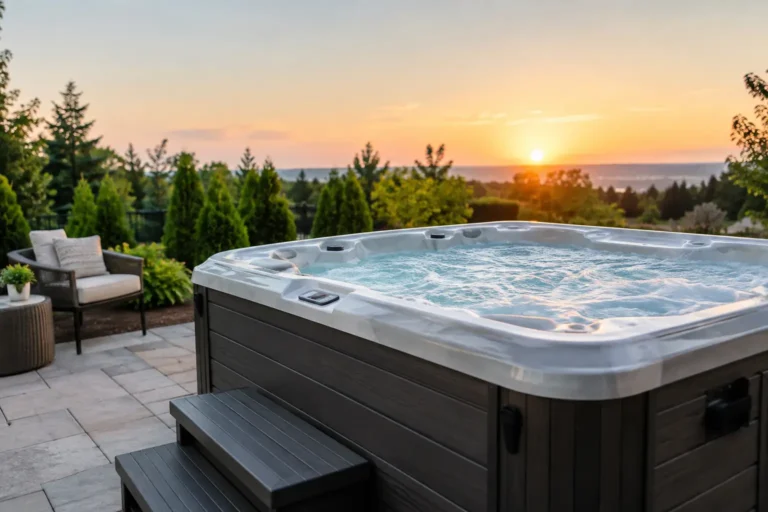

The price on the showroom floor is only one part of bringing hydrotherapy home. Realistic spa ownership costs include the hot tub itself, preparing the site, power, water care, a protective cover, and the occasional professional service visit. Knowing those pieces before you buy makes it easier to choose a spa that fits both your backyard and the way you want to use it – whether that means a quiet evening soak, relief after a long workday, or a place where family and friends naturally gather.
For most Southern California homeowners, a quality spa is a long-term lifestyle investment rather than a short-term purchase. The right model, installed correctly and cared for consistently, can provide years of comfort with predictable ongoing expenses.
What Goes Into Spa Ownership Costs?
A useful budget separates one-time expenses from the monthly and annual costs of ownership. Your total will depend on spa size, insulation, equipment, local utility rates, access to the installation site, and how often the spa is used. A compact two- or three-seat spa has different requirements than a seven-seat model designed for entertaining.
The spa purchase
New hot tubs span a wide price range. Entry-level models may begin in the high thousands, while premium spas with advanced hydrotherapy seating, more jets, upgraded cabinetry, circulation systems, lighting, and sophisticated controls can reach well into the teens or higher. Swim spas generally cost more because they combine a fitness area with a hot-tub-style recovery space and require a larger installation footprint.
The best value is not always the lowest initial price. Better insulation, an efficient circulation system, durable shell materials, and reliable components can reduce inconvenience and operating costs over the life of the spa. Just as important, consider how many people will use it, which seats feel best for your body, and whether you want focused therapy for the neck, back, legs, or feet.
Financing can make a higher-quality spa more approachable by spreading the purchase across manageable payments. When comparing options, look at the full monthly picture: financing payment, anticipated electricity, water-care supplies, and any service plan you prefer.
Delivery, access, and site preparation
Every spa needs a level, structurally sound base. A reinforced concrete pad is a common choice, but properly engineered pavers or an appropriate deck may also work. The spa must sit on a surface that supports its filled weight, including water and bathers. A larger spa can weigh several thousand pounds when full.
Site-preparation costs vary substantially. A straightforward backyard with wide side-yard access and an existing patio will usually cost less than a property that needs grading, a new pad, a gate removed, landscaping adjusted, or a crane lift over a home. In Southern California, tight lots and hillside properties can make access planning especially important.
Before choosing a spa, measure the entire delivery route, not just the final location. Check gates, corners, roof overhangs, steps, and slopes. A showroom team can help you think through the placement, clearances, cover operation, drainage, privacy, and proximity to power before delivery day.
Electrical work and permits
Most full-size hot tubs require a dedicated 240-volt electrical circuit, a GFCI disconnect, and installation by a qualified electrician. The cost depends on the distance from your electrical panel, panel capacity, trenching needs, and local permit requirements. A spa located close to an adequately sized panel is generally simpler than one at the far end of a large yard.
Do not treat electrical work as an afterthought. Safe, code-compliant installation protects your household and helps your spa operate as intended. Your local jurisdiction may have requirements related to permits, setbacks, barriers, or inspections, so build a little time and budget flexibility into the project.
Monthly Hot Tub Operating Costs
Once the spa is installed, the recurring costs are generally easier to manage than buyers expect, especially with a well-insulated model and a properly fitted cover. Still, they are worth planning for.
Electricity
Electricity is typically the largest ongoing expense. Southern California utility rates, outdoor temperatures, wind exposure, set temperature, spa size, insulation quality, and use frequency all affect the result. Many owners find that a modern, energy-efficient spa costs roughly $30 to $100 or more per month to operate, but there is no universal number. A large spa held at a high temperature in a cool, exposed location will cost more than a smaller, covered spa in a sheltered patio setting.
Keeping the water at a steady temperature is often more efficient than turning it down dramatically between uses and asking it to heat back up repeatedly. The practical approach depends on your usage pattern. If you use your spa several times a week, maintaining a comfortable ready-to-use temperature is usually sensible. If it will sit unused for extended periods, ask your dealer about an appropriate vacation or economy setting.
A quality cover is one of the most valuable operating-cost tools you can buy. It helps retain heat, limits evaporation, keeps debris out, and reduces strain on the heating system. Replace a cover when it becomes waterlogged, cracked, or no longer seals well around the shell.
Water care and refills
Spa water needs regular testing and treatment to remain clean, balanced, and comfortable. Budget for sanitizer, pH and alkalinity adjusters, test strips or a testing system, filter cleaner, and occasional shock treatment. The specific products and quantities depend on your water source, bather load, and sanitation system.
Most owners drain and refill a hot tub about every three to four months, although heavy use can shorten that interval. Water itself is usually a modest expense compared with the purchase and installation, but refilling also means reheating the spa. Maintaining good water balance helps extend the usable life of each fill and protects equipment from scale or corrosion.
A simple routine prevents most avoidable issues: test water regularly, rinse filters as needed, clean them on schedule, and shower before soaking when practical. Lotions, cosmetics, laundry detergent, and heavy debris can all make water chemistry harder to manage.
Maintenance and repair planning
A well-made spa does not require constant service, but it is a mechanical system exposed to heat, water, and outdoor conditions. Filters eventually need replacement. Pillows, cover lifters, ozone or sanitation components, pumps, heaters, and control equipment can require attention over time.
Annual professional service can be a smart choice for owners who want a technician to inspect components, deep-clean the spa, and identify small concerns before they become disruptive repairs. Some homeowners prefer hands-on care; others value scheduled maintenance and the reassurance of local service support. Either approach works when the spa receives consistent attention.
When comparing brands, ask about warranty coverage, parts availability, local technician support, and the expected cost of common wear items. These details matter more after the first year than an attractive feature list alone.
How to Keep Spa Costs Predictable
The most cost-conscious decision happens before the spa arrives. Choose a size that matches your real household habits instead of buying extra capacity you will rarely use. A five- or six-seat spa can be ideal for many families, while a smaller model may be perfect for two people focused on daily therapy. For frequent hosts, additional seating and easier entry may be worth the higher purchase and heating costs.
Place the spa where it is protected from prevailing wind, convenient to reach, and visible enough that you will actually use it. A spa tucked behind the house may save a few feet of patio space but lose its appeal if it feels inconvenient on a cool evening. Consider privacy, shade, lighting, towel storage, and a clear walking path from the home.
Use the cover every time. Keep filters clean. Address a leak, error message, or water-quality change early. These small habits are far less expensive than allowing a minor problem to become a damaged component or a full water replacement.
Is a Premium Spa Worth the Higher Cost?
It depends on what you want the spa to do for your household. A budget model may provide a pleasant warm-water soak, while a premium spa can offer more refined seating, targeted jet systems, quieter operation, better insulation, and materials designed for years of outdoor use. Those differences are meaningful for owners who plan to use their spa several times each week for recovery, stress relief, mobility, or family time.
There is also value in buying from a dealer that supports the full ownership experience. At Backyards In Style, homeowners can compare respected spa brands in person, discuss installation realities, and have a local resource for water care, accessories, maintenance, and repair needs after delivery.
A thoughtfully selected spa should feel less like another household expense and more like a reliable place to reset. Plan for the complete cost, choose quality where it matters, and your backyard can become the place everyone looks forward to coming home to.