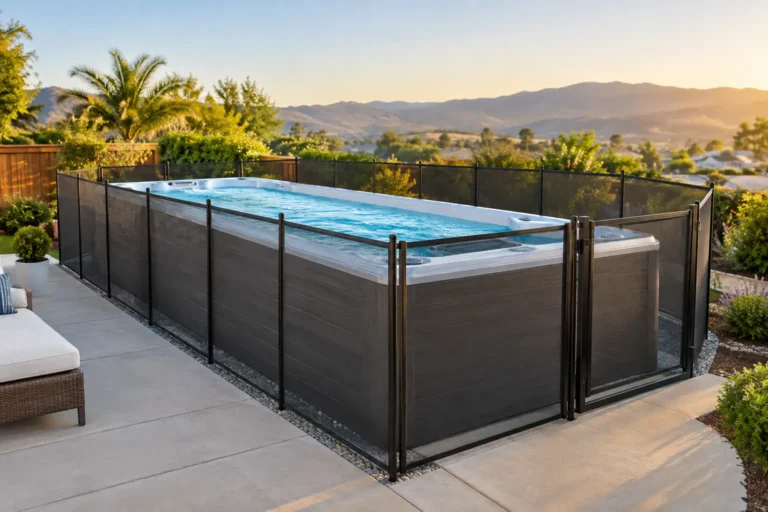
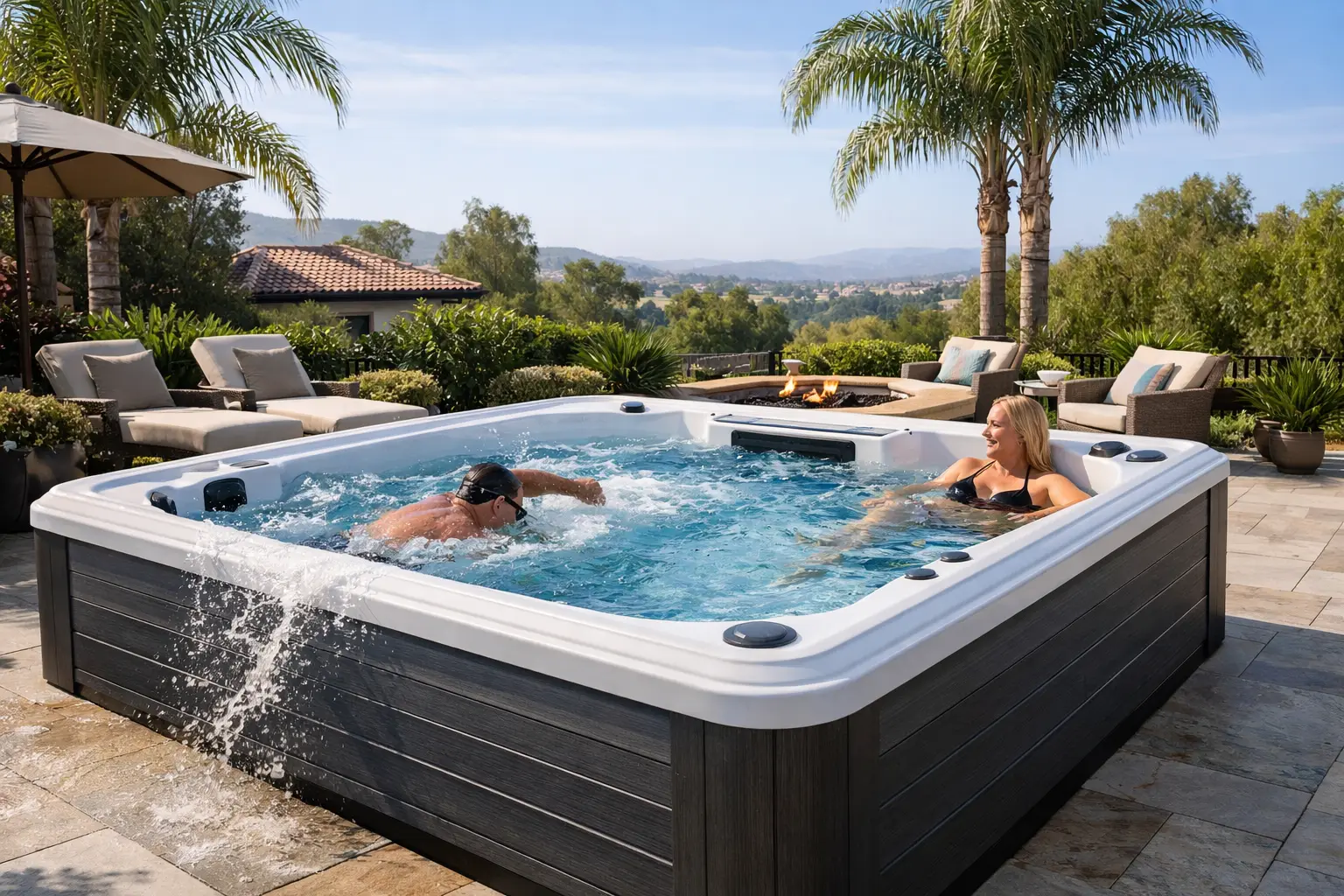
A swim spa can turn an underused patio into the place where early workouts happen, sore muscles recover, and the family stays outside long after the sun goes down. This swim spa ownership guide is designed for Southern California homeowners who want that lifestyle without surprises around placement, installation, care, or ongoing costs.
Unlike a traditional pool, a swim spa brings fitness, hydrotherapy, and relaxation together in a compact, heated vessel. It can be a smart choice for a narrow side yard, a smaller backyard, or a household that wants year-round water time without taking on the scale of a full pool. The right ownership experience starts before delivery day.
Start With How You Will Use Your Swim Spa
The best size, layout, and feature set depend on your priorities. A fitness-focused household may want a longer swim area, adjustable current controls, and room for resistance exercise. Families often value a generous seating area where parents can relax while children play. If hydrotherapy is the main goal, pay close attention to seat depth, jet placement, and how comfortably each seat fits the people who will use it most.
Some swim spas are designed as one continuous body of water, while dual-zone models separate the swim area from a hotter spa section. A dual-zone configuration can be especially appealing when one person wants to swim at a cooler temperature and another wants a warm soak. The trade-off is a larger footprint, a more involved operating system, and typically a higher purchase price.
Think about your routine rather than buying for an idealized version of it. If the swim spa will be used for quick morning exercise, convenient access and simple controls matter more than features you may rarely touch. If it will anchor weekends with family and friends, seating capacity, steps, lighting, and surrounding patio space deserve more attention.
Plan the Site Before You Choose the Model
A swim spa is substantial when filled with water and occupied. It needs a level, engineered foundation that can support its full weight. In many installations, that means a properly prepared concrete pad. Depending on the property, an engineered deck or another approved foundation may work, but it should be evaluated before a purchase decision is finalized.
Measure more than the space where the cabinet will sit. Leave room for cover removal, entry steps, comfortable walking paths, and service access to the equipment panel. A swim spa tucked tightly against a wall may look efficient on a sketch, but it can make future maintenance difficult and limit the enjoyment of the surrounding outdoor living area.
Access is equally important. Delivery crews need a clear route from the street to the final location. Gates, rooflines, retaining walls, slopes, and overhead utility lines can all affect the delivery plan. In some Southern California backyards, a crane is the practical answer. Identifying that early avoids last-minute changes and helps set a realistic installation budget.
Electrical, drainage, and local requirements
Your swim spa will require a dedicated electrical connection installed by a qualified electrician. The electrical requirements vary by model, so confirm them before work begins rather than assuming an existing outdoor outlet is sufficient. Your installer can also help you understand disconnect placement and other safety considerations.
Plan where splash-out and drained water will go. The goal is to keep water away from the home, neighboring properties, and areas where it could create slippery surfaces or affect landscaping. Permitting and code requirements can vary by city and installation type, particularly for fencing, barriers, and electrical work. A local, experienced dealer can help clarify the questions worth asking before the project is underway.
Budget for Ownership, Not Just the Purchase
The purchase price is only one part of swim spa ownership. A complete budget should also consider foundation preparation, electrical work, delivery conditions, steps, a cover, water-care supplies, and any landscape or patio improvements planned around the unit. Financing can make a premium backyard upgrade more manageable, but it is still helpful to see the full project cost in one view.
Monthly operating costs depend on the model, water temperature, local utility rates, how often the cover is left off, and outdoor conditions. Southern California’s mild climate can be favorable for year-round use, yet cool evenings, wind exposure, and frequent heating adjustments still affect energy consumption.
A well-fitting insulated cover is one of the simplest ways to protect efficiency. Keep it on whenever the swim spa is not in use, inspect it for damage, and avoid setting the water temperature higher than your household actually enjoys. If fitness use is the priority, a slightly cooler water temperature may also be more comfortable for exercise.
Swim Spa Ownership Guide: Water Care That Stays Manageable
Clear water is not accidental. It comes from a regular routine that balances sanitizer, pH, alkalinity, filtration, and circulation. The exact products and schedule depend on your water source, bather load, and the sanitation system used by your swim spa, but consistency is more valuable than overcorrecting every small test result.
Most owners benefit from testing the water several times a week, especially during periods of heavy use. Sanitizer should be maintained within the recommended range, while pH and alkalinity should be adjusted gradually. Adding several chemicals at once can make it harder to understand what changed and can lead to a frustrating cycle of corrections.
Rinse filters regularly and clean them more thoroughly on the schedule recommended for your model. Filters collect body oils, sunscreen, debris, and fine particles that otherwise cloud the water and reduce circulation. Showering before use, keeping the cover closed, and asking guests to avoid lotions or laundry detergent residue on swimwear all make the maintenance routine easier.
Water eventually needs to be drained and refreshed. The right interval varies with usage and water quality, but many owners plan for a periodic drain, clean, refill, and rebalance. This is also an ideal time to inspect the cover, cabinet, jets, and accessible equipment areas.
When professional service makes sense
Some owners enjoy handling routine water care. Others prefer dependable scheduled maintenance, particularly when travel, busy family schedules, or a second home make consistency harder. Professional service can include water testing, chemical adjustments, filter care, inspections, and help addressing issues before they become larger repairs.
If water will not stay clear, the heater is not maintaining temperature, or a pump sounds different than usual, do not wait for the problem to worsen. Early service is often simpler than recovering neglected water or repairing equipment after it has been working under strain.
Build a Backyard You Want to Use
The swim spa itself is the centerpiece, but the space around it determines whether it feels like an occasional amenity or part of everyday life. Non-slip walkways, thoughtful lighting, towel storage, privacy screening, and nearby seating make a major difference. A pergola, gazebo, or shade structure can add comfort during sunny afternoons while creating a more finished retreat.
Give the cover a practical home when the spa is open. A cover lifter can reduce the effort of daily use and help protect the cover from being dragged across the patio. Consider sightlines from the house as well. Being able to keep an eye on children in the water while preparing dinner or relaxing indoors adds peace of mind.
For households combining wellness and entertaining, create zones. Keep the immediate perimeter clear for safe entry and service access, then place lounge furniture, a dining area, or an outdoor kitchen a little farther out. That approach lets swimmers move comfortably while guests still feel connected to the activity.
Choose Support That Continues After Delivery
A swim spa is a long-term investment, and the relationship with the dealer matters after installation. Look for a team that can explain model differences clearly, review site readiness, coordinate delivery expectations, and remain available for water-care questions, maintenance, and repairs. The lowest initial quote is not always the best value if service support is difficult to reach later.
At Backyards In Style, the goal is to make the process feel informed and comfortable, from showroom comparison through the years of ownership that follow. Seeing models in person can help you judge seat comfort, cabinet finishes, entry height, and the real scale of a swim spa in ways a specification sheet cannot.
A well-planned swim spa becomes easier to use, easier to care for, and more rewarding season after season. Give your project the same attention you would give any meaningful home improvement, and your backyard can become the dependable place where exercise, recovery, and time together naturally fit into the week.