A hot tub can look beautifully clear and still be asking too much of its filter. Your spa filter lifespan has a direct effect on water clarity, jet performance, heating efficiency, and the easy, restorative soak you expect at the end of a long day. In Southern California, frequent use, warm weather, windblown debris, sunscreen, and hard-water minerals can all make a filter work harder than many owners realize.
A filter is not a permanent component. It is a consumable part of your hot tub’s circulation system, designed to capture oils, lotion, hair, leaves, dust, and fine particles before they settle in the plumbing or cloud the water. Cleaning it regularly can extend its useful life, but it cannot restore filter media that has become worn, compressed, or permanently clogged.
What Is the Typical Spa Filter Lifespan?
Most quality cartridge filters last about 12 to 24 months with consistent care. That range is useful, but it is not a deadline. A lightly used spa with disciplined water care may stay near the two-year mark. A family hot tub used several times a week, especially one enjoyed after workouts or pool days, may need replacement closer to once a year.
The filter itself is only one part of the equation. Water balance, sanitizer levels, bather load, environmental debris, and cleaning habits determine how quickly its pleated fabric loses its ability to trap contaminants while allowing water to move freely.
For many homeowners, a practical approach is to plan on annual filter replacement and adjust from there based on use and condition. Keeping a spare set on hand is also smart. It lets you rotate clean, dry filters into the spa while the other set is being deep-cleaned, so your spa is never waiting on maintenance when you are ready to relax.
What Shortens a Spa Filter’s Life?
A filter’s pleats are remarkably effective, but they are not meant to absorb every product and contaminant that enters the water. Body oils, cosmetics, deodorant, hair products, detergent residue on swimsuits, and sunscreen are especially demanding. These materials can coat the filter fibers and resist a simple rinse.
High bather load matters, too. If friends and family regularly gather in the spa, the filter is doing more work than it would in a two-person household with occasional use. That is not a reason to use the spa less. It simply means cleaning and replacement should follow your actual lifestyle rather than a generic calendar.
Southern California conditions add a few local factors. Santa Ana winds can carry fine dust and plant debris into an uncovered spa. A spa near trees, lawns, or active outdoor entertaining areas may collect leaves, pollen, and airborne debris more quickly. Mineral-heavy fill water can also leave scale behind, narrowing the spaces between pleats and restricting circulation.
Chemical imbalance can be equally hard on a cartridge. Low sanitizer allows organic contaminants to accumulate. Excessively high sanitizer, incorrect pH, or improper use of cleaning products can degrade the filter material. The goal is balanced water that feels comfortable on skin and is easier on every component in the spa.
Signs It Is Time to Replace Your Filter
A clean filter should have open pleats, a firm shape, and no lingering odor. Discoloration alone does not always mean it has failed, but a cartridge that stays brown, gray, greasy, or stiff after a proper cleaning has likely reached the end of its service life.
Watch for changes in how the spa operates. Slower water flow, weak jets, recurring flow-related error messages, longer heat-up times, or a circulation pump that seems louder than usual can all point to a restricted filter. Cloudy water that returns soon after it has been balanced and treated is another common clue.
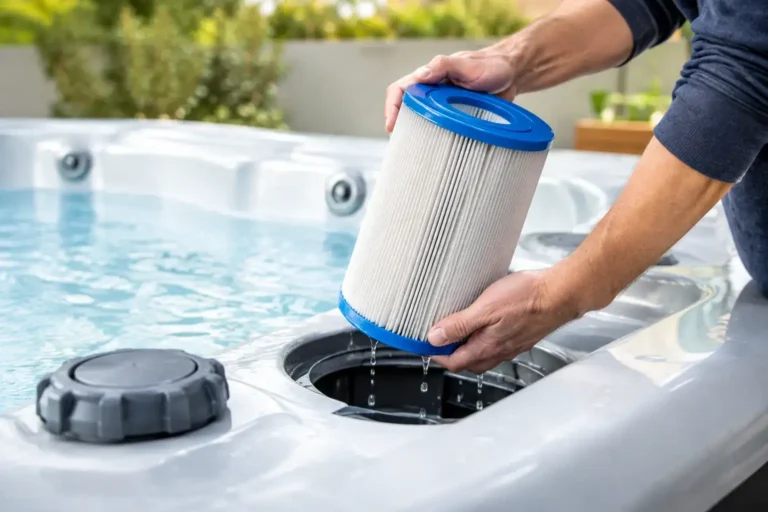
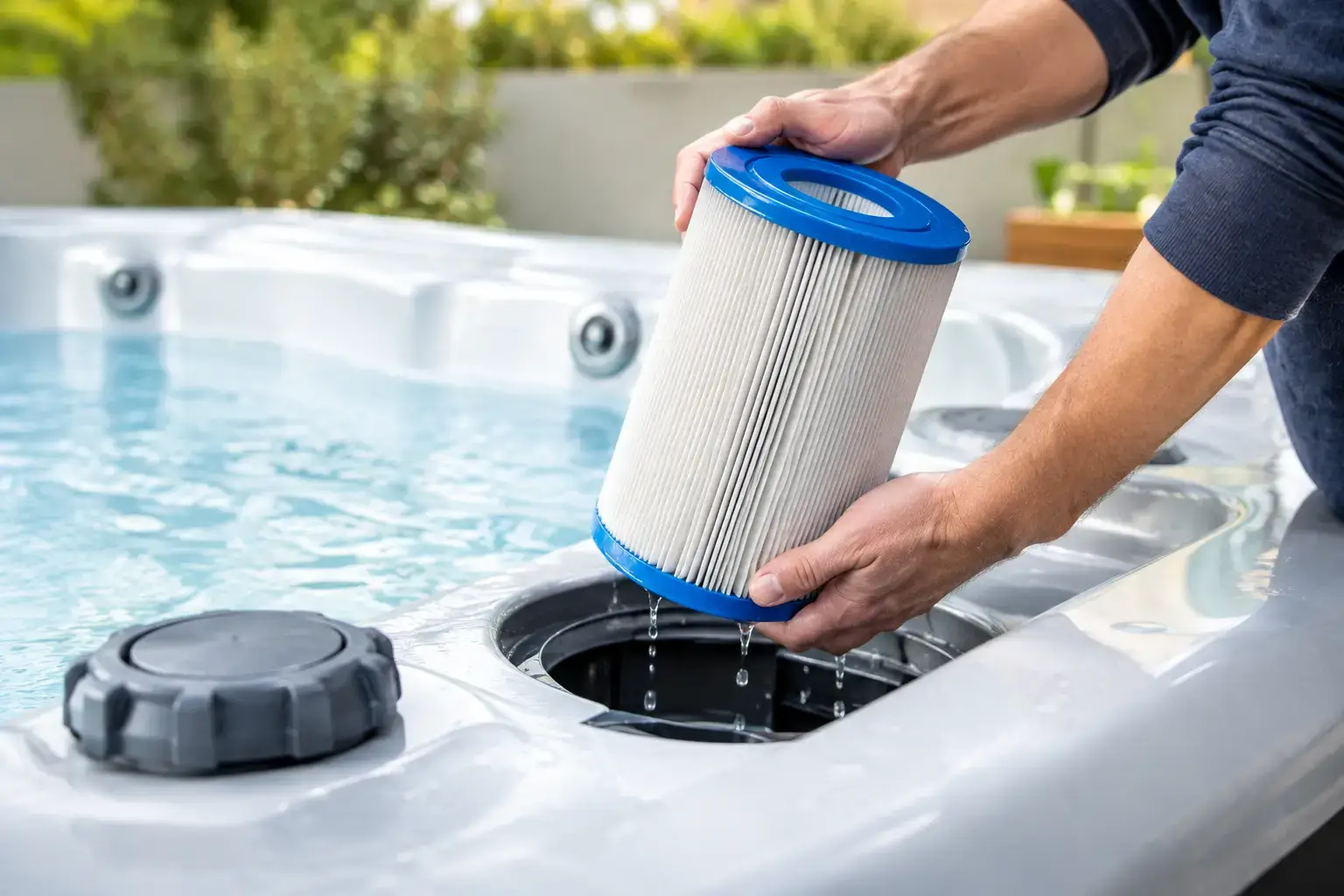
Remove the filter and inspect it in good light. Replace it if you see torn pleats, cracked end caps, loose bands, flattened sections, fraying fabric, or a center core that looks distorted. A damaged cartridge can allow debris past the filter or shed material into the system. Continuing to use it may place unnecessary strain on the pump and heater.
A simple test can help when you are unsure. With the spa powered down as directed in your owner’s manual, remove the filter and inspect its condition. If water flow noticeably improves after the filter is removed, the cartridge may be restricted. Do not run the spa without its filter except for a brief diagnostic step when appropriate for your model, and always reinstall or replace it before normal operation.
Cleaning Extends Life, but It Does Not Reset It
Routine rinsing is the first line of defense. Every one to two weeks, or more often during heavy use, remove the cartridge and rinse between the pleats with a garden hose. Work from top to bottom and use enough pressure to dislodge debris without flattening or tearing the fabric.
Avoid a pressure washer. It can separate the pleats, damage the media, and shorten the usable life of a perfectly good filter. Dish soap, laundry detergent, and household cleaners should also stay out of the process. Even small residues can create foam and water-quality problems once the cartridge goes back into the spa.
Every three to four months, give the filter a deeper cleaning with a product made specifically for spa cartridges. These cleaners are formulated to break down oils, minerals, and contaminants that a hose cannot remove. Follow the product directions for soak time, rinse thoroughly, and allow the cartridge to dry completely before reinstalling if you have a second set available.
Drying matters because it helps the pleats open and makes it easier to see whether the material has become misshapen or damaged. Rotating between two sets also reduces the temptation to reinstall a filter before it has been fully rinsed and dried.
Match Maintenance to How You Use Your Spa
There is no one cleaning schedule that fits every backyard. A couple using their hot tub two evenings a week can typically follow a lighter routine than a household with children, regular guests, and weekend gatherings. Swim spa owners may need to be especially attentive because exercise introduces perspiration, body oils, and outdoor debris at a higher volume.
Use these situations as a practical guide:
- Light use: Rinse filters about every two to four weeks and deep-clean every three to four months.
- Regular family use: Rinse every one to two weeks and deep-clean every two to three months.
- Heavy use, frequent entertaining, or swim spa workouts: Check filters weekly, rinse as needed, and deep-clean more often.
- After a party, storm, or extended period of heavy use: Inspect the water and filter promptly rather than waiting for the next scheduled service.
This routine works best alongside regular water testing. When sanitizer, pH, alkalinity, and calcium hardness are in their recommended ranges, the filter can do its intended job rather than compensating for preventable water problems.
Choosing the Right Replacement Filter
When it is time to replace a cartridge, the correct fit is more than a matter of convenience. Filter length, diameter, core style, end-cap configuration, square footage, and brand-specific design all affect how the cartridge seals and how effectively it supports circulation.
Check your spa owner’s manual or the identifying information printed on the existing filter before ordering a replacement. A look-alike cartridge may seem close enough but fit poorly, restrict flow, or fail to seal correctly. Quality replacement filters are designed to provide the filtration area and structural durability your particular spa requires.
This is also a good time to evaluate the cause of early replacement. If filters are failing every few months, the issue may be unusually high bather load, poor water balance, excess debris, or a cleaning method that is too aggressive. Addressing the underlying cause can protect your next filter and improve the entire ownership experience.
For homeowners who would rather spend their free time soaking than troubleshooting water care, Backyards In Style can help identify the right filter and provide knowledgeable local service for your spa. A quick professional assessment can be especially valuable if recurring cloudy water, weak flow, or error codes continue after a new filter is installed.
A fresh, properly fitted filter is one of the simplest ways to protect the comfort and performance of your hot tub. Treat it as routine care for the backyard retreat you have created, and every soak can feel more like the reset it is meant to be.