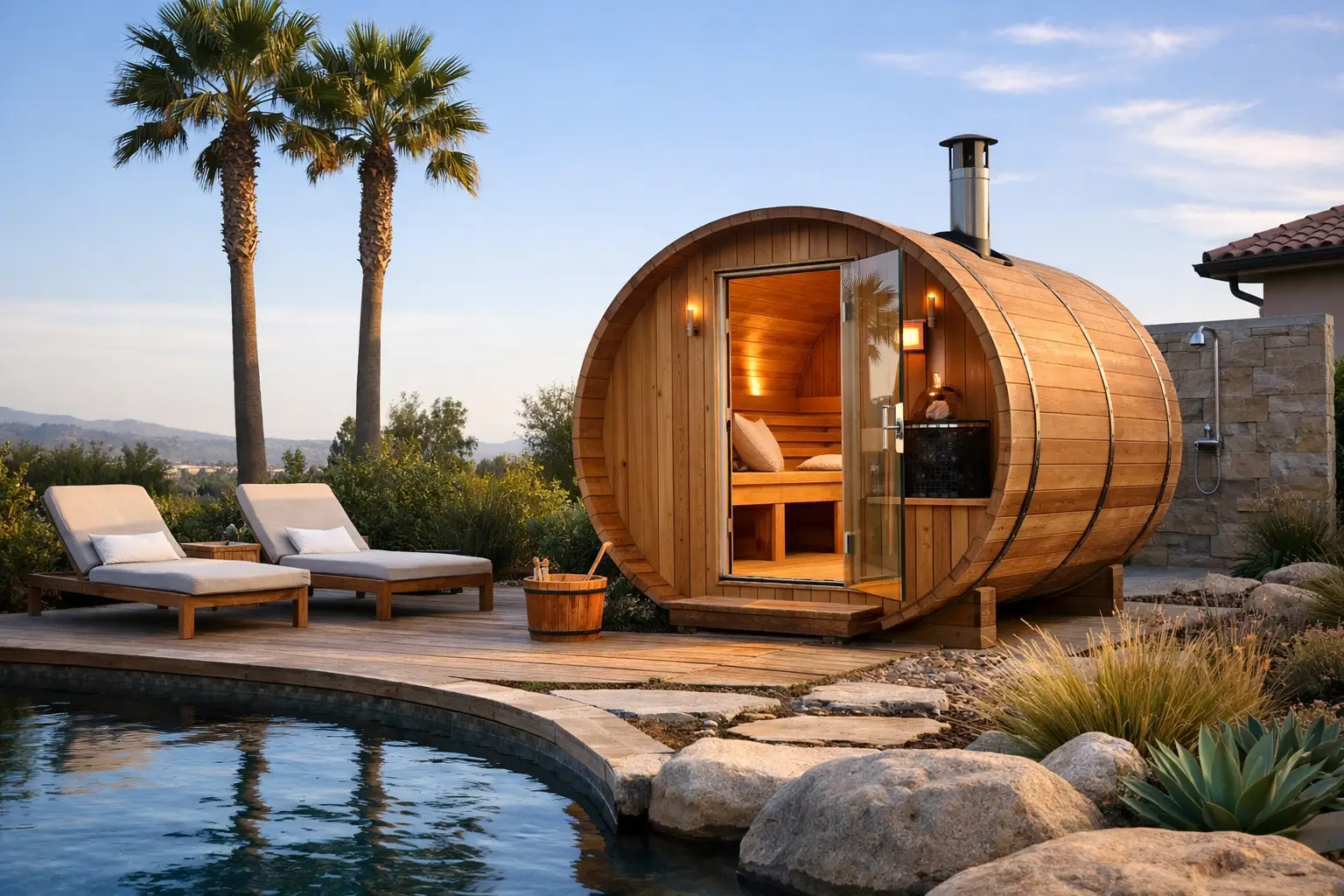
A sauna should feel like the easiest part of your day: step outside, settle into the heat, and return to your evening feeling restored. Thoughtful outdoor sauna installation is what makes that experience feel effortless for years to come. In Southern California, the big decisions are rarely about whether a sauna will fit. They are about choosing a location, utility plan, and design that work with the way you actually use your backyard.
For some homeowners, that means placing a sauna near a cold plunge for a focused recovery routine. For others, it means adding a quiet wellness zone beside the pool, patio, or primary suite. The right plan creates a destination that supports stress relief, physical comfort, and everyday connection without making the yard feel crowded or complicated.
Start With How You Want to Use Your Sauna
Before selecting a model or preparing a pad, picture the full experience. Who will use the sauna most often? Will it be a daily personal ritual, a post-workout recovery space, or part of a larger entertaining area? A two-person sauna can be an excellent fit for couples or individuals who value a compact footprint. Families and frequent hosts may prefer more interior room, additional seating, and a layout that gives each person comfortable space.
Consider the route from the house as carefully as the sauna itself. A sauna located just steps from a bathroom, shower, or changing area is more likely to become part of your regular routine. If it is paired with a cold plunge, leave enough room to move safely between the two and to set down towels, robes, and hydration nearby.
Privacy also matters. A beautiful view can make a sauna session more relaxing, but a direct sightline from neighboring windows can have the opposite effect. Landscaping, a privacy screen, a gazebo, or thoughtful orientation can create a tucked-away retreat while still keeping the sauna accessible.
Choose the Right Location for Outdoor Sauna Installation
Most outdoor saunas need a level, stable surface and clear access for delivery and service. A concrete pad is often a practical long-term choice because it offers durability and a consistently level base. Pavers or a properly engineered deck may also work, depending on the sauna model, total weight, and local building requirements.
Do not choose a location based only on open space. Think about drainage after a rare but heavy Southern California rain, exposure to irrigation, nearby tree debris, and access to electrical service. Water should drain away from the sauna base rather than collecting beneath or around it. If the site sits near sprinklers, adjust the heads so they are not regularly spraying the exterior.
Sun exposure is another trade-off. A shaded location can be more comfortable in the afternoon and may help protect surrounding furniture and finishes. At the same time, a sauna under dense trees may require more frequent cleaning from leaves, pollen, or sap. A professional site review can help balance comfort, maintenance, privacy, and delivery access before the installation date is set.
Leave Room Around the Sauna
A sauna is more enjoyable when it has breathing room. Plan for doors to open fully, comfortable entry and exit, access to controls, and space for future maintenance. If the sauna has a rear or side service area, keep that section clear rather than enclosing it tightly with planters or built-in furniture.
This is also the time to plan the details that make the area inviting: slip-resistant walking surfaces, soft outdoor lighting, a towel hook, a bench, and a small table for water. These elements do not need to be elaborate. They simply make it easier to use your wellness space on a weeknight when time is limited.
Plan Electrical Service Early
Electrical planning is one of the most important parts of an outdoor sauna installation. Many premium electric saunas require a dedicated circuit and professionally installed wiring. Requirements vary by model, heater size, voltage, and local code, so the sauna specifications should guide the electrical plan rather than the other way around.
A licensed electrician can assess your existing panel capacity, determine the proper circuit, and plan a safe route for conduit or wiring. Starting this conversation early avoids a frustrating situation where the sauna is ready for delivery but the power connection is not. It also gives you a clearer picture of the full project investment before work begins.
Avoid relying on extension cords or temporary electrical solutions for a permanent sauna. Heat, moisture, and outdoor conditions call for a properly designed installation. Professional electrical work protects your equipment, supports reliable performance, and helps preserve the peaceful feeling a sauna is meant to provide.
Check Permits, Setbacks, and Community Rules
Permit requirements can differ across Anaheim and surrounding Southern California communities. Depending on the sauna, electrical scope, foundation, property layout, and homeowners association rules, you may need approvals before installation. A freestanding sauna may have different considerations than a custom-built structure or an installation that includes a new deck, roof cover, plumbing, or major electrical upgrade.
Setbacks are especially worth checking when the preferred location is near a fence, side yard, or property line. If you live in an HOA community, review architectural guidelines before ordering. These steps can feel administrative, but they are far easier to address before delivery than after a site has been prepared.
An experienced local retailer can help you understand the questions to ask and coordinate the installation process with the appropriate trades. At Backyards In Style, that kind of guidance is part of making a high-consideration backyard purchase feel more straightforward.
Build a Wellness Zone, Not Just a Sauna Pad
An outdoor sauna can stand on its own, but it becomes more valuable when it fits into a complete backyard routine. Pair it with a cold plunge for contrast therapy, place it near a hot tub for a broader hydrotherapy experience, or create a sheltered seating area where you can cool down after a session. The goal is not to fill every inch of the yard. It is to give each part of the space a purpose.
Lighting deserves special attention. Bright overhead fixtures can make a private retreat feel clinical. Low, warm path lighting helps guide guests safely while preserving a calmer atmosphere. If you enjoy using the sauna after sunset, make sure steps, gates, and changes in elevation are easy to see.
Materials should also match the rest of your outdoor living area. Coordinating the sauna location with patio furniture, pergolas, planters, and hardscaping makes the addition look intentional. This is particularly helpful in smaller yards, where visual continuity can make the space feel more open.
Prepare for Delivery Day
Delivery is smoother when the path from the street to the final location has been reviewed in advance. Measure gates, side yards, turns, overhead clearances, and any stairs. Remove temporary obstacles such as patio furniture, planters, hoses, or low-hanging branches. If a gate needs to be removed and reinstalled, arrange that before the crew arrives.
The foundation and electrical work should be complete according to the sauna manufacturer’s requirements. If the sauna will be lifted over a wall or placed in a challenging backyard location, specialized equipment or additional planning may be needed. Clear communication before delivery protects both the product and your property.
Once the sauna is in place, follow the manufacturer’s startup and care instructions. Give yourself time to learn the controls, recommended temperature settings, ventilation guidance, and cleaning routine. Consistent basic care helps preserve the wood, heater, and overall appearance of your investment.
Make the First Session Part of Your Routine
The best outdoor sauna installation is not the one that photographs beautifully once. It is the one you use when your shoulders are tight after a long day, when you want a quiet reset before bed, or when family and friends gather in the backyard. Build the space around those small, repeatable moments, and your sauna can become the place where home feels a little more restorative every day.