A patio heater should make a crisp Anaheim evening feel like an invitation to stay outside, not create a warm circle that leaves half the table reaching for blankets. This outdoor patio heater size guide helps you choose coverage and heat output based on the space you actually use, whether it is a compact conversation set, a poolside lounge, or a full outdoor dining area.
The right size is less about buying the highest-BTU model and more about matching the heater to your layout, ceiling height, wind exposure, and the way your family and guests gather. A properly planned heater can extend the use of your patio through cooler months while keeping the setting comfortable, attractive, and functional.
Outdoor Patio Heater Size Guide: Start With the Zone
Measure the seating zone you want to heat, rather than your entire backyard. If your patio is 600 square feet but your outdoor dining table and chairs occupy a 150-square-foot section, size the heater for that dining area. Trying to heat every open inch of a large yard with one unit usually leads to disappointing results.
For a quick starting point, think in terms of usable coverage. A freestanding propane patio heater with roughly 40,000 to 48,000 BTUs often warms an area of about 150 to 250 square feet in mild conditions. That can work well for a six- to eight-person dining set or a modest lounge arrangement. In an exposed or breezy location, the practical coverage area becomes smaller.
| Outdoor area | Typical heater approach | Best use | | — | — | — | | Up to 100 square feet | One compact electric or propane heater | Bistro set, balcony-style nook, small seating area | | 100 to 200 square feet | One 40,000-48,000 BTU freestanding propane heater or two electric units | Dining table, conversation set, covered patio | | 200 to 350 square feet | Two heaters placed around separate seating zones | Larger dining and lounge layout | | More than 350 square feet | Multiple zoned heaters or a built-in heating plan | Outdoor kitchen, pool deck, entertaining patio |
These ranges are planning tools, not promises. A protected courtyard can feel comfortable with less heat, while an open hillside, wide side yard, or coastal location may need more focused heating even when temperatures are relatively mild.
BTUs Matter, but Placement Matters More
BTU stands for British thermal unit, a measure of heat output. More BTUs generally mean more available heat, but they do not automatically mean better comfort. A powerful freestanding heater placed at the far edge of a patio may waste warmth on open air. A lower-output unit aimed at a well-defined seating area can feel much more effective.
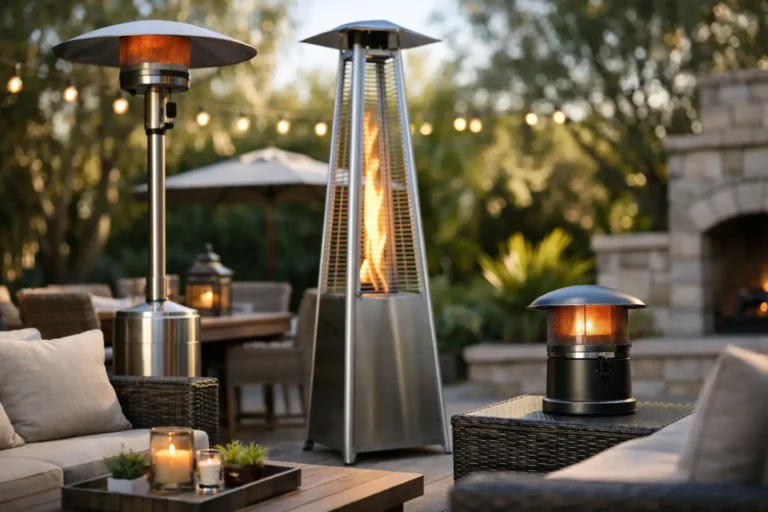
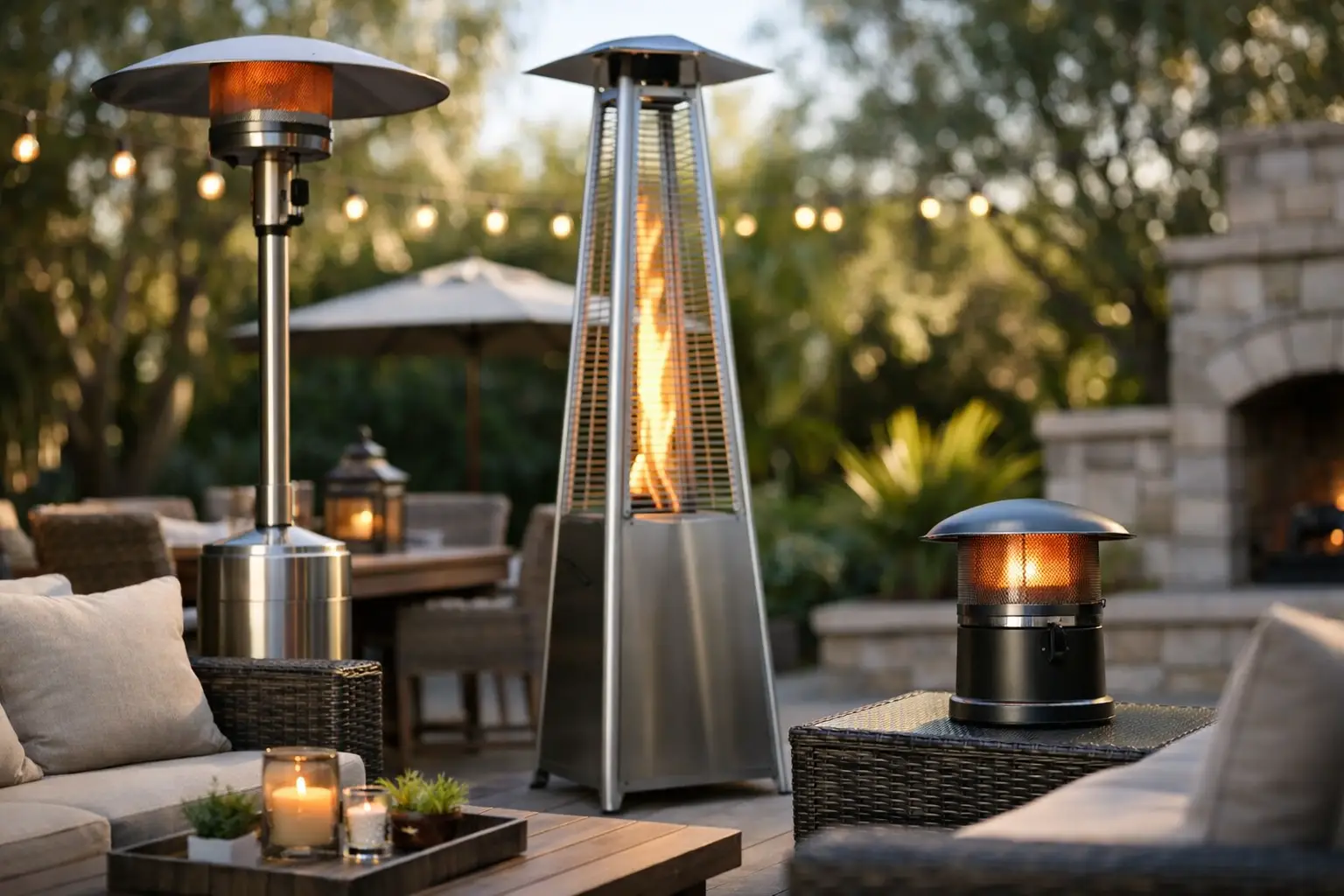
For propane models, 40,000 to 48,000 BTUs is common for mushroom-style and pyramid-style freestanding heaters. Their heat radiates outward and downward, so guests generally need to sit within the manufacturer’s recommended range. These units are a familiar choice for flexible entertaining spaces because they can be moved as furniture arrangements change.
Electric infrared heaters work differently. Instead of attempting to warm a large volume of air, they warm people and nearby surfaces directly. This makes them especially appealing under covered patios, gazebos, and pergolas where the seating layout is predictable. Their output may be listed in watts rather than BTUs, so compare the manufacturer’s stated coverage area instead of judging the unit by a single number alone.
Natural gas heaters can be an excellent long-term option for a dedicated outdoor living area, especially when you want to avoid moving or replacing propane tanks. They require professional gas-line planning and installation, but they offer convenience for homeowners who host often and want a more permanent setup.
Measure the Space in Three Dimensions
Square footage is only one part of the decision. Before choosing a heater, measure the width and depth of the seating area, then look up. Overhead clearance affects what type of heater can be used safely and where it can be placed.
A tall freestanding propane heater may be ideal beside an open dining area, but it may not fit safely beneath a low patio cover. A ceiling-mounted or wall-mounted electric heater can preserve floor space in that situation, provided the structure, electrical supply, and clearances meet the product requirements. Always follow the heater manufacturer’s installation instructions for distances from ceilings, walls, furniture, umbrellas, draperies, and other combustible materials.
Think about traffic flow as well. A heater should not sit where guests need to squeeze around it, where children play, or where a door regularly swings open. On a smaller patio, a wall-mounted electric unit can be a cleaner choice because it leaves pathways open for dining, grilling, and everyday family use.
Account for Wind Before You Size Up
Southern California evenings are often pleasant, but patios can be surprisingly breezy. Wind pulls heated air away from guests and can make an oversized heater feel underpowered. Before purchasing, stand in the intended seating area at the time of day you are most likely to use it. Notice which direction the breeze comes from and whether walls, fences, landscaping, or a patio cover provide protection.
If wind is a regular factor, do not rely on one large heater to serve a long table or oversized sectional. Two smaller heat sources positioned closer to the group typically provide more even comfort. This also lets you heat only the occupied zone when hosting a smaller gathering.
Wind should not be solved by moving a fuel-burning heater into an enclosed room, garage, or tightly enclosed patio. Propane and natural gas heaters are designed for outdoor use with proper ventilation. For covered or partially enclosed spaces, confirm that the specific model is approved for that environment and that all installation and ventilation requirements are met.
Choose a Heater Style That Fits How You Entertain
Freestanding propane heaters are a strong fit for flexible patios. They are easy to position near a dining table for a holiday meal, then move near a lounge area for a relaxed evening with friends. Their trade-off is floor space, visible fuel storage, and the need to monitor propane supply.
Tabletop propane heaters provide a smaller, more intimate source of warmth for a compact dining setup. They are not meant to heat a broad patio, but they can make a two- to four-person table more inviting when used according to their clearance and stability instructions.
Mounted electric heaters suit homeowners who want an integrated look and consistent coverage over a specific zone. They are especially practical above an outdoor sofa, beneath a properly designed patio cover, or along the edge of an outdoor kitchen. Installation may require a dedicated electrical circuit, which should be evaluated before selecting the heater.
Fire tables and fire pits contribute ambiance and give people a place to gather, but their heating pattern is localized. They work beautifully as a centerpiece for a conversation area, not as a substitute for a patio heater when the goal is to warm a large dining space. Many well-planned backyards use both: a heater for reliable coverage and a fire feature for atmosphere.
A Simple Layout Makes the Difference
Picture where people will sit, not where the heater will look best from across the yard. For a rectangular dining table, place heat near the center of the group while maintaining all required clearances. For a sectional, position heaters to reach the seats that face away from the house or the area that catches the most breeze.
Large patios benefit from zones. One heater can support the dining area, while another serves a lounge near the spa, pool, or fire feature. This approach creates comfort without turning the whole backyard into a construction project or running every heat source when only one area is in use.
At Backyards In Style, patio heaters are part of a larger outdoor-living plan. Matching the heater to furniture scale, patio covers, outdoor kitchens, and wellness spaces helps the backyard feel intentional from day to night.
Safety and Operating Details Worth Planning For
A heater that is correctly sized still needs a safe home. Place freestanding units on a stable, level surface and keep them away from pool splash zones, high-traffic paths, and play areas. Inspect hoses, connections, cords, and fasteners regularly, and never operate damaged equipment.
For propane heaters, make sure the tank is properly secured and keep a spare tank only if it can be stored according to local requirements and manufacturer guidance. For electric models, avoid extension cords unless the heater manufacturer specifically permits them. A qualified installer can help with gas and electrical considerations for permanent installations.
The best patio heater is one you can use comfortably without rearranging your entire evening around it. Measure the gathering area, consider the wind, choose the right fuel and mounting style, and plan heat around the people you want to bring together. Then cooler nights become another reason to enjoy the backyard you have created.