A spa should feel like the easiest part of your day: warm water, targeted jets, and a quiet place to reset after work, workouts, or busy family weekends. When comparing saltwater versus chlorine spas, the choice often comes down to how you want to manage water care, what type of feel you prefer in the water, and how hands-on you want to be between service visits.
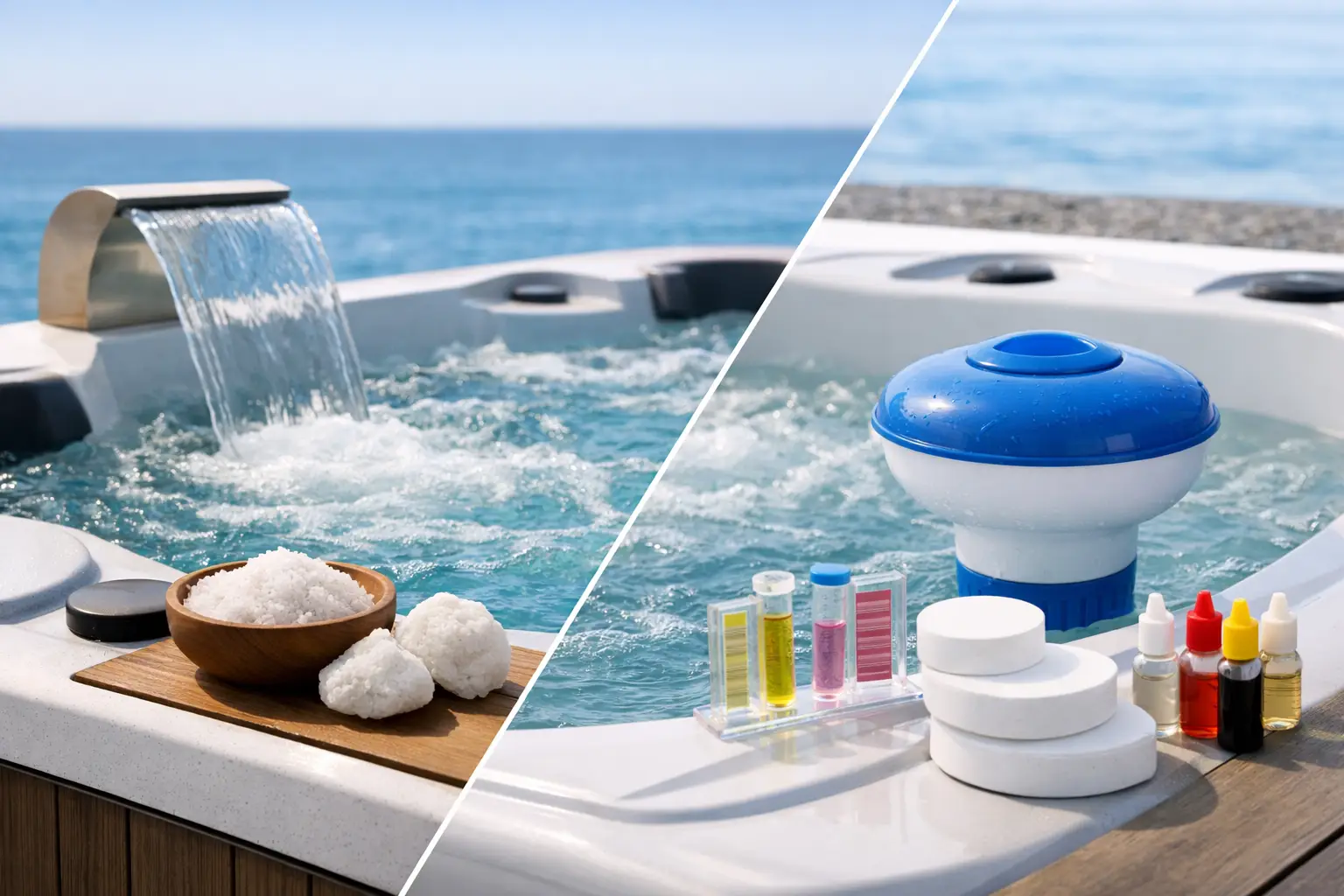
The key point is often misunderstood: a saltwater spa is still a chlorine spa. The difference is how that chlorine enters the water. A conventional chlorine system relies on measured additions of sanitizer, while a saltwater system uses dissolved salt and a salt cell to generate chlorine gradually. Both can provide clean, comfortable water when properly maintained.
How Saltwater and Chlorine Spa Systems Work
A traditional chlorine spa uses chlorine granules, tablets where appropriate, or another approved sanitizer routine to maintain a safe residual in the water. Owners test the water regularly and add products as needed to manage sanitizer, pH, alkalinity, and hardness. It is a familiar approach, and many spa owners appreciate having direct control over each adjustment.
A saltwater system begins with a measured amount of spa-grade salt. As water moves through the system, a salt cell converts that salt into chlorine. The sanitizer continues doing its job in the water, then the process repeats. Because chlorine is generated in smaller, steadier amounts, the water can feel more consistent between adjustments.
Neither option eliminates the need for testing, balancing, filter cleaning, or scheduled draining and refilling. Clean water is the result of a complete care routine, not simply the sanitizer system installed in the spa.
Saltwater Versus Chlorine Spas: The Feel of the Water
For many buyers, water feel is the first noticeable difference. Saltwater spa water is often described as softer or silkier, though it is not the same as ocean water. The salt concentration is much lower, and the water should not feel noticeably salty when the system is balanced correctly.
Saltwater systems may also produce fewer sharp chlorine odors because they generate sanitizer steadily rather than requiring larger manual doses. That can be appealing for homeowners who plan to use their spa frequently for hydrotherapy, quiet evenings, or family time.
Still, chlorine itself is not automatically harsh. Eye irritation, dry skin, and strong odor are commonly signs of unbalanced water, excessive chloramines, or sanitizer levels that need attention. A well-maintained traditional chlorine spa can be every bit as inviting as a saltwater spa. If someone in your household has sensitive skin, discuss your water-care options with a spa professional, but do not assume saltwater is a guaranteed solution for every sensitivity.
Maintenance: Automated Does Not Mean Maintenance-Free
Saltwater systems offer a meaningful convenience advantage for some owners. Once properly set up, the system can maintain a more even sanitizer level with less frequent manual dosing. For a household that uses the spa several times a week, that steady generation can make day-to-day care feel simpler.
However, saltwater systems have their own requirements. The salt cell needs periodic inspection and cleaning, and it eventually needs replacement. Water chemistry must still be tested regularly, especially pH and calcium hardness. In Southern California, hard water can contribute to mineral scale, which may affect the cell and other spa components if it is not managed carefully.
Traditional chlorine care requires more active additions, particularly after a heavy soak, a gathering with friends, or a stretch of hot weather. The trade-off is simplicity of equipment. There is no salt cell to maintain or replace, and the products and testing routine are straightforward. For owners who are comfortable checking water and making small adjustments, conventional chlorine can be a dependable, cost-conscious choice.
Upfront Cost and Long-Term Ownership
A saltwater spa system may increase the initial price of a spa or the cost of a compatible upgrade. The salt cell is a specialized component, and replacement cells are a future ownership expense. Depending on use, water chemistry, and maintenance habits, a cell may last several years, but it should be viewed as a consumable part rather than a permanent feature.
A conventional chlorine system generally has lower equipment costs. You will spend on sanitizer and balancing products over time, but there is less specialized hardware involved. The best financial choice depends on how long you plan to own the spa, how often it will be used, and whether the convenience of automated chlorine generation is worth the added equipment cost to you.
It is also worth looking beyond sanitizer expenses. Properly fitted covers, clean filters, regular service, and correct water balance protect the pumps, heater, jets, and shell of either spa type. Those habits have a greater effect on a spa’s long-term performance than the saltwater-versus-chlorine decision alone.
Which System Fits Your Backyard Lifestyle?
A saltwater system may be a strong match if you want a gentler-feeling water experience, use your spa often, and prefer a system that generates sanitizer steadily. It can be especially appealing when your backyard retreat is designed around daily wellness: a morning soak before work, post-exercise recovery, or an evening wind-down routine.
A traditional chlorine system may be the better fit if you prefer lower initial cost, want a straightforward care method, or enjoy having direct control of your water adjustments. It is also a practical option for occasional users who do not mind testing the water and adding sanitizer according to a regular schedule.
Your preferred spa model matters, too. Some models are designed with integrated saltwater systems, while others may use conventional sanitation or offer different compatible water-care options. Before choosing a system or considering a retrofit, confirm what the manufacturer recommends. Adding salt to a spa that is not designed for it can create avoidable concerns with equipment compatibility, warranty coverage, and corrosion resistance.
Water Care Still Comes First
Whether your spa uses saltwater or chlorine, plan on testing the water at least weekly and more often during periods of frequent use. Sanitizer level, pH, total alkalinity, and calcium hardness all work together. After a busy weekend of entertaining, the water may need attention regardless of the system you selected.
Showering before soaking, keeping the cover closed when the spa is not in use, rinsing filters, and following the recommended drain-and-refill schedule can make water care much easier. These small routines help preserve the clear, comfortable water that makes a backyard spa feel like a true everyday escape.
For homeowners choosing a new hot tub, a showroom conversation can make the decision more personal than a simple feature comparison. Backyards In Style can help you evaluate the spa model, expected use, water source, and service preferences so your system supports the way you want to relax, recover, and spend time at home.
The best choice is the one you will feel confident caring for. When the water routine fits your lifestyle, it is easier to keep your spa ready for the moment you need it most.