A new hot tub can turn an ordinary Southern California backyard into the place where your family unwinds after work, reconnects on weekends, and makes better use of every season. But before delivery day, the surface beneath the spa needs just as much attention as the spa itself. Knowing how to prepare a spa pad protects your investment, supports safe operation, and helps the finished space look intentional rather than improvised.
A filled hot tub is exceptionally heavy. Between the shell, cabinet, water, and people, many models weigh several thousand pounds. The right pad provides a level, stable foundation that can carry that load for years without settling, shifting, or collecting water underneath the cabinet.
Start With the Right Location
The best spa pad begins with a thoughtful site plan. Look beyond where the hot tub will fit and consider how you will actually use the space. A location near the home can make evening soaks more convenient and shorten the walk from the back door. A more private corner of the yard may create a quieter retreat, especially when paired with landscaping, a gazebo, or comfortable patio furniture.
Measure the spa model you plan to purchase, then leave room around it. You need clear access for the cover to open, service technicians to reach equipment panels, and bathers to enter and exit safely. A small walkway can make a big difference when you are carrying towels, balancing drinks, or checking water care.
Also consider the practical connections. Your electrician will need a safe route for the required dedicated electrical circuit, while the delivery team needs a realistic path from the street or driveway to the final location. Gates, side yards, roof overhangs, steps, and tight turns should all be reviewed before the spa arrives. In some backyards, a crane may be the most efficient and safest delivery solution.
What a Spa Pad Must Do
A proper hot tub foundation should be level, continuous under the entire footprint, and able to support the filled weight specified by the manufacturer. It should also drain well and remain stable through changing temperatures and moisture conditions.
Level matters more than many homeowners expect. A pad that looks nearly flat can still be off enough to affect water level, comfort, and long-term stress on the spa shell and frame. Do not use shims, blocks, loose pavers, or wood pieces to correct a pad after installation. The surface should be finished correctly before delivery.
In Southern California, soil conditions vary widely from one neighborhood to the next. Compacted soil, sandy ground, sloped yards, and areas with previous landscaping can behave differently over time. If the site has visible settling, a significant grade change, or uncertain drainage, it is wise to have a qualified contractor assess the area before construction begins.
How to Prepare a Spa Pad: Choose Your Base Material
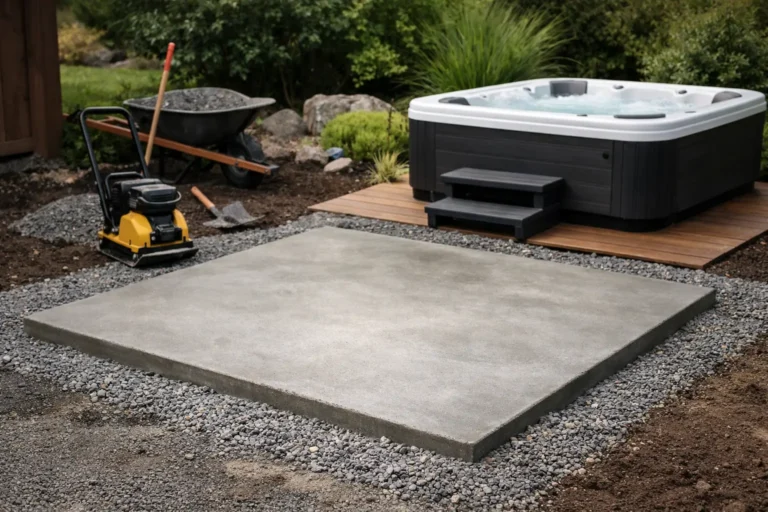
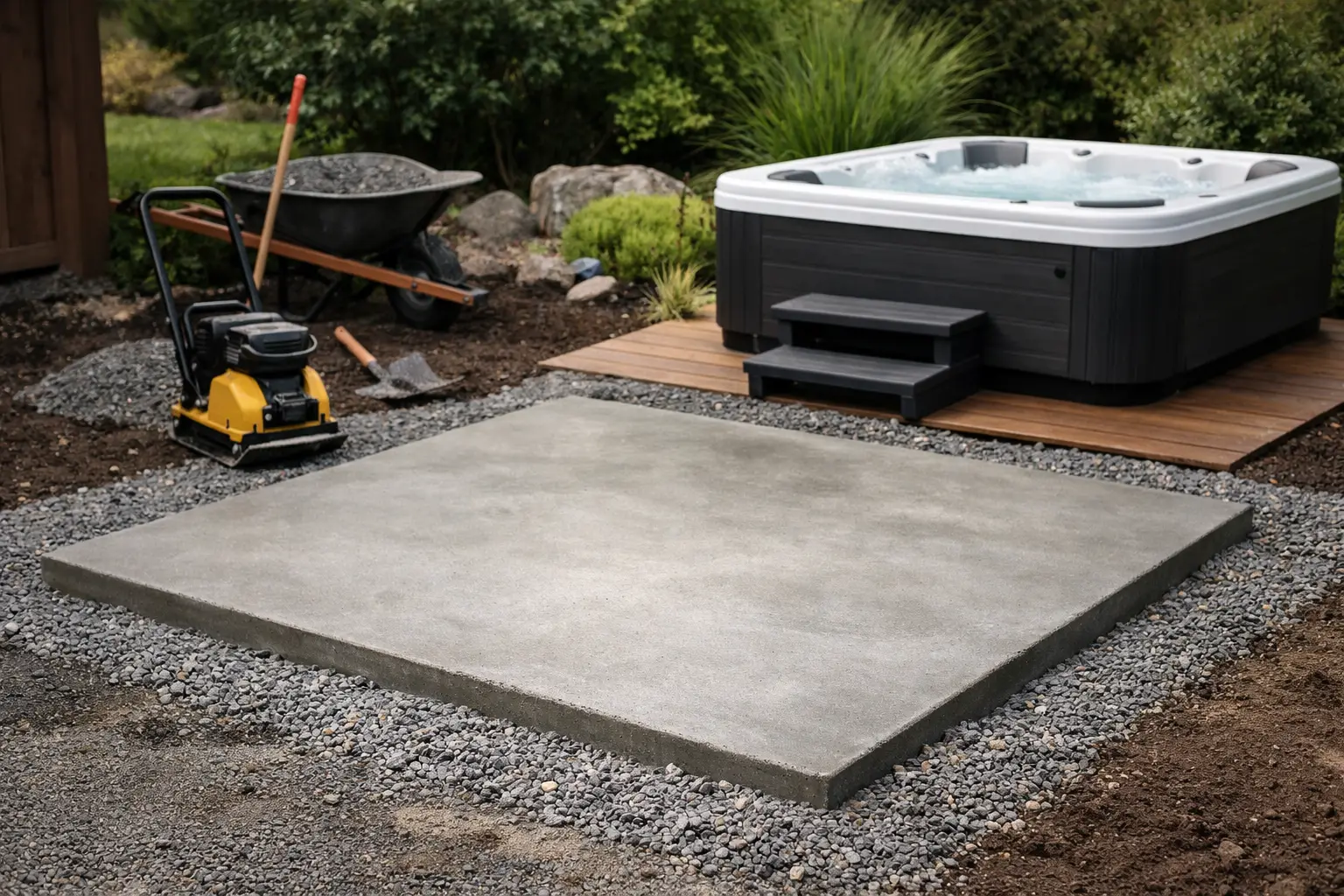
Concrete is the most common and dependable option for a permanent hot tub installation. A reinforced concrete slab creates a uniform, durable surface and works especially well for larger spas, swim spas, and backyard layouts that include patios or outdoor kitchens. The required thickness and reinforcement depend on the spa, soil, and local building conditions, so follow the spa manufacturer’s specifications and consult an experienced installer or contractor.
Pavers can also create an attractive spa area, particularly when they match an existing patio. However, pavers need a properly excavated and compacted base beneath them. They cannot simply be laid over loose soil or grass. Uneven paver movement may leave parts of the spa unsupported, so this option calls for careful site preparation and professional installation.
A purpose-built spa pad made from engineered composite panels can be a practical choice for some portable hot tubs. These pads are relatively quick to install and can be useful where pouring concrete is not ideal. They still require a level, compacted sub-base. The pad itself is not a substitute for correcting soft ground, poor drainage, or an unstable slope.
A deck is another possibility, but only when it is engineered to hold the full filled weight of the specific spa. Standard residential decks are not automatically designed for that concentrated load. Before placing a hot tub on an elevated or existing deck, have a qualified structural professional confirm that the framing, footings, and connections are adequate.
Build for Drainage, Not Just for a Level Surface
Water is part of hot tub ownership, whether it comes from splashing, rainfall, filter cleaning, or draining and refilling the spa. Your pad should not create a low spot where water sits against the cabinet or flows toward the home.
The surrounding landscape should direct surface water away from the spa and away from the house. A concrete area may have a subtle slope nearby to guide water toward an appropriate drainage path, while the actual spa footprint remains level. This distinction is crucial: the hot tub needs a level foundation, but the yard around it needs a plan for moving water away.
Avoid placing a spa where roof runoff pours directly onto the cover or equipment area. If the selected site is near a downspout, adjust the drainage route before installation. Thoughtful drainage reduces mess, helps preserve the surrounding hardscape, and makes the backyard more comfortable during the occasional rainy stretch.
Prepare the Ground Before the Pad Goes In
For a ground-level installation, remove grass, roots, loose mulch, and organic material from the planned area. Organic material decomposes and compresses, which can lead to settling. The exposed ground should be shaped, compacted, and prepared according to the foundation design.
If you are installing pavers or a composite pad, the sub-base is where the long-term performance is decided. A contractor may use compacted aggregate and leveling material to create a firm, even surface. Skipping this step can seem like a cost savings at first, but correcting a sinking or uneven spa area later is far more disruptive once the tub is filled and in use.
Keep the immediate perimeter clean and finished. Decorative gravel, stepping stones, or a non-slip patio surface can make maintenance easier and reduce the amount of grass and debris that ends up in the water. For homeowners planning a complete backyard retreat, this is also the ideal time to coordinate lighting, privacy screening, a towel station, or a nearby seating area.
Confirm Electrical, Access, and Local Requirements Early
A spa pad is only one part of a delivery-ready installation. Most hot tubs require a dedicated electrical circuit installed by a licensed electrician, and electrical placement must meet applicable safety codes. Discuss the spa’s voltage, breaker requirements, disconnect location, and wiring route early in the process. Do not plan on using an extension cord for a permanent hot tub installation.
Permitting requirements can vary by city, property type, and the scope of the work. A new electrical circuit, concrete work, deck modification, fencing, or drainage changes may require permits or inspections. Homeowners associations may also have rules regarding equipment location, screening, noise, and construction access.
It is helpful to confirm these details before finalizing the pad location. Moving a spa pad after it is built can affect your budget, delivery timing, and the layout of the entire backyard.
Plan for Service and Everyday Enjoyment
A hot tub should feel easy to own, not difficult to access. Leave the equipment compartment accessible for routine service and avoid building permanent walls, planters, or cabinets directly against the service side. If you are adding a gazebo, privacy structure, or cover lifter, verify its clearance with the spa dimensions before construction.
Think about the path you will take in bare feet at night. Non-slip surfaces, gentle lighting, and a clear route from the house create a safer, more inviting experience. The same planning that supports maintenance also supports the moments that matter most: a quiet soak after a long day, recovery after a workout, or a relaxed evening with friends.
Backyards In Style can help homeowners coordinate spa selection, delivery access, and installation considerations before the project reaches the construction stage. A few measurements and a clear site plan now can help your new hot tub arrive ready to become part of the backyard life you have been planning for.