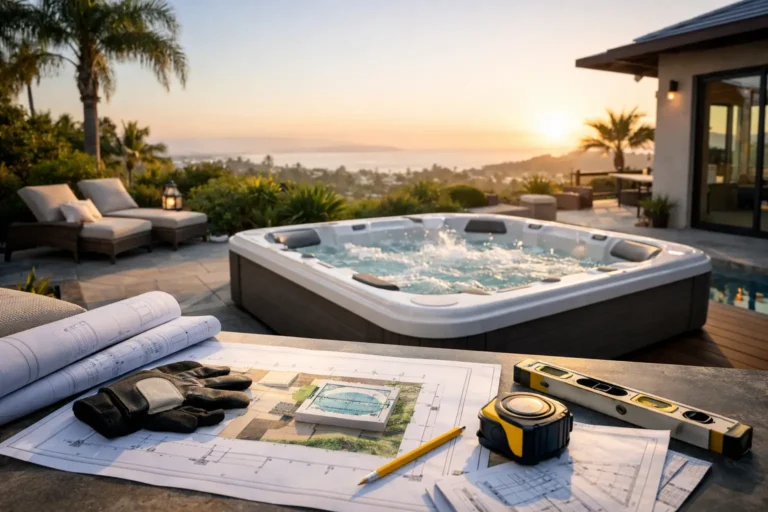
The best hot tub location is rarely the first empty patch of patio. Before you choose a model, picture an ordinary Tuesday evening: where will you step out, set down a towel, enjoy privacy, and relax without crossing a dark or inconvenient yard? Thoughtful hot tub installation planning turns a premium purchase into a backyard retreat that feels easy to use year-round.
For Southern California homeowners, the good news is that outdoor living can be enjoyed in every season. The details still matter. Access constraints, electrical requirements, sun exposure, local rules, and the condition of an existing patio all shape what will work well at your home.
Start Hot Tub Installation Planning With Daily Use
A hot tub should support the life you want to live, whether that means quiet recovery after a long workday, family time on the weekend, or a comfortable place to host close friends. Start by considering who will use the spa most often and how they will get there.
A location near the house is often practical, particularly when you want a short walk from the bathroom, kitchen, or primary bedroom. It can also simplify lighting and encourage more frequent use. A spot farther into the yard may provide a more private, resort-like feeling, but it needs a safe, well-lit path and a realistic plan for carrying water-care supplies, towels, and refreshments.
Think about sightlines from neighboring homes, second-story windows, and the street. Privacy landscaping, a gazebo, a screen, or a carefully placed seating area can make an exposed location feel more inviting. At the same time, avoid enclosing the spa so tightly that service access, ventilation, or cover operation becomes difficult.
Sun, Shade, and Southern California Weather
Full sun can be pleasant on a cool morning, but it may make the water and surrounding deck feel too warm during summer afternoons. Partial shade is often a strong compromise. It helps protect the spa shell and cover from intense UV exposure while preserving an open-air experience.
Look up as well as around. Falling leaves, seed pods, and tree debris create more cleanup and can affect water care. Large trees may provide welcome shade, but roots, branches, and frequent debris are trade-offs worth weighing before the spa arrives.
Confirm the Foundation Can Carry the Load
Water is heavy. Once filled and occupied, even a compact hot tub can weigh several thousand pounds. The spa must sit on a level, stable surface designed to support the full load without shifting or settling.
A sound concrete pad is a common choice. Some homeowners may have an existing patio that is suitable, but its thickness, condition, levelness, and drainage should be evaluated first. Cracked, sloped, or uneven surfaces can create problems over time. Pavers may work when installed over a properly prepared base, while gravel alone is generally not a finished foundation for a premium spa.
Deck installations require particular care. A standard residential deck is not automatically built for the concentrated weight of a filled hot tub and its occupants. A qualified professional should assess the structure and recommend reinforcement if needed. Do not rely on appearance alone – a beautiful deck can still need structural work.
Drainage deserves equal attention. Water from rain, splash-out, and periodic draining should move away from the home and not collect beneath the spa. A level base is essential, but the surrounding yard should still direct water appropriately.
Map the Delivery Route Before You Buy
Many installation surprises happen before the hot tub reaches the backyard. Measure gates, side yards, walkways, roof overhangs, utility meters, steps, and tight turns from the curb to the final location. Compare those measurements with the dimensions of the specific spa, not just a general category of hot tub.
Some spas can be moved through a wide side gate with a trained delivery team. Others may need to be placed on their side, require fence-panel removal, or call for a crane lift over a home or garage. A crane can be an excellent solution for difficult properties, but it should be planned early so the cost, staging area, street access, and scheduling are clear.
Keep the route clear on delivery day. Move patio furniture, planters, vehicles, and anything else that could slow the crew or create risk. Delivery is also the time to protect delicate landscaping, irrigation lines, and new hardscape.
Plan Electrical Service and Local Requirements
Most full-size, premium hot tubs need a dedicated electrical circuit installed by a licensed electrician. This is not a place for extension cords or improvised power connections. Your electrician can determine the correct voltage, amperage, wiring method, disconnect location, and GFCI protection for the selected model and your property.
The distance from the electrical panel to the spa can affect installation cost. A home with available panel capacity and a straightforward route may require less work than an older property with a full panel or a long underground run. Discuss the exact spa model before electrical work begins, since requirements vary.
Permits and code requirements can also vary by city, neighborhood, and installation type. In some cases, electrical work, barriers, or setbacks may be part of the approval process. If your home is governed by an HOA, review its rules for equipment placement, noise, fencing, and visible structures before committing to a location. Addressing these items early protects your timeline and helps you avoid rework.
Leave Room for Service, Covers, and Comfort
A hot tub is more enjoyable when the area around it works as well as the water inside it. Leave practical clearance around the equipment compartment so trained technicians can perform maintenance or repairs without moving the spa. The access side varies by model, so confirm it before final placement.
Also account for the cover. A standard cover needs room to fold back, while a cover lifter may extend behind or beside the spa. A lifter makes opening the cover easier and can help preserve the relaxed, spontaneous use that owners value, but it needs its own clearance.
Then plan the comfort details that make the space feel finished. A non-slip path, nearby towel hooks, a small table for drinks, outdoor lighting, and a place to change can transform the experience. If you are creating a larger outdoor retreat, consider how the spa relates to a fire feature, lounge seating, outdoor kitchen, sauna, or cold plunge. The goal is not to fill every square foot. It is to create an easy flow from one part of your backyard to the next.
Choose Size and Seating for Real People
A larger hot tub can be ideal for a family or frequent entertaining, but more seats do not always mean a better fit. Consider the seating styles you will actually use. Lounge seats can offer a full-body hydrotherapy experience, while upright seats can make conversation easier and may fit a wider range of body types. Deep therapy seats, varied jet placements, and captain’s chairs each serve different comfort preferences.
Bring your household into the decision when possible. Sit in dry models at a showroom, compare seat depth, and notice how easy it is to enter and exit. A spa that looks right on paper may feel different once you are seated. This is especially helpful for buyers who want targeted relief for shoulders, lower back, legs, or tired feet.
There is also a practical balance between size and operating costs. A larger water volume, more features, and a higher-capacity model may suit your lifestyle, but they should fit your budget for electricity, water care, and long-term maintenance. Quality insulation, an effective cover, and consistent care help protect efficiency regardless of spa size.
Build a Better Ownership Routine From Day One
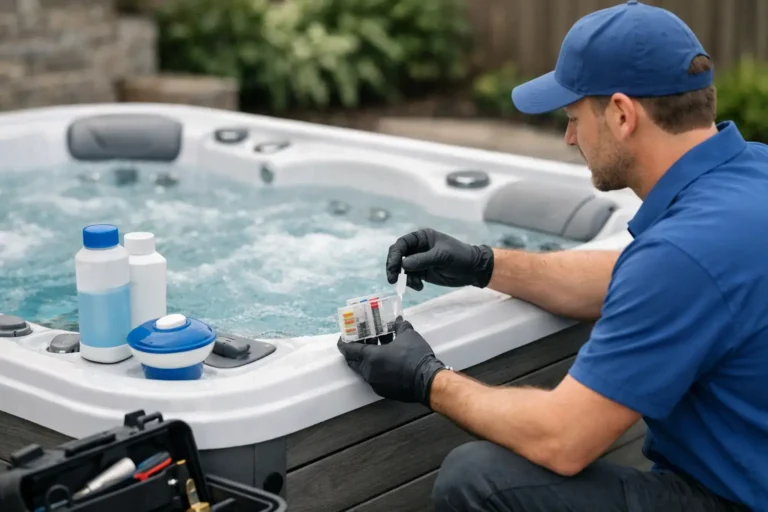
Installation day is the beginning of ownership, not the finish line. Decide where you will store water-care products, test strips, filters, and a garden hose. Keep supplies protected from heat and out of reach of children and pets. Learn how to check water balance, rinse filters, maintain the cover, and recognize when professional service is the smarter choice.
For first-time owners, a local dealership relationship can make these routines much less intimidating. Backyards In Style helps homeowners move from product selection through installation guidance and ongoing service, so questions do not have to become setbacks after delivery.
Give the project enough lead time for site preparation, electrical work, delivery coordination, and any required approvals. Rushing can lead to compromises in location or foundation quality that are difficult to correct later.
Your hot tub should feel like an invitation, not another item on the to-do list. Plan for the walk to the water, the people beside you, and the quiet moments you want to create there. When those details are handled before delivery day, stepping outside to recharge becomes one of the simplest parts of being home.