A hot tub can look perfectly clear and still be out of balance. If the water leaves skin feeling dry, carries a sharp odor, foams when the jets turn on, or feels less inviting than it should, the answer is often in the chemistry. Regular hot tub water testing gives you a clear picture of what is happening beneath the surface, so every soak remains comfortable, clean, and ready for the people you welcome into your backyard.
For Southern California homeowners, testing is especially valuable. Warm weather, frequent use, windblown debris, sunscreen, and long stretches of sunshine can all change water balance faster than expected. A few consistent minutes of care protect your spa equipment, preserve the finish, and help your hot tub remain the restorative retreat you invested in.
What Hot Tub Water Testing Tells You
A test strip or liquid test kit measures the conditions that determine whether your water is safe, comfortable, and easy on the spa itself. The goal is not to chase a perfect-looking number every day. It is to keep the water within healthy operating ranges and correct small changes before they become cloudy water, scale buildup, corrosion, or a stubborn sanitation problem.
The core readings are sanitizer, pH, total alkalinity, and calcium hardness. Depending on your system and water source, you may also monitor stabilizer, metals, total dissolved solids, or salt level. Your hot tub owner’s manual and the recommendations for your specific sanitizer system should always guide final targets.
Sanitizer: The Reading That Protects Every Soak
Chlorine or bromine is what controls bacteria and other contaminants introduced by bathers, body oils, cosmetics, and the outdoor environment. For most traditional systems, a chlorine level of 1 to 3 parts per million or a bromine level of 3 to 5 parts per million is a common working range. Check the guidance for your spa and water-care products, since systems can vary.
A low sanitizer reading means the water may not be adequately protected, even if it still looks clear. A very high reading can be irritating and may mean you need to allow the level to come down before using the spa. Strong chemical odor does not automatically mean there is too much chlorine. Often, it signals that contaminants have built up and the water needs to be properly shocked according to the product directions.
pH and Alkalinity: The Comfort and Stability Team
pH measures whether water is acidic or basic. A typical target is 7.2 to 7.8. When pH is too low, water can feel harsh and may damage metal components over time. When it is too high, sanitizer becomes less effective and scale or cloudy water can follow.
Total alkalinity acts as pH’s stabilizer. Many spas perform well with alkalinity around 80 to 120 ppm, but your equipment and water-care program may call for a narrower range. If pH seems to swing up or down every time you test, start by correcting alkalinity. Adjusting pH before alkalinity is stable often creates a frustrating cycle of adding one product after another.
Calcium Hardness: Protection for Water and Equipment
Calcium hardness matters even in an acrylic hot tub. Water that is too soft can become aggressive and seek minerals from spa surfaces and components. Water that is too hard can leave scale on heaters, jets, shell surfaces, and plumbing.
A common hot tub range is roughly 150 to 250 ppm, although local water conditions and manufacturer guidance matter. Southern California water can be mineral-heavy in some areas, so it is wise to test hardness when filling or refilling your spa rather than assuming the water is the same from one home to the next.
How Often Should You Test Your Hot Tub Water?
For a regularly used hot tub, test sanitizer and pH at least two to three times per week. Test more often during busy weekends, after a group soak, after heavy rain or wind, and whenever the water looks, smells, or feels different. If your family uses the spa daily, a quick sanitizer check before entering is a smart habit.
Test total alkalinity and calcium hardness weekly or every other week once your water is stable. Check them immediately after a fresh fill and whenever you are having repeated pH issues, cloudy water, scale, or foaming. Stabilizer and total dissolved solids do not usually need daily attention, but they should be included in periodic water-care checks and considered when it is time to drain and refill.
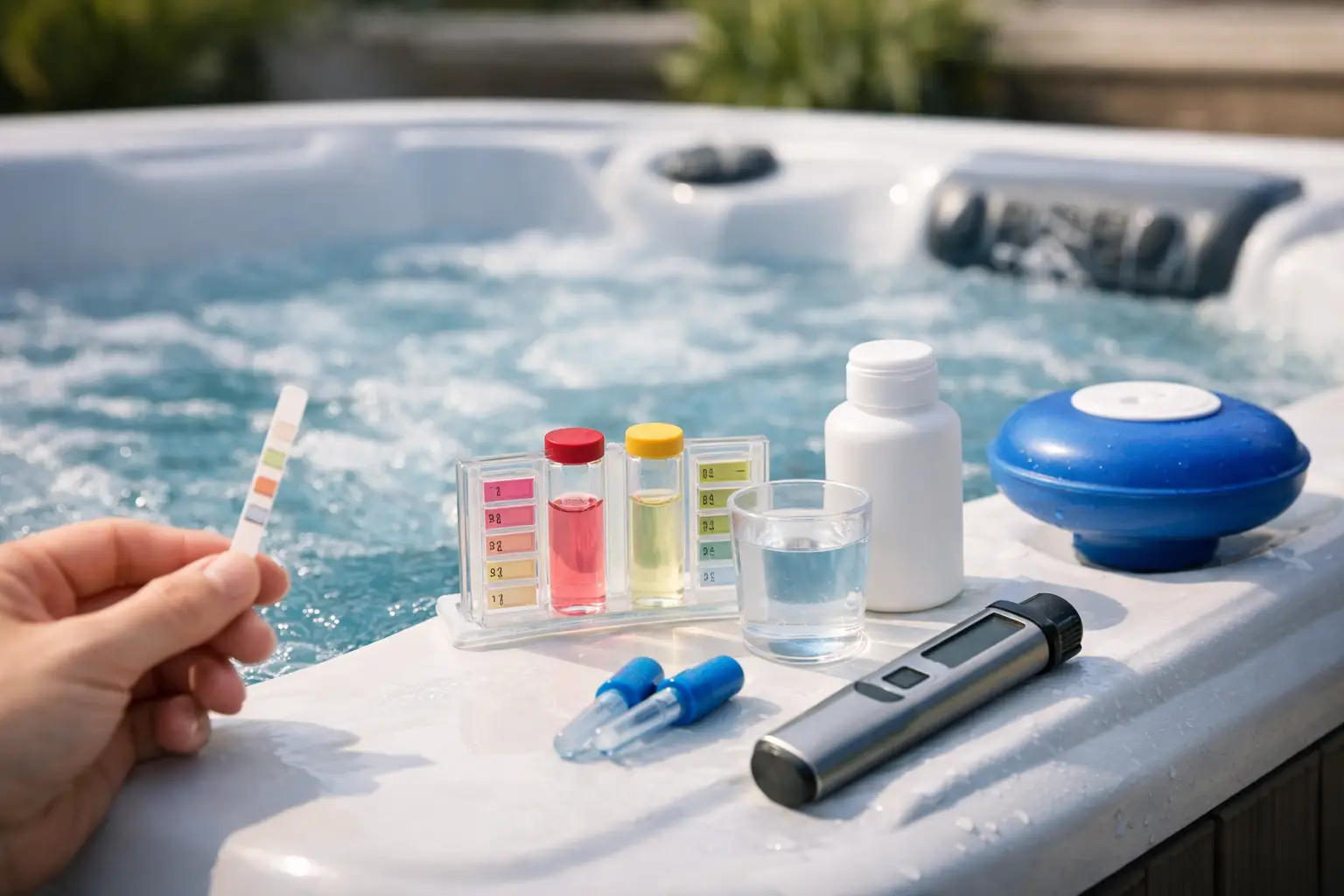
There is a practical trade-off between test strips and drop-based kits. Quality test strips are fast, convenient, and ideal for routine checks. A liquid drop kit generally provides more precision, which can be helpful when a reading seems off or you are trying to resolve a persistent issue. Many owners keep both: strips for everyday use and a drop kit for confirmation.
A Simple Testing Routine That Works
Consistency matters more than complexity. Test water at approximately the same time of day when possible, especially if your spa is outdoors. Keep the cover open for a few minutes before testing if you have recently added chemicals, and run the circulation system as directed so the water is mixed.
For test strips, use dry hands, remove one strip without touching the pads, dip it briefly, and follow the timing instructions precisely. Reading too early or too late can give misleading results. Compare the colors in natural light rather than under a colored patio light.
For a liquid kit, collect a water sample from elbow depth and away from return jets. Follow the kit’s drop count and mixing instructions exactly. Rinse the testing vial after use, and replace reagents before they expire. Old strips and expired reagents can lead to unnecessary chemical adjustments, which is why storage matters. Keep supplies cool, dry, and out of direct sun.
Record your readings in a simple notebook or phone note. You do not need a complicated chart. Logging sanitizer, pH, alkalinity, chemicals added, and unusual use patterns makes it much easier to recognize what your hot tub needs. Over time, you will learn how your spa responds after a family gathering, a hot Anaheim afternoon, or a period when the cover has stayed closed.
What to Do When a Reading Is Off
Make one adjustment at a time whenever possible. Add the recommended product in the proper amount for your spa’s water volume, circulate the water, and retest before adding something else. Pouring in multiple balancing products at once can create competing changes and makes it hard to know what solved the problem.
If sanitizer is low, confirm that the circulation system is running, the filter is clean, and your feeder or sanitizer source is functioning. Then restore the level with the appropriate product. After a high bather load or an event, follow your water-care program’s shock treatment instructions to oxidize accumulated contaminants.
If pH or alkalinity is out of range, adjust alkalinity first when both readings need correction. Give the water time to circulate before retesting. If calcium hardness is high, a partial drain and refill with lower-hardness water may be more effective than repeatedly adding treatment products. If it is low, use a calcium increaser designed for spas.
Cloudy water is not always a single-chemical problem. It can come from low sanitizer, high pH, a dirty filter, heavy bather use, or poor circulation. Start with a complete test, clean the filters, verify water flow, and address the readings in a deliberate order. Foamy water may point to lotions, detergent residue on swimsuits, or accumulated dissolved solids. In some cases, a foam reducer helps temporarily, but a drain and refill is the more lasting solution.
When Fresh Water Is the Best Fix
Even carefully maintained water eventually reaches the end of its useful life. As chemicals, minerals, and bather waste accumulate, it becomes harder to balance and less pleasant to use. Many households benefit from draining and refilling every three to four months, though the right timing depends on spa size, number of users, and how frequently it is used.
A fresh fill is also an excellent time to inspect and clean the shell, rinse or deep-clean filters, and begin with a well-balanced foundation. Test your fill water before adding sanitizer so you know whether alkalinity, pH, or calcium needs attention first.
Water care should support your backyard lifestyle, not become another weekend project. If readings keep moving in the wrong direction, equipment is not circulating properly, or you would simply prefer professional help, Backyards In Style can provide local guidance and service for long-term spa ownership. A dependable testing routine lets you spend less time second-guessing the water and more time enjoying the quiet, comfort, and connection your hot tub was made to create.