A hot tub can look inviting at sunset and still have a filter that is working far harder than it should. In Southern California, windblown dust, pollen, sunscreen, body oils, and frequent use can load a cartridge quickly. Timely hot tub filter replacement is one of the simplest ways to protect water clarity, maintain enjoyable jet pressure, and keep every soak feeling like the restorative break it is meant to be.
Your filter is not a minor accessory. It is a primary part of your spa’s circulation system, trapping the small debris and contaminants that water care alone cannot remove. When it is clean and correctly sized, your pumps can circulate water efficiently and sanitizer can do its job more effectively. When it is clogged or damaged, the result can be dull water, reduced performance, added strain on equipment, and more time spent correcting water problems.
When Is Hot Tub Filter Replacement Due?
A filter does not need to look completely black or fall apart before it deserves attention. Most spa cartridges should be rinsed regularly, deep-cleaned periodically, and replaced when their condition or performance tells you cleaning is no longer enough. For many homeowners, replacement falls around every 12 to 24 months. That range is useful, but it is not a deadline that applies to every backyard.
A spa used daily by a family, especially one near trees or exposed to afternoon winds, may need a new filter sooner. A lightly used spa that is carefully maintained and covered when not in use may get more life from its cartridge. The filter’s material, your spa model, bathing habits, and cleaning routine all affect the timeline.
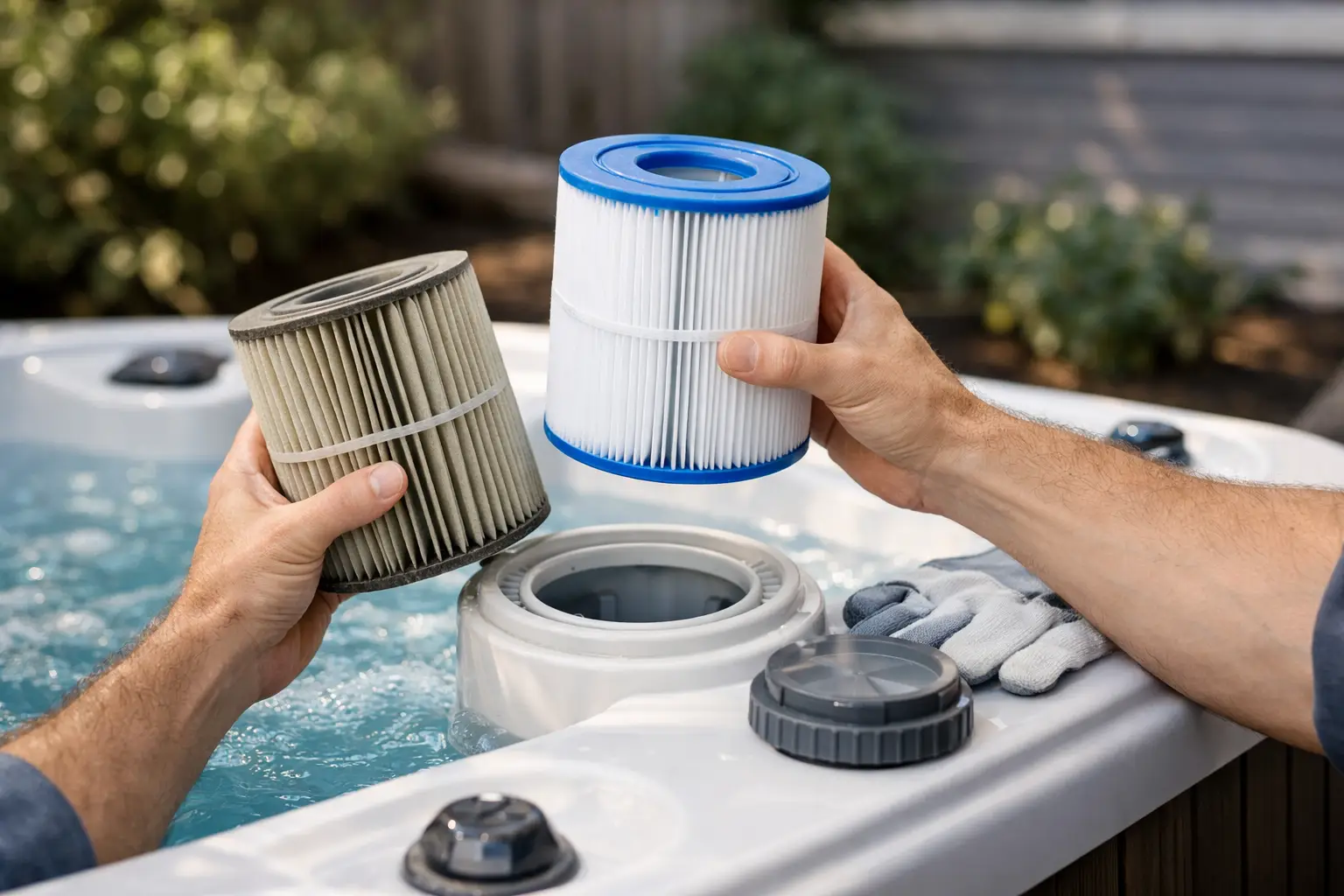
Watch for a few practical signs. If your water stays cloudy soon after balancing it, the cartridge may no longer be filtering effectively. A persistent odor, lower-than-usual jet flow, frequent filter cycles, or a cartridge that remains discolored and stiff after a proper cleaning are also good reasons to take a closer look. Cracked end caps, torn pleats, crushed media, or a loose center core mean replacement should not wait.
It is also wise to inspect the filter after unusual use. A backyard gathering, a stretch of heavy winds, construction dust, or a season of frequent sunscreen use can create a heavier contaminant load than normal. The goal is not to replace a cartridge on a fixed date regardless of condition. It is to keep the spa circulating clean water without forcing the equipment to work against a blocked filter.
Clean It First or Replace It?
Regular rinsing extends filter life. With the spa powered off, remove the cartridge according to your owner’s manual and use a garden hose to rinse between the pleats from top to bottom. A gentle stream works better than a high-pressure nozzle, which can flatten or damage the filtering media. Allow the filter to dry fully before reinstalling it if possible. Drying helps loosen particles that may remain embedded in the pleats.
For deeper cleaning, use a spa filter cleaner made for cartridge media. Oils, lotions, and fine residue can cling to a filter even when it appears clean after a hose rinse. Follow the cleaner’s dilution and soak-time directions, then rinse thoroughly. Household detergents are not a good substitute because they can leave behind sudsing residue that creates its own water-care frustrations.
Cleaning has limits. A chemically cleaned filter may look better without regaining its original flow rate. Once pleats stay flattened, fabric feels rough or brittle, or debris remains trapped deep in the media, replacement is the better value. Continuing to clean a worn-out cartridge can lead to poor circulation and repeated water adjustments that cost more time and effort than a new filter.
Many experienced owners keep a second set of filters. One set can dry after cleaning while the other is in the spa, making regular maintenance easier and avoiding a rushed reinstall. This approach is particularly helpful for busy households that want their hot tub ready for a relaxing evening, a weekend visit from family, or post-work hydrotherapy.
Choosing the Right Replacement Cartridge
The correct replacement filter is based on fit and construction, not just what looks similar on the shelf. Start with your spa’s make, model, and year, then check the original filter label or owner’s documentation. Premium spas may use one or more cartridges with specific lengths, diameters, square-foot ratings, handle styles, threads, and bottom openings.
Measure the old filter if a model number is no longer readable. You will need its outside diameter, length without compressing the end caps, and the precise configuration at both ends. One end may have a threaded opening while the other is closed, open, or fitted with a particular adapter. A near match can still fit poorly, bypass debris, or interfere with proper water flow.
Original-equipment filters are designed around the spa’s intended specifications, while quality aftermarket options can be appropriate when they match every relevant dimension and connection. The trade-off is simple: a less expensive cartridge is not a savings if the pleat count, material quality, or fit causes it to clog early or reduce circulation. When there is any uncertainty, a spa professional can identify the correct cartridge before you purchase one.
Do not assume a larger filter is automatically better, either. Your spa’s plumbing and filter compartment were designed for a particular configuration. The right filter supports the system as designed and helps preserve the comfortable, consistent performance you expect from your investment.
A safe replacement process
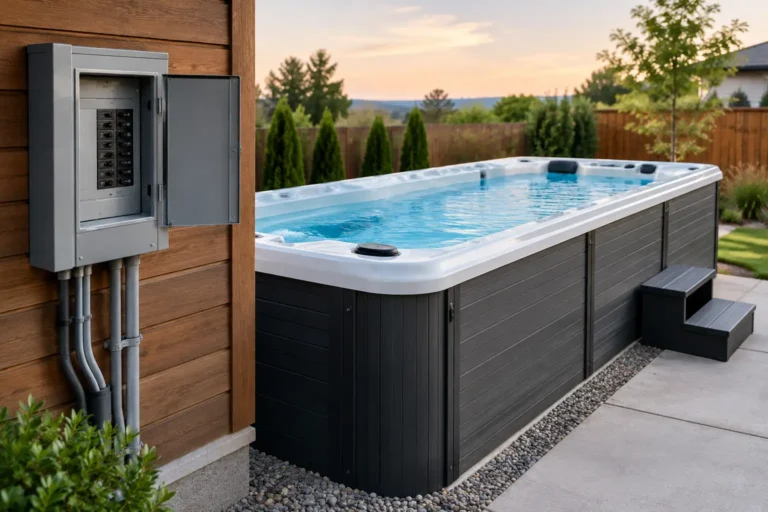
Before removing a filter, turn off power to the spa at the breaker or disconnect. Never remove a cartridge while pumps are running. Open the filter compartment, lift or unscrew the old cartridge as directed by your manual, and inspect the area for loose debris. Wipe the compartment clean before installing the new filter.
Seat the replacement cartridge carefully. It should thread or rest securely without forcing it into place. Reinstall any lid, screen, or retaining hardware, restore power, and run the spa through a normal filtration cycle. Check that water is circulating normally and that there are no leaks around the filter housing.
After replacement, test and balance the water. A fresh filter improves circulation, but it does not replace routine water care. Maintaining proper sanitizer, pH, alkalinity, and calcium hardness helps the new cartridge stay cleaner longer. Showering before soaking, using a well-fitted cover, and keeping lotions and oils out of the water also make a noticeable difference.
Protecting Your Spa Between Replacements
A consistent maintenance rhythm is easier than troubleshooting neglected water. Rinse filters every few weeks, or more often during heavy use. Deep-clean them on the schedule recommended for your specific spa and water conditions. Inspect the cartridge whenever you drain and refill the spa, and make sure the cover is secured whenever the hot tub is not in use.
For homeowners who prefer more time enjoying their backyard and less time managing maintenance, professional water care and service can provide useful peace of mind. Backyards In Style can help Southern California spa owners identify compatible replacement filters and support the long-term care of their hot tub equipment.
A clean, properly fitted cartridge quietly supports the moments that matter most: easing into warm water after a demanding day, sharing a soak with family, or enjoying a calm backyard evening. Keep a replacement on hand before the current filter reaches its limit, and your spa will be ready when you are.