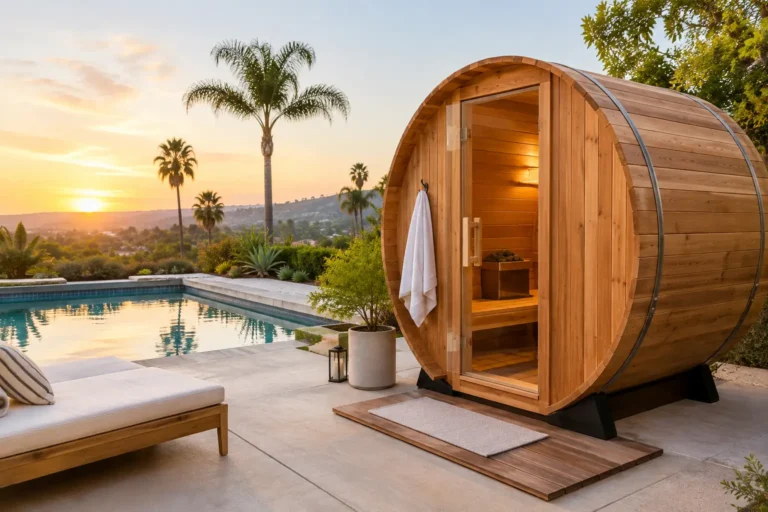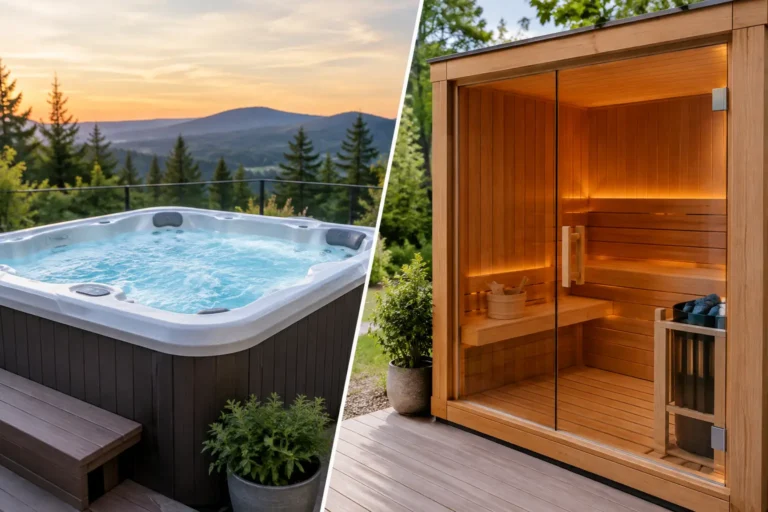
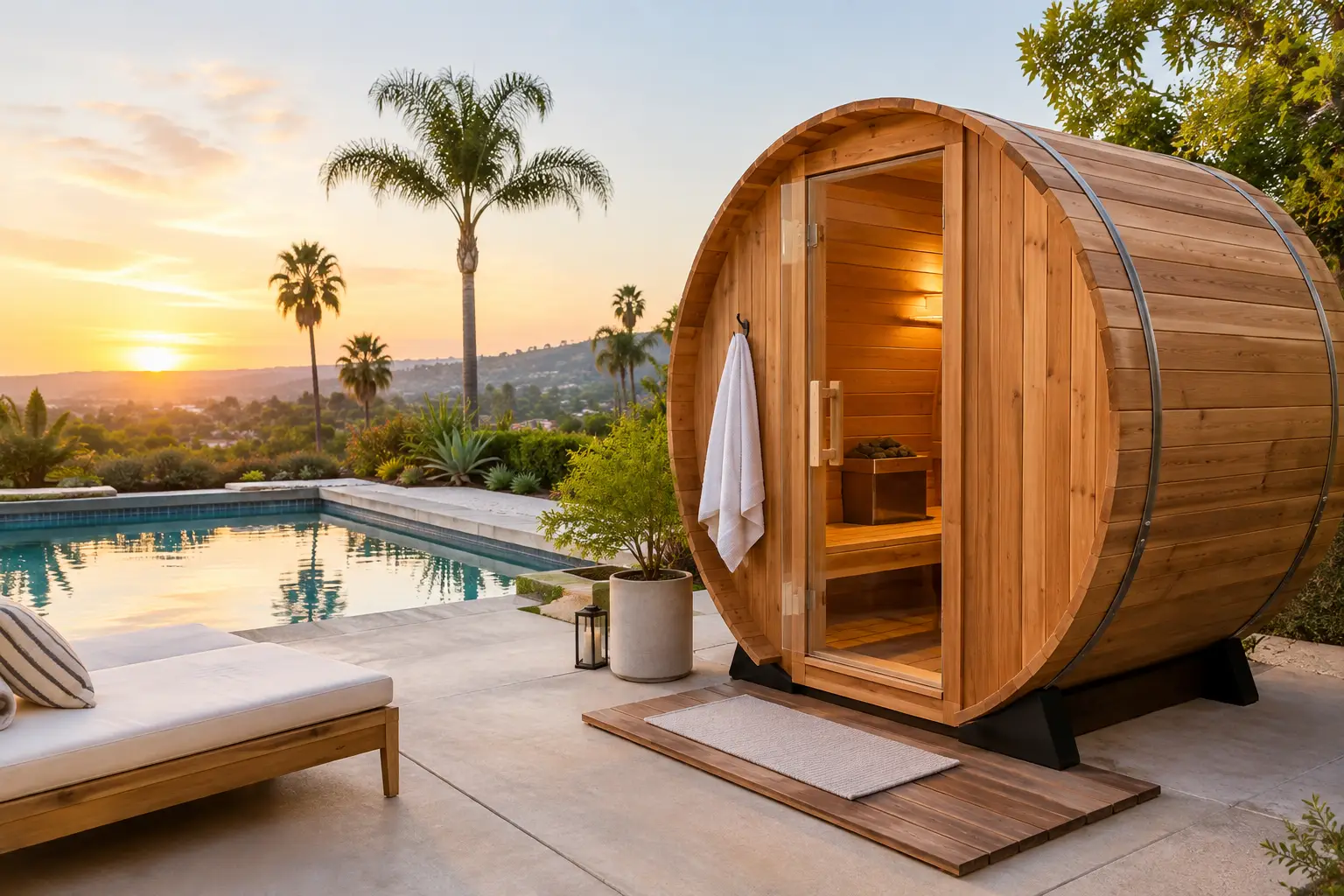
A sauna can turn the quietest corner of your yard into a daily place to reset. But the right choice is not simply the largest cabin or the hottest heater. This backyard sauna buyer guide helps Southern California homeowners match their wellness goals, available space, installation needs, and long-term expectations before bringing a sauna home.
For some households, that means a compact infrared model for post-work relaxation and muscle recovery. For others, it means a traditional outdoor sauna where family and friends can slow down after a swim, workout, or long day. The best fit is the one you will use often, enjoy comfortably, and feel confident maintaining for years.
Start With How You Want to Use Your Sauna
Begin with the experience you want, not the product category. A sauna used by one or two adults several nights a week has different requirements than one intended for family wellness, entertaining, or a shared backyard retreat.
Think about who will use it most, how frequently you expect to use it, and whether you prefer a quick session or a longer, high-heat ritual. If recovery is a priority, consider when the sauna will fit into your routine after exercise, golf, cycling, or strength training. If relaxation is the focus, placement near a patio, pool, cold plunge, or quiet garden area may matter more than proximity to a home gym.
Also consider the feeling you want from the space. An outdoor sauna can become part of a larger wellness zone with a cold plunge, comfortable seating, soft lighting, and a clear path back into the house. Planning the full experience early often creates a more polished and useful backyard than treating the sauna as a standalone purchase.
Traditional vs. Infrared: Choose the Heat Experience
The biggest decision in a backyard sauna buyer guide is often the heating style. Both options can support a restorative routine, but they create very different sessions.
Traditional saunas offer the classic high-heat ritual
Traditional saunas warm the air with an electric or wood-burning heater, usually with sauna stones that can be topped with water for steam. They generally operate at higher temperatures and create the familiar heat, aroma, and sensory experience many people picture when they think of a sauna.
An electric heater is often the practical choice for Southern California backyards. It provides dependable temperature control, avoids firewood storage, and can be suited to regular use. Wood-burning models bring a distinctive cabin-like atmosphere, but they require more planning for venting, clearances, local regulations, and ongoing operation.
Traditional saunas usually need a warm-up period. That can be a benefit if you enjoy making the session part of an unhurried evening routine, but it is worth considering if you want a quick 20-minute session between work and dinner.
Infrared saunas prioritize gentle, direct warmth
Infrared saunas use radiant panels designed to warm the body more directly at lower air temperatures. Many owners appreciate the milder environment, shorter warm-up time, and straightforward operation. They can be especially appealing to people who find traditional high heat uncomfortable.
The trade-off is experiential. An infrared sauna does not deliver the same hot-air-and-steam ritual as a traditional model. Neither approach is automatically better. The right choice depends on which environment will invite you to use the sauna consistently.
Size It for Comfort, Not Just Capacity
A sauna’s stated capacity can be useful, but bench design and intended use matter more. A two-person sauna may be ideal for a couple who plans to sit side by side, while a larger model gives one or two users room to stretch out and feel less enclosed.
For a family or homeowners who enjoy hosting, a four- to six-person sauna can make sense. Just remember that larger cabins require more backyard footprint, more heater capacity, and potentially greater electrical requirements. Bigger is valuable when it supports the way you live, not when it creates unused space and a higher installation cost.
Bench layout deserves close attention. Ask whether the upper bench offers a comfortable seated position, whether there is enough depth to recline, and how easily users can enter and exit. Multiple bench levels are useful in traditional saunas because heat rises, allowing each person to choose a more comfortable temperature zone.
Plan the Location Before You Fall in Love With a Model
The best outdoor sauna location balances privacy, access, drainage, and the look of the overall yard. A secluded corner can feel peaceful, but it should still have a safe, well-lit walking path. If you plan to use the sauna after dark, lighting, slip-resistant surfaces, and clear access become part of the ownership experience.
Choose a level, stable base appropriate for the sauna’s weight. Depending on the model and site, that may be a concrete pad, reinforced pavers, or another properly prepared foundation. Avoid placing a sauna directly on uneven soil, loose gravel, or a surface where water collects.
Southern California weather makes outdoor use appealing throughout much of the year, yet sun exposure still matters. Strong afternoon sun can make the approach to the sauna uncomfortably hot and increase wear on exterior finishes. Nearby shade, a pergola, or thoughtful orientation can improve comfort without blocking needed ventilation.
Leave room around the sauna for installation, service access, and ventilation clearances. This is particularly important for traditional units, where heater specifications and safety clearances should guide the final layout. A site visit or careful consultation can identify obstacles such as gates, slopes, utility lines, roof overhangs, and limited delivery access before they become expensive surprises.
Understand Electrical, Permitting, and Installation Needs
A premium sauna should feel relaxing from the first session, which starts with a well-planned installation. Traditional electric saunas typically require a dedicated electrical circuit, while infrared models may have lighter electrical demands depending on their size and design. Have a qualified electrician confirm the available service, circuit requirements, disconnect location, and local code compliance before finalizing your purchase.
Permitting requirements vary by city, property, and installation type. Homeowners associations may also have rules about exterior structures, setbacks, finishes, and noise. Anaheim-area homeowners and those across Southern California should verify local requirements early, especially for larger outdoor cabins, hardwired heaters, or projects that include new electrical work.
If your sauna is part of a broader backyard renovation, coordinate it with patio work, landscaping, a cold plunge, pool equipment, or outdoor kitchen plans. It is easier to place conduit, drainage, lighting, and pathways before hardscape is complete than to retrofit them later.
Look Closely at Materials and Construction
Heat, moisture, and outdoor exposure demand quality materials. Inside the sauna, look for woods that are comfortable to touch at high temperatures, resist warping, and create a clean, inviting finish. Cedar is a popular choice for its appearance and natural aroma, though other sauna-appropriate woods may suit your preferences and budget.
For an outdoor model, evaluate the exterior cladding, roof construction, insulation, door quality, and weather protection. A well-built sauna should retain heat efficiently while standing up to sun, temperature changes, and occasional wet weather. Good insulation is not only about energy use. It also helps the sauna heat more evenly and hold a stable temperature.
Doors and glass panels influence both style and performance. Glass can make a compact sauna feel more open and connect the interior to your backyard setting, but it may affect heat retention and privacy. Solid doors can feel more traditional and insulated. Consider the view from both inside and outside before deciding.
Budget for Ownership, Not Only the Sauna
The purchase price is only one part of the investment. A realistic budget should include the sauna, delivery, site preparation, electrical work, possible permits, and any desired upgrades such as exterior lighting, a changing area, or coordinated outdoor furniture.
Operating costs vary by heater type, sauna size, local utility rates, insulation, and how often you use it. A smaller sauna used regularly may be a better value than a larger one that takes longer to heat and sees little use. Ask for clear guidance on expected maintenance as well. Most sauna care is manageable, but it is easier when you understand cleaning recommendations, wood care, heater inspection, and seasonal exterior upkeep from the start.
A knowledgeable local dealer can help connect these decisions. Backyards In Style can help homeowners compare sauna options in the context of the complete backyard, from practical installation details to the comfort features that make a wellness space feel personal.
Make the Sauna Part of a Routine You Will Keep
The most rewarding sauna is not necessarily the most elaborate one. It is the one that becomes part of your week: a calm place before bed, a recovery stop after a workout, or a shared ritual that brings people outdoors without needing a special occasion.
Choose a sauna that fits your body, your property, and your habits. When the path to it is easy, the setting feels inviting, and the heat experience suits you, your backyard can offer something increasingly rare: a reliable place to pause and feel restored.