A cool Southern California evening can make a backyard feel like the best room in the house. The question is whether that space should offer warm, jetted water or the dry, enveloping heat of a sauna. In the hot tub versus sauna decision, there is no universal winner. The better choice comes down to how you relax, who will use it, how you plan to entertain, and what kind of wellness routine you can see yourself enjoying week after week.
Both options turn an ordinary backyard into a place to reset. Yet they create distinctly different experiences. A hot tub invites you to settle in, talk, and let targeted jets work on tired muscles. A sauna asks you to slow down, sit quietly, and let heat do the work. Understanding that difference makes it much easier to invest confidently.
Hot Tub Versus Sauna: Start With How You Recover
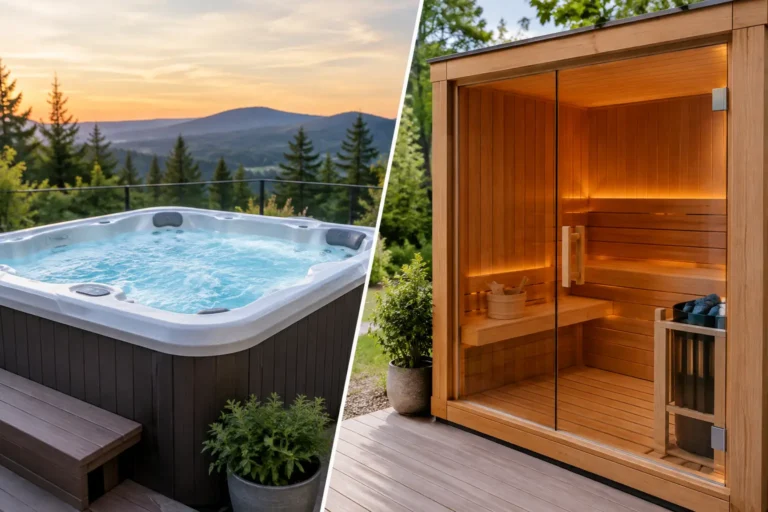
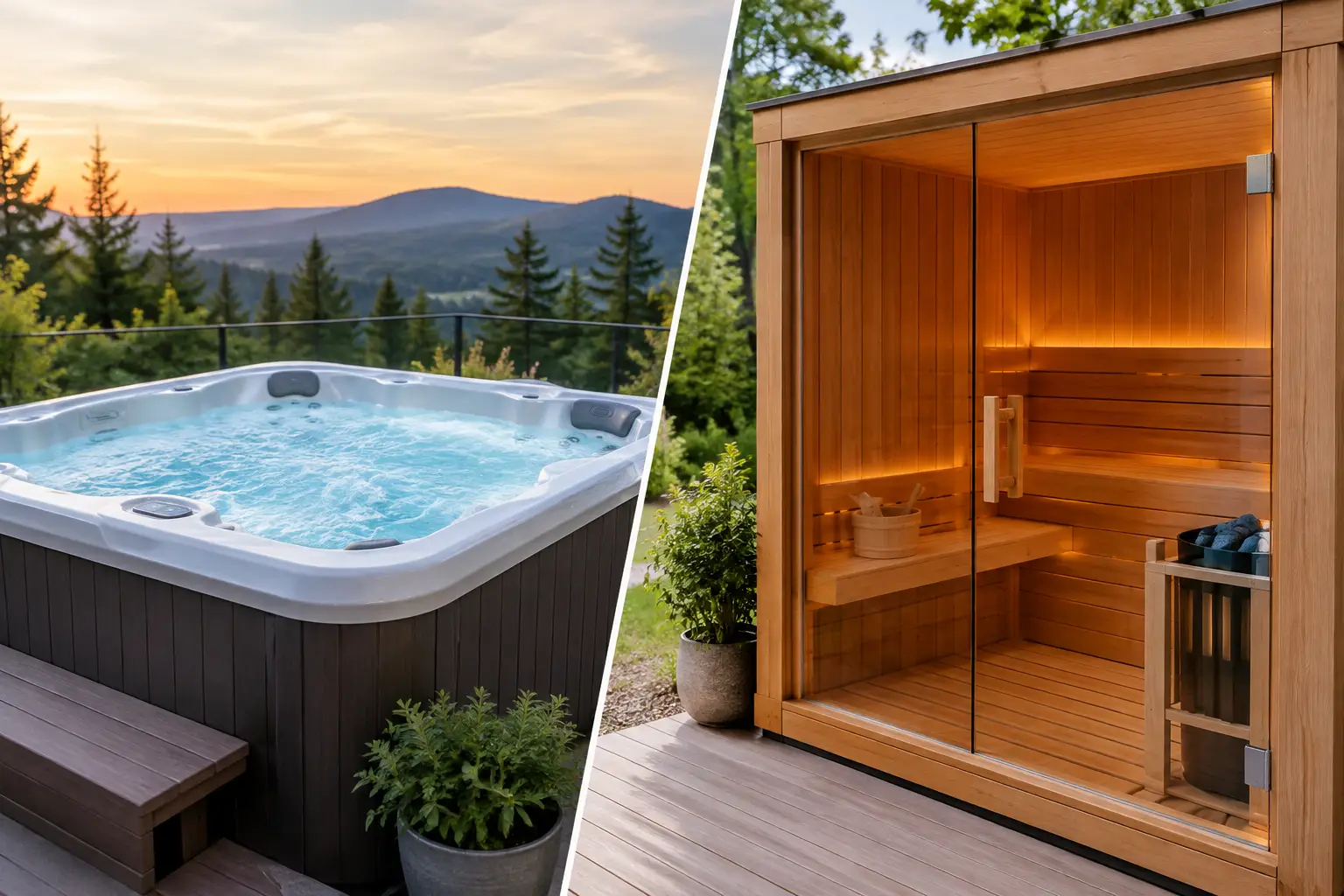
A hot tub combines heated water with buoyancy and hydrotherapy. Water supports the body, which can feel especially welcome after a long day on your feet, a workout, a round of golf, or hours at a desk. Adjustable jets can be directed toward common trouble spots such as the lower back, shoulders, calves, and feet. The experience is active in a comforting way: you can change seats, adjust jets, cool down briefly, or share the water with family and friends.
A sauna uses heated air rather than water. Traditional saunas create dry heat, while infrared models use radiant heat that warms the body more directly at lower air temperatures. The sensation is simpler and more contained. You sit, breathe, sweat, and leave when you are ready to cool down. For people who value a quiet daily ritual, that simplicity can be the appeal.
Neither should be viewed as a substitute for medical care. People who are pregnant or have cardiovascular conditions, blood pressure concerns, or other health considerations should speak with a qualified healthcare professional before using high heat. For most healthy adults, hydration, comfortable session lengths, and listening to your body are sensible starting points with either choice.
Choose a Hot Tub for Connection and Targeted Comfort
A hot tub is often the more versatile fit for households that want their wellness investment to double as a social space. It can be a place for a couple to decompress after dinner, a family to spend device-free time together, or friends to gather on a weekend. Unlike a sauna, where the experience is usually quiet and shorter, a spa naturally supports conversation and longer, leisurely use.
Hydrotherapy is another major reason homeowners choose a spa. Premium models offer different seat designs, jet placements, and therapy zones, so one seat may focus on the neck and shoulders while another targets the legs or lumbar area. A wet test, when available, is valuable because comfort is personal. The seat that feels right for a tall runner may not be the preferred seat for someone seeking a deep, reclining soak.
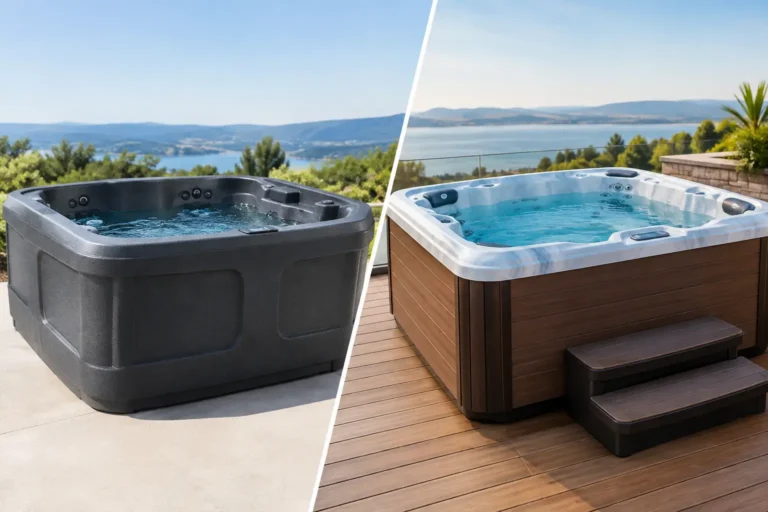
Hot tubs also offer a broad range of sizes. A compact two- or three-person model can create an intimate retreat without taking over a patio. Larger spas may seat six to eight people and become the center of an outdoor entertaining area. Features such as lounge seating, waterfalls, lighting, audio, and easy-access steps can make the space feel even more inviting.
The trade-off is ongoing water care. A hot tub needs routine attention to sanitizer, water balance, filtration, and periodic draining. Modern equipment and professional service can make ownership straightforward, but it is still a hands-on consideration. You will also need a suitable foundation, electrical planning, and clear delivery access to the installation location.
Choose a Sauna for a Focused Wellness Ritual
A sauna may be the right choice if your ideal reset is private, simple, and heat-centered. Many owners use a sauna as part of a regular morning, post-workout, or evening routine. There is no water chemistry to test, no filters to rinse, and no need to change into a swimsuit if you prefer not to. After a session, you cool down, rehydrate, and go on with your day.
For homeowners who prefer a lower-maintenance wellness feature, that can be a meaningful advantage. Saunas still need cleaning, occasional inspection, and proper care for the heater and wood, but day-to-day upkeep is generally lighter than spa ownership. They also use less water because there is no water to fill or replace.
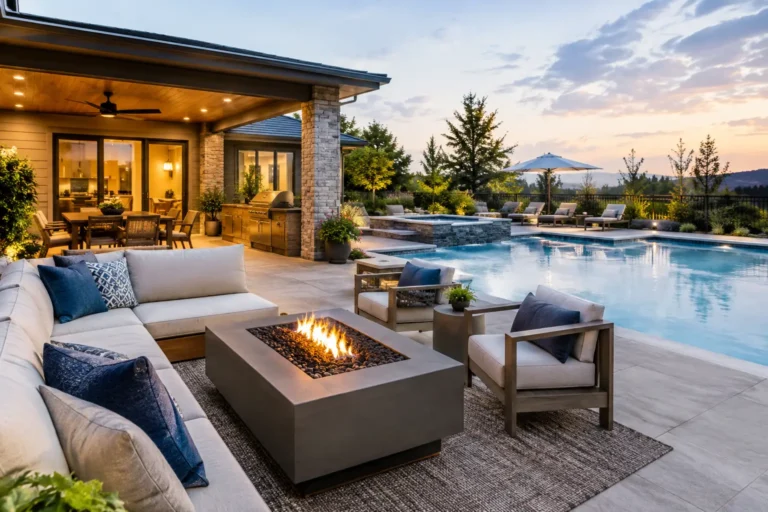
A sauna can be an elegant addition to a covered patio, pool area, home gym, or dedicated indoor wellness room. Its smaller footprint may suit a homeowner with limited outdoor space, particularly if the goal is individual use rather than group entertaining. Depending on the model and configuration, installation may require a level base, proper electrical service, weather protection, and attention to ventilation and manufacturer clearance requirements.
The limitation is that a sauna is not usually a destination for the whole family at once. While some larger cabins accommodate multiple people, the experience is less flexible than a hot tub gathering. If your main goal is bonding with children, hosting neighbors, or creating a resort-style focal point around the pool, a sauna may feel more like a personal amenity than a shared one.
Consider Your Backyard, Schedule, and Climate
Southern California homeowners have an advantage: both hot tubs and outdoor saunas can be enjoyed in every season. A spa is especially appealing on mild winter nights, when the warm water contrasts with cooler air. During hot summer afternoons, however, some owners use their hot tub less often or reserve it for late evening. A sauna can also feel intense during a heat wave, although an early-morning or nighttime session may still fit comfortably into your routine.
Think about proximity to the house as well. A hot tub placed just outside the primary bedroom or near a back door is more likely to be used on a busy weeknight. A sauna tucked into a far corner may be beautifully private, but it should not be so inconvenient that it becomes an occasional novelty. Path lighting, privacy screening, a nearby place for towels, and a comfortable cool-down area all improve the experience.
Budget should account for the complete project, not only the unit itself. With a hot tub, plan for the spa, cover, electrical work, site preparation, delivery, and water-care supplies. With a sauna, consider the cabin or indoor unit, heater, electrical requirements, foundation or flooring, and any shade or weather protection needed. Premium materials, energy-efficient insulation, quality construction, and reliable service support often matter more over the years than a low initial price.
The Best Option May Be Both, but Start With One
For homeowners building a comprehensive backyard retreat, a hot tub and sauna can complement each other beautifully. Some people enjoy heat in the sauna before soaking, while others prefer a spa session for muscle comfort and a sauna as a separate daily ritual. Adding a cold plunge can create another contrast option for those who enjoy structured hot-and-cold wellness routines.
Still, starting with one is often the smarter path. Choose the feature you will realistically use most often. If you picture lingering in warm water while your family talks about the day, prioritize the hot tub. If you picture a quiet 20-minute routine that helps you transition from work to personal time, a sauna may deliver more value in your life.
See the Experience Before You Decide
Specifications are helpful, but they do not tell you how a seat supports your body, how a jet feels across your shoulders, or whether the interior of a sauna feels comfortably spacious. Visiting a showroom gives you the chance to compare sizes, seating layouts, finishes, controls, and installation considerations in person.
Backyards In Style helps Southern California homeowners look beyond the purchase itself, with guidance on selecting the right model, preparing the site, arranging delivery, and caring for the investment over time. Bring a few photos and rough measurements of your space, along with an honest picture of how your household relaxes. The right choice is the one that makes stepping into your backyard feel like time well spent.