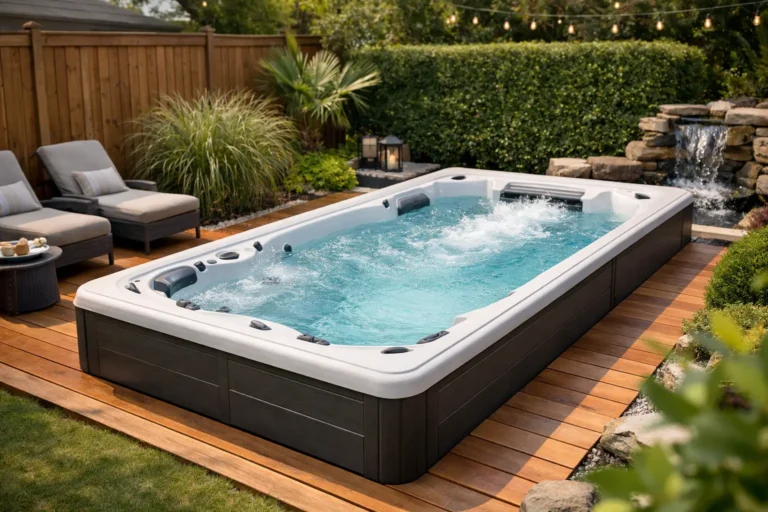
A swim spa exercise routine can make the few minutes between work, family plans, and dinner feel more useful. Instead of driving to a crowded gym or waiting for lap lanes, you can step into your own backyard for low-impact cardio, resistance work, and recovery. For Southern California homeowners who want their outdoor space to support everyday wellness, that convenience is a meaningful part of the investment.
The best routine is not the hardest one. It is the one you can repeat comfortably, with enough variety to keep your body progressing and enough recovery to make exercise feel good the next day. A swim spa’s current, warm water, and compact footprint make it especially practical for adults balancing fitness goals with busy schedules, joint concerns, or a preference for private exercise.
Start With a Realistic Swim Spa Exercise Routine
Before setting a weekly schedule, establish a baseline. If you are new to swimming or returning after an injury, begin with 15 to 20 minutes at an easy effort two or three times per week. Experienced swimmers may be ready for longer intervals, but even they benefit from a gradual adjustment to the swim spa’s current.
Choose an effort level that matches your breathing. During an easy set, you should be able to speak in short sentences. During a harder interval, conversation should be difficult, but you should still feel in control of your stroke and posture. If your form falls apart, reduce the current or shorten the interval rather than pushing through.
Water temperature matters, too. A cooler fitness setting is generally more comfortable for sustained exercise than hot tub temperatures. Follow your model’s operating guidance, stay hydrated, and take a break if you feel lightheaded, overheated, or unusually fatigued. Anyone managing a medical condition, recent surgery, or chronic pain should check with a healthcare professional before starting a new program.
A Four-Day Weekly Plan for Strength, Cardio, and Mobility
This sample plan works well for many homeowners because it includes focused exercise days without turning the backyard into another obligation. Adjust the minutes, current level, and rest periods to suit your ability.
Day 1: Steady Swim and Core Control
Warm up with five minutes of gentle swimming against a low current. Then swim 10 to 15 minutes at a steady, conversational pace. Focus on a long body line, relaxed shoulders, and a consistent kick instead of trying to overpower the current.
Finish with five minutes of core work in chest-deep water. Try standing knee lifts, controlled torso rotations, and flutter kicks while holding the edge. Water supports your body while creating resistance in every direction, which can make simple movements surprisingly effective.
Day 2: Water Resistance Strength Session
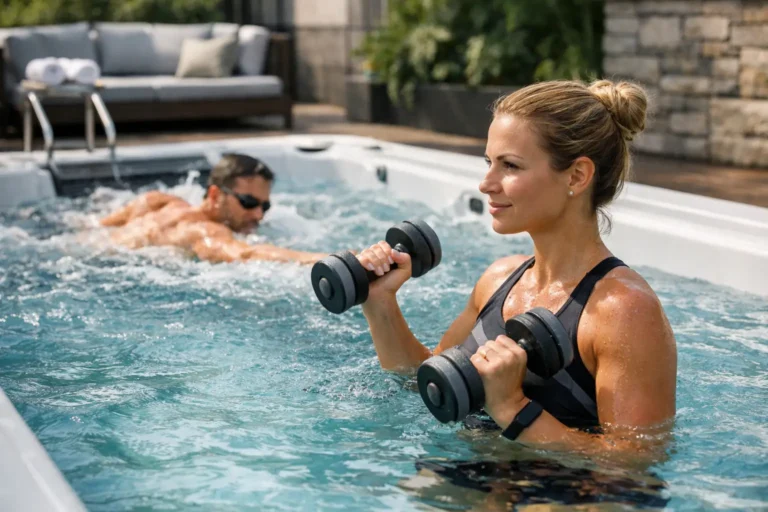
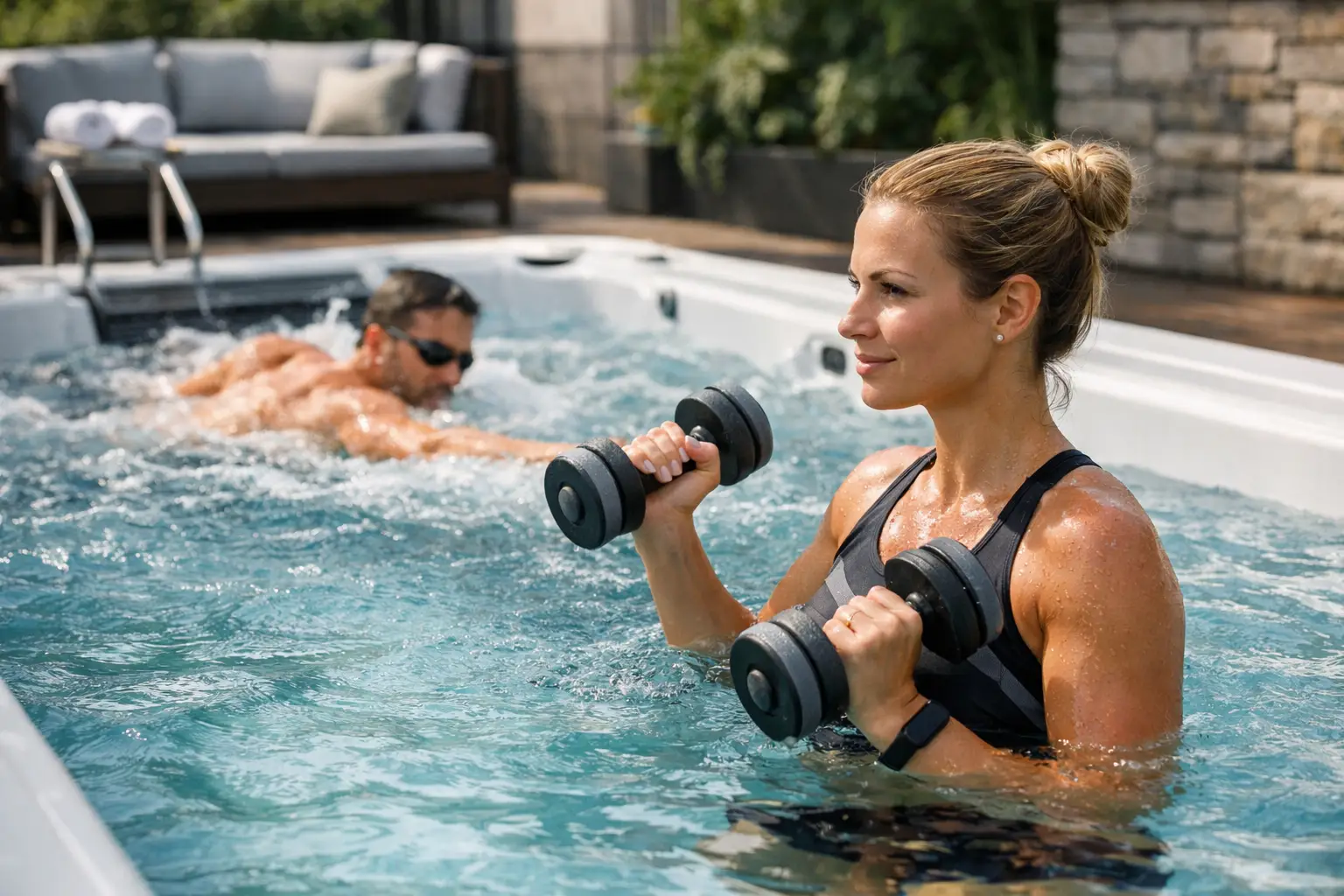
On your second day, use the water for resistance rather than distance. Begin with a gentle five-minute warmup, then perform two or three rounds of 10 to 15 repetitions of each movement: water push-ups at the wall, squats, reverse lunges, standing leg lifts, and biceps curls with water dumbbells if you have them.
Move slowly enough to feel the resistance on both phases of each exercise. Pressing a dumbbell down through the water is work; guiding it back up with control is work, too. This is one advantage of aquatic training for people who dislike high-impact strength workouts or want a kinder option for knees and hips.
Day 3: Interval Cardio
Intervals make good use of a swim spa because you can control the current and stay in place. After a five-minute warmup, alternate one minute of moderately challenging swimming with one minute of easy swimming or gentle walking. Repeat six to 10 times, then cool down for five minutes.
The trade-off is intensity. Hard intervals can build cardiovascular capacity efficiently, but they should not become every workout. One interval day per week is plenty for many people, particularly when strength work, recreational swimming, golf, cycling, or active family weekends are already part of the picture.
Day 4: Mobility and Recovery
Use the final session as a reset. Walk forward, backward, and sideways through the water, then perform slow hip circles, calf raises, shoulder circles, and gentle hamstring stretches. Add an easy five to 10 minutes of swimming if it feels restorative.
This session is not a skipped workout. Consistent mobility work can help you move better during swimming, strength training, and daily life. It also creates a simple reason to use the spa on days when a demanding session does not fit your energy level.
Make the Current Work for You
The current is a valuable training tool, but it is not a measure of toughness. Start at a setting where you can maintain good form for several minutes. Increase the speed only when you can keep your head position, breathing pattern, and stroke rhythm steady.
For freestyle swimming, look down and slightly forward rather than lifting your head to find the edge of the spa. Keep your hips close to the surface and rotate from the torso as you breathe. If the current feels turbulent or pulls your stroke off line, changing your position slightly may help more than simply reducing the speed.
You do not have to swim for every session. Water walking against the current can elevate your heart rate, while side stepping and backward walking challenge muscles that receive less attention in a traditional lap workout. This variety is helpful for beginners, older adults, and anyone rebuilding fitness after time away.
Pair Exercise With Recovery Without Overdoing It
Many swim spa owners appreciate having exercise and hydrotherapy in one backyard setting. After a workout, a brief period of gentle stretching in the water can be a comfortable transition. If your swim spa includes hydromassage seating, use it after you have cooled down and rehydrated rather than treating hot water as part of the workout itself.
More heat is not always better. A long soak immediately after a strenuous session can leave some people dehydrated or dizzy, especially in warm weather. Listen to your body, keep recovery sessions short, and save the longer, more relaxing soak for a separate time when you are no longer working hard.
Build Consistency Around Your Backyard Lifestyle
The strongest routine is one that has a place on your calendar. Morning sessions may be easier before the day fills up, while evening water walking can become a calming transition out of work mode. Families may prefer a weekend pattern where one person completes a focused workout before the swim spa becomes part of shared recreation.
Keep a simple record of current settings, workout length, and how you felt afterward. Over several weeks, you will see whether you are ready to add a few intervals, extend a steady swim, or take an extra recovery day. Progress can be measured by better endurance, easier movement, improved confidence in the water, or simply showing up more often.
A properly selected swim spa also makes consistency easier. The right size, current system, depth, and seating configuration depend on who will use it and how. Backyards In Style can help homeowners compare premium swim spa options with the practical details of installation, ownership, and long-term care in mind.
Your backyard does not need to become a high-pressure training facility. Give yourself a routine that fits the life you want to live, then let each session be a small, repeatable investment in feeling stronger, more comfortable, and more at home outdoors.