
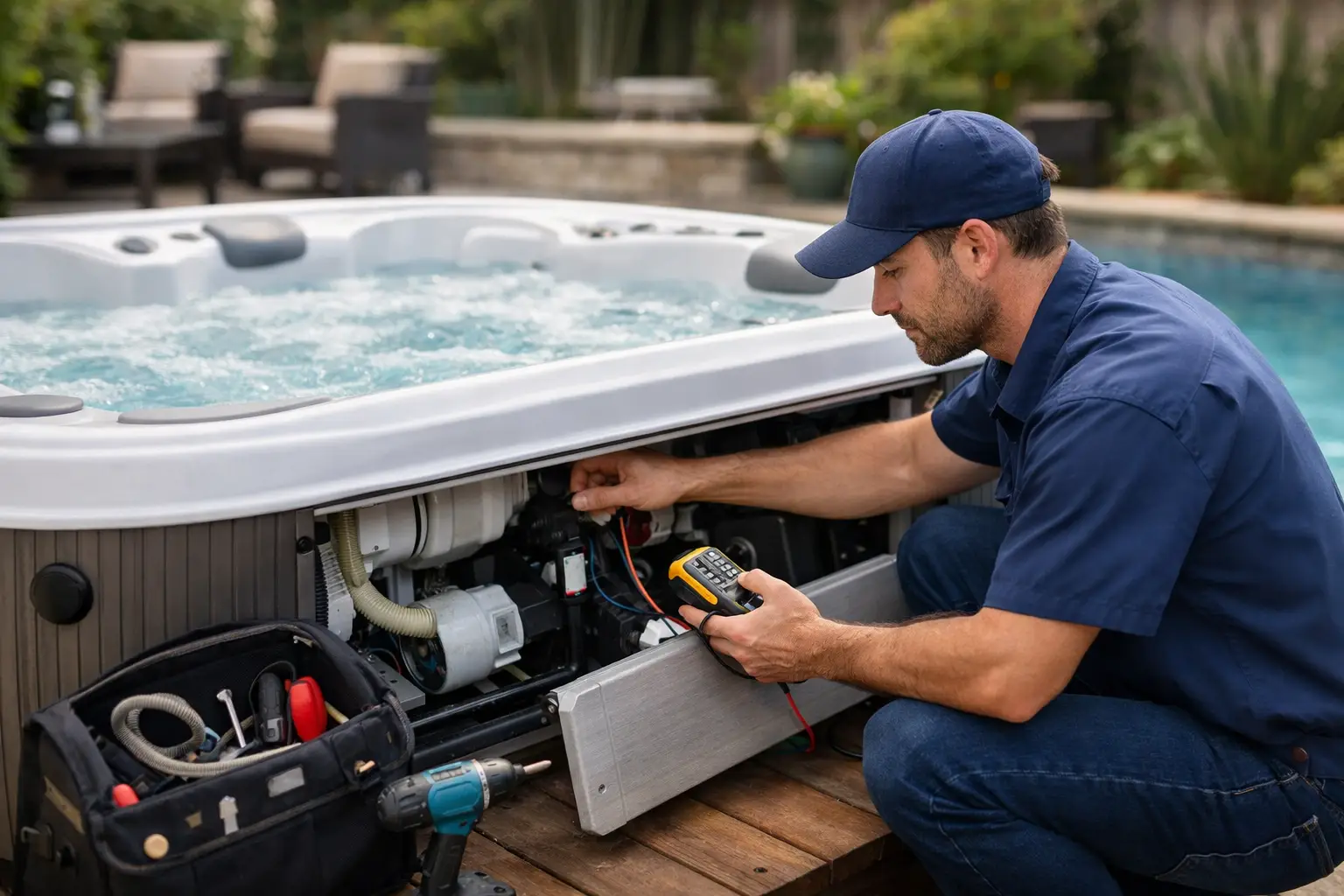
A hot tub that will not heat, trips the breaker, leaks onto the patio, or flashes an unfamiliar error code can change a relaxing backyard ritual into a source of stress quickly. When you search for hot tub repair service near me, you are not simply looking for a quick fix. You need a knowledgeable local technician who can diagnose the issue accurately, protect your investment, and help return your backyard to the comfortable retreat your family enjoys.
For Southern California homeowners, prompt service matters. Our mostly mild climate allows hot tubs to be used throughout the year, which also means equipment is asked to perform consistently through changing temperatures, dry winds, rain, and frequent use. The right repair partner helps you address the immediate concern while spotting maintenance needs that could prevent another interruption down the road.
When to Search for Hot Tub Repair Service Near Me
Some spa issues call for professional attention right away. A total loss of heat, persistent breaker trips, a leaking cabinet, or a pump that makes grinding or unusually loud noises should not be ignored. Continuing to run a hot tub with an electrical, circulation, or plumbing problem can turn a smaller repair into a larger one.
Water quality concerns can also point to an equipment issue. Cloudy water is often a maintenance matter, but water that will not stay clear despite balanced chemistry and clean filters may indicate weak circulation, a failing ozone or sanitation component, or a heater-related problem. If the control panel displays an error message, take a photo of it before resetting anything. That detail can help a technician narrow down the cause.
There are a few situations where it is best to stop using the spa until it has been inspected. Turn off power at the GFCI breaker if you notice a burning smell, smoke, repeated breaker trips, water near electrical connections, or signs of a serious leak. Do not bypass a breaker or attempt to force a pump or heater back on. Those safety features are there to protect your home and everyone using the spa.
Common Hot Tub Problems and What They May Mean
A hot tub is a connected system of water, plumbing, electronics, and mechanical components. One symptom can have several possible causes, which is why experienced diagnosis is so valuable.
The Water Is Not Heating
If your spa is running but the water stays cool, start by checking that the cover is fully closed and that the filtration cycle is active. A dirty filter can restrict water flow enough to keep the heater from operating properly. If the filter is clean and the spa still is not warming, the issue could involve the heater element, high-limit sensor, pressure switch, circulation pump, control board, or wiring.
The trade-off is simple: replacing a heater before confirming adequate flow may not solve the real problem. A qualified technician should assess the complete heating system rather than assume the heater is at fault.
Jets Have Lost Power or Will Not Turn On
Weak jets can result from closed valves, low water level, dirty filters, air in the plumbing, or a worn pump. If only certain jets are affected, the problem may be localized to a jet insert or diverter valve. If all jets are weak, a circulation or pump issue is more likely.
Before scheduling service, make sure the water level is above the filters and inspect whether a valve was accidentally closed during cleaning. Avoid opening the equipment compartment or loosening plumbing fittings if you are unfamiliar with the system. A small mistake can create a leak or introduce air into the lines.
The Spa Is Leaking
Not every wet spot means your hot tub has a plumbing leak. Splashing, rainwater, condensation, and water draining from a recently removed cover can all collect around the base. But if the water level drops consistently, the source needs attention.
Leaks may come from pump seals, unions, heater connections, valves, plumbing lines, or the shell itself. Their location is not always obvious because water can travel along the cabinet floor before appearing outside the spa. A professional leak evaluation saves time and helps avoid unnecessary part replacement.
The Breaker Keeps Tripping
A GFCI breaker trip is a safety alert, not an inconvenience to work around. It may be caused by moisture in an electrical component, a failing heater, a pump issue, damaged wiring, or a problem with the breaker itself. Resetting it once after a weather event may be reasonable, but repeated trips require professional evaluation.
Do not repeatedly reset the breaker in hopes that the problem will disappear. A dependable repair service will isolate components carefully to identify what is causing the electrical fault.
What a Quality Local Spa Repair Visit Should Include
A good service appointment begins with listening. Your technician should ask when the problem began, whether the spa has recently been drained or refilled, what messages appear on the control panel, and whether anything changed before the issue started. Those details can shorten the diagnostic process.
During the visit, the technician should inspect the visible equipment, water flow, pumps, heater operation, plumbing connections, electrical behavior, and control system as appropriate for the complaint. The best repair recommendations explain both the failed component and the reason it likely failed. For example, a circulation pump replacement may be needed, but the technician should also discuss whether old filters, poor water balance, or a blocked intake contributed to the strain.
Ask whether the repair includes a warranty on parts and labor, whether the necessary component is available, and whether a return visit may be needed. Some repairs can be completed in one appointment; others depend on model-specific parts or require additional time to confirm proper operation. Clear expectations are part of good service.
For premium brands and older spas alike, model familiarity matters. Controls, plumbing layouts, diagnostic codes, and replacement parts vary by manufacturer and series. Working with a dealership or service team that understands the equipment in your backyard can make the process more efficient and help preserve the performance you expect from your spa.
How to Prepare Before the Technician Arrives
You can help make a service visit more productive without taking on the repair yourself. Keep the spa filled to its normal operating level unless you have been instructed otherwise, and leave power on if it is safe to do so. Many problems are easier to diagnose when the technician can observe the symptom firsthand.
Have the spa model and serial number available if possible. Note any error messages, describe when the issue occurs, and mention recent changes such as a drain and refill, a new filter, storm exposure, or unusually heavy use. Clear access to the equipment compartment is helpful, especially if patio furniture, planters, or storage items have accumulated around the cabinet.
If the issue involves a leak, avoid draining the spa before the appointment unless directed by your service provider. The water level can help identify the height and likely location of the leak. If a major leak is occurring, however, shut off power and contact a professional for guidance.
Repair or Replace? Making the Right Call
Most hot tub issues are repairable, particularly when the shell and structure are in good condition. Pumps, heaters, sensors, control components, plumbing fittings, covers, and jet parts all have service lives, and replacing them can restore years of enjoyable use.
Replacement becomes a more serious consideration when an older spa has multiple major failures, parts are no longer available, the shell has extensive damage, or operating costs have become difficult to justify. It depends on the age of the spa, the condition of the cabinet and shell, and the total cost of current and likely upcoming repairs.
A trusted local advisor should not push replacement when a sensible repair will serve you well. At the same time, they should be candid when investing in a new, energy-efficient model could offer better reliability, hydrotherapy features, water care technology, and long-term value. Backyards In Style approaches spa ownership as a long-term relationship, from selecting the right model to maintaining the comfort it brings to your home.
Protect Your Spa Between Service Calls
Consistent care reduces avoidable repairs. Keep filters clean, maintain balanced water chemistry, check the water level regularly, and inspect the cover for tears, waterlogging, or poor fit. A quality cover does more than retain heat – it helps keep debris out and reduces the workload on your circulation and heating systems.
Scheduled maintenance is especially useful for owners who use their spa often, travel frequently, or want professional support with water care. Regular inspections can catch small drips, worn seals, declining pump performance, and heater-flow issues before they interrupt a weekend gathering or a quiet evening soak.
Your hot tub should feel like the easiest part of your backyard: warm water, comfortable seating, and time set aside for recovery or connection. When something changes, timely local service can help keep that experience ready whenever you are.